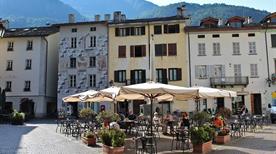
Centro Storico di Chiavenna
Chiavenna
Ancient facades with paintings of great charm and of great importance, fountains and portals in ollàre stone, decorated with floral and geometric motifs, are the elements that characterize the fascinating historic center of Chiavenna.
There are numerous arcades overlooking the river Mera and the architectural treasures to be discovered by wandering through the streets of the village; courtyards and hidden gardens such as the Córt di àsen, represent characteristic corners, which have remained intact over time.
A historic center, dating back to the sixteenth century, already surrounded by Sforza walls, partly still visible, which is testimony to how rich and important Chiavenna was at the time of the great trade with central Europe.
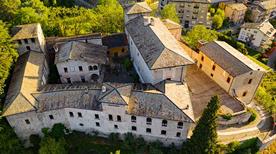
Castello di Masegra
Sondrio
Built in 1048, the castle was destroyed and rebuilt at the beginning of the 15th century with a military function for its important strategic position. Later, he went into inheritance to Beccaria undergoing a total reconstruction. At the end of the 90s, with the renovation of the castle, its high architectural quality was highlighted.
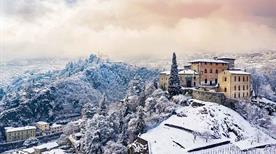
Museo Storico Castello Masegra
Sondrio
The Historical Museum Masegra Castle of Sondrio, Valtellina, Lombardia, tells, in its three halls, history and key moments of domination of the Grisons region of Switzerland (Swiss canton).

Galleria Storica Civici Pompieri della Valchiavenna
Chiavenna
The museum collects and exhibits artifacts of firefighting origin present from the beginning. The material was ordered to offer visitors the opportunity to evaluate the technical evolution of the various fire-fighting and rescue equipment during the first half of the 1900s.
Among the exhibited pieces is the "MERA 3" hand pump, complete with transport wagon, supplied to the Chiavenna Fire Brigade from 1883 to the second post-war period, fortunately found in 1989 during a fire in a farmhouse. In addition to some accessories and service uniforms, the parade helmet of the Civic Firemen of Chiavenna (1889) is preserved.
To recreate the atmosphere of the time, a typical peripheral service center was also set up, such as that of Chiavenna around the end of the 1930s. The Historical Gallery is completed by documents, photographs and relics, kindly made available by the local population. Finally, the Historical Gallery houses an impressive collection of fire vehicle models, self-built in 1:14 scale by a firefighter from Chiavenna. The collection, which currently consists of about 100 pieces.
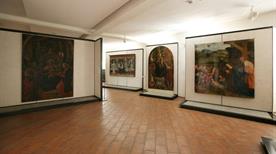
Museo Valtellinese di Storia e Arte
Sondrio
The Valtellina Museum of History and Art of Sondrio has been based since 1994 in the historic Palazzo Sassi de' Lavizzari, an austere sixteenth-century building donated by the owners to the Municipality in 1922 for cultural purposes. The collections of the Museum collect archaeological evidence from the prehistoric and Roman times and works able to offer an overview of the history of Valtellina art from the Middle Ages to the present day.
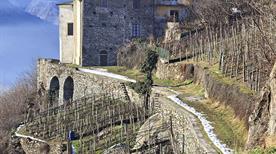
Santuario della Sassella
Sondrio
The Sanctuary of Sassella in Sondrio is a place of spiritual peace built around the tenth century after the apparition of Our Lady. Inside the sanctuary there are wonderful works of art to see and admire.

Museo Mineralogico e Naturalistico
Bormio
The Mineralogical and Naturalistic Museum was opened in 1972. The largest collection that presents all the secrets of nature through a map showing the treasures of the mountains of Sondrio is that of Edy Romani with more than 14,000 crystals and minerals. At the Museum you can also admire curated naturalistic reconstructions and the workshop with the stone cutting machine.
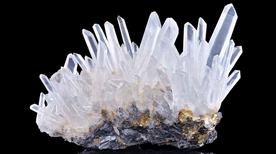
Museo Mineralogico - Collezione "F. Grazioli"
Sondrio
The Flavio Grazioli Mineralogical Museum is located in the municipality of Sondrio. It is one of the most important civic museums in Italy. It was established in 1991 to promote knowledge of the geological and mineralogical environment. The Museum exhibits a large collection of minerals, rich in more than 460 species and about 12,000 samples of minerals.
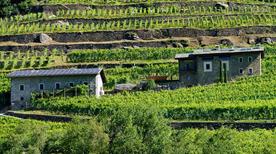
Fondazione Fojanini
Sondrio
The Foundation was established by Giuseppe Fojanini, in order to create a doctrinal center for local agricultural problems. It was started in 1971 and has always contributed so much in enhancing and promoting the activities of the first sector. Over the years, the processes related to the aforementioned activity have been improved. Today, at the foundation, there are several institutes linked to these purposes.

Museo del Tesoro
Chiavenna
It is located in the charming collegiate church of San Lorenzo. It preserves a vast set of vestments and sacred furnishings. Main piece: “Peace of Chiavenna” covered with a twelfth century evangelary in embossed gold, gems, pearls and enamels, medieval masterpiece.

Parco Archeologico-Botanico del Paradiso e Museo Archeologico della Valchiavenna
Chiavenna
The botanical-archaeological park of Paradiso is made up of two hills, the "Paradiso" and the "Castellaccio", which are located on the eastern edge of Chiavenna in a magnificent panoramic position, both over the city and the surrounding area. The two hills, separated by the deep crack of the "Caurga" (ancient Roman ollàre stone quarry), are connected by a daring walkway and crossed by a dense network of well-equipped paths that allow an easy visit and ascent to the most high. There are numerous attractions that justify a visit, in fact on the two cliffs there are concentrated: singular environmental, geological and landscape aspects, botanical varieties of flowers and plants, with rare species and exotic vegetation; various archaeological and historical remains such as the ruins of the old walls and the fortress; artistic and architectural artefacts in soapstone, flooring in "botòn" (scraps of soapstone turning). Inside the Torrione there is the naturalistic section of the Valchiavenna Museum in which geo-mineralogical and faunal installations are presented that illustrate the natural environment of the valley.
In the building at the entrance to the ollàre stone quarry, it is possible to find the Archaeological Museum of Valchiavenna on the first floor. During the visit to the rooms it is possible to "walk" in the millennial history of Chiavenna and its Valley. We are accompanied along the path by didactic panels, reconstructive drawings of scenarios and landscapes and, above all, the finds, objects that directly from the past are able to tell us about the life, work and beliefs of those who lived in these places over the centuries.

Palazzo Carbonera
Sondrio
Palazzo Carbonera is located in a neighborhood, formerly known as a 'canton', which has existed since the Middle Ages and, since those times, it is crossed by the famous Via Valerian which has always represented the only western access to the city. The structure has preserved very precious architectural ornaments of the sixteenth century. On several doors and windows you can still notice the coat of arms of the Parravicini, although today the building is owned by the Carbonera, from which it takes its name.

Mulino Moro di Bottonera
Chiavenna
The mill of the former Moro pasta factory is located in Bottonera, the artisan district of Chiavenna, built in the 19th century in the upper part of the village and represents an important work of industrial archeology.
It was Carlo Moro who gave life to the pasta factory. The foundation dates back to 1868, although as early as 1851 the Chiavenna Chamber of Commerce reported the presence of a "non-sweet pasta factory", known as "wheat mill and pasta factory" in 1890. The complex has come down to us almost intact. The mill was in operation day and night and the work, distributed over three shifts, was coordinated by a chief miller who, with a team of workers, supervised the operation of the machines and the loading into the bags of processing products: flour, bran, flour and half grains.
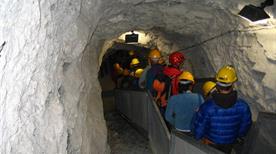
Ecomuseo della Bagnada
Chiesa in Valmalenco
Eco museum Bagnada. The field of talc Bagnada was discovered in the late '20s from the quarries of Asbestos Limited Company (hereinafter Mining Valtellina). To fully understand the importance of this activity has played in the lives of villagers, leaving an indelible mark in the history, the landscape and the economy, just think of geological heterogeneity with its mineral wealth (asbestos and talc, soapstone and serpentinite) who made the Val Malenco - and they do, even today - a point of reference in the international arena.

Museo Civico
Bormio
The Museum is set up in the De Simoni Castle. It was opened to the public in 1962. Inside there are about 3000 objects in fourteen rooms, each of which represents a different historical period in the area with all the elements dating back to the time treated. Currently, the museum is open to the public.

Palazzo Vertemate Franchi
Piuro
Palazzo Vertemate Franchi is located in Prosto di Piuro just two kilometers from Chiavenna, in Val Bregaglia. Erected in the second half of the 16th century by the brothers Guglielmo and Luigi Vertemate Franchi, exponents of one of the richest families who had flourishing commercial activities in Piuro, it is the only building of the properties that was saved from the landslide of 1618 which submerged the town with many of its inhabitants. The palace is a beautiful Renaissance masterpiece immersed in an enchanting environment that allows you to read the reality of a noble family of the sixteenth and seventeenth centuries. The facade is sober and essential, surrounded by airy and functional spaces, such as the Italian garden with the fishpond and the double exedra balustrade.

Pasini Arredamenti
Piuro