
Teatro Romano
Spoleto
(16 Km)
The Roman Theatre is located in Spoleto, in the province of Perugia and dates back to the first century BC. The structure suffered extensive damage due to a landslide, but was restored in the past. The theater is located within the city walls and keep a cavea of 70 m in diameter.

Rocca Albornoziana di Spoleto
Spoleto
(16 Km)
The Fortress is located in Spoleto and was built in 1300 by Matteo Gattapone. The structure is rectangular in shape and inside it there were two courts: the Court of Arms and the Court of Honor. From 1817 until 1982 the building was used as a prison. Built by innocent VI in the 14th century with the aim of strengthening the defensive system of the Church-State, it has two courtyards and a complex system of angular towers joined together by high defensive walls.
Cattedrale di Santa Maria Assunta
Spoleto
(17 Km)
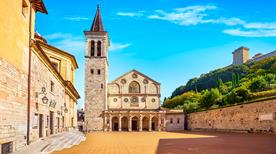
The Cathedral dates back to the end of the 12th century. Inside, numerous works of absolute importance: from the Painted Cross by Alberto Sotio (1187), to the cycle of the apse with Stories of the Virgin frescoed by Filippo Lippi between 1467 and 1469.

Basilica di San Salvatore
Spoleto
(16 Km)
Originally dedicated to the martyrs Concordio and Senzia, it was built between the end of the VII and the beginning of the 8th century. Today it is a UNESCO World Heritage Site within the “Italia Langobardorum” serial site Centers of Power and Worship (568-774 AD)
Basilica di Sant'Eufemia
Spoleto
(16 Km)
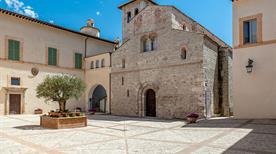
Among the most notable Romanesque buildings in Umbria (X-XII century) The church is characterized by an internal arrangement with three naves and the presence of the matroneo (entrance from the Diocesan Museum).
Museo Archeologico Nazionale
Spoleto
(17 Km)
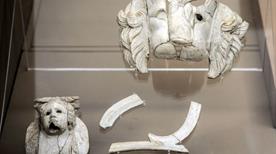
The National Archaeological Museum was opened in 1985 at the former monastery of Santa Agata. Recently, the museum was renovated. It presents the formation of the urban center of Spoleto from the first human presence. The Museum occupies two floors of the former monastery and also owns the theater built in the first century BC.
Complesso Monumentale di San Francesco
Spoleto
(7 Km)
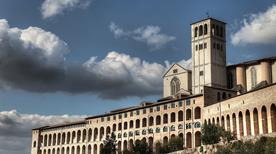
The “fortress church of San Francesco”, dating back to the twelfth century, is par excellence the monumental construction of the Castle (10,720 cubic meters between church and convent). Benedictine oratory first and the friars of the Order of Minors Conventual then...

Piazza del Mercato
Spoleto
(16 Km)
An ancient Roman forum, Piazza del Mercato was until the last century the most lively place in the city, where the most important public events took place. The scenographic source built between 1746 and 1748 shows you.

Ponte delle Torri
Spoleto
(16 Km)
The Bridge of Towers was erected at the end of 1300 on the remains of a Roman aqueduct to lead water from the mountain to the city. At its extreme is the Fortilizio dei Mulini, from which numerous walks to the Spoleto mountain start.
Castello di Eggi
Spoleto
(14 Km)
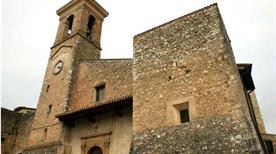
Eggi Castle dates back to the fourteenth century. From the few historical documents found, we know that it was the fief of the Racani family, the nobles of the country. The Castle has a triangular base surmounted by two high defensive towers.
Casa Romana
Spoleto
(16 Km)
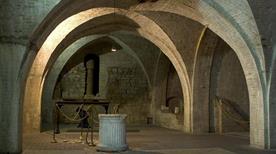
Patrician house of the first century AD found between the end of the nineteenth century and the first decades of the next. This is a valuable stately house whose architectural pattern reflects the classic one of Roman homes.

Arco di Druso e Germanico
Spoleto
(16 Km)
Built in 23 AD, it was the triumphant entrance to the Roman Forum, the current Piazza del Mercato. Here the stratification of the city is perceptible: the right pylon of the arch rests on the original plane of the hole.
Torre dell' Olio
Spoleto
(17 Km)
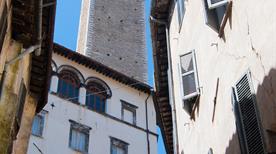
The Torre dell'Olio is one of the most characteristic monuments of the city of Spoleto. In fact, it is considered the symbol of the city. Its construction dates back to the 13th century. The tower was named Torre dell'Olio as hot oil was poured to defend the city over enemies.

Chiesa Gotica di San Francesco
Cascia
(6 Km)
It was built in 1424 by Bishop Anthony Alms. Striking for the beauty of the rose window and its arched doorway. Worth seeing!
Monastero di Santa Rita
Cascia
(6 Km)
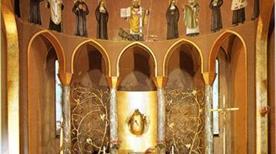
The old part of the monastery dates back to 1200, it was dedicated to St. Mary Magdalene. It was enlarged in the first half of 1700 with the generous offer of John V, King of Portugal, the eye healed of cancer through the intercession of the saint.

Palazzo Collicola Arti Visive - Museo Carandente
Spoleto
(17 Km)
The museum's collection originated with the Spoleto Prize, an artistic competition designed to promote the birth of a permanent collection of contemporary art, thanks also to the important contribution of the critic Giovanni Carandente.
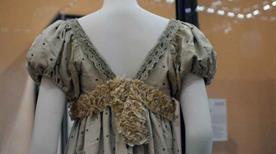
Museo del Tessuto e del Costume
Spoleto
(16 Km)
In the rooms of Palazzo Rosari Spada there are many artifacts from various collections that represent a cross-section of the history of fabric and costume between the fourteenth and twentieth centuries.
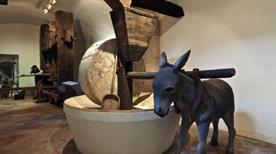
Museo della Civiltà dell' Ulivo
Trevi
(24 Km)
The Museum of Civilization of the Olive Tree is located at the former convent of St. Francis. It is the first public museum dedicated to oil and olive trees in Europe. The exhibition offers the opportunity to read news about the olive tree from a historical, botanical, and agronomic point of view.

Raccolta d' Arte di S. Francesco
Trevi
(24 Km)
The Art Collection of San Francesco is located inside the former convent of San Francesco. It was opened in October 1996. The collection includes paintings, sculptures, drawings, memorabilia and archaeological finds. It is part of the City Museum Circuit together with the Museum of Civilization of the Olive Tree which is located in the same place.
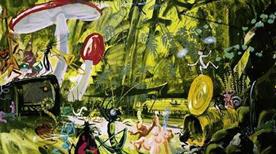
Trevi Flash Art Museum
Trevi
(24 Km)
The Trevi Flash Art Museum is held in the Palazzo Lucarini Contemporary. Many contemporary works are housed in this Museum. The gallery can be visited at any time, even outside opening hours, but only by reservation.
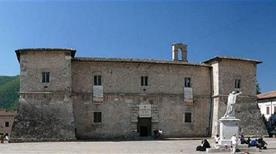
Museo Civico Diocesano "La Castellina"
Norcia
(16 Km)
The Civic and Diocesan Museum “La Castellina”, built in 1967, after a long period of closure, was reopened in 1996 as a permanent exhibition. This is based in the main floor of La Castellina, a fortress built in 1554 on a project by Jacopo Barozzi, by the will of Pope Giulio III. The museum itinerary is divided into three sections: the Collection of the Civic and Diocesan Museum, which brings together works of art owned by ecclesiastical or municipal, dating from the twelfth and eighteenth centuries, the Collection Massenzi and the Permanent Archaeological Exhibition “Leave for the Afterlife”.
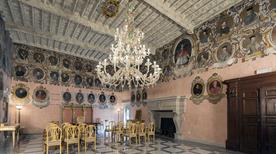
Museo Diocesano
Spoleto
(16 Km)
The Museum was inaugurated in the 1970s at the Archbishop's Palace. The works are exhibited chronologically in the rooms dedicated to thematic consideration. The living rooms are adorned with doors of the '500. The first news dates back to the 10th century. The interior with three naves is divided by columns with reuse capitals, coming from classical and early medieval buildings, while the 13th century marble altar is carved with refined bas-reliefs.
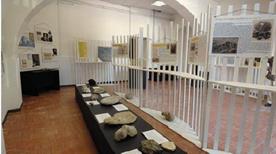
Laboratorio di Scienze della Terra
Spoleto
(16 Km)
A point of interest of the municipality of Spoleto is represented by the Laboratory of Earth Sciences, created by an important and well-known nineteenth-century collection, geopaleontological by Count Francesco Toni. It is an educational and scientific museum. The geopaleontological collection was proposed to the public between 1867 and 1892 and includes about 6000 minerals, rocks and fossils.
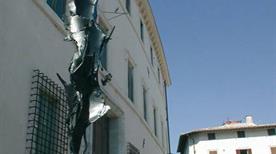
Galleria Civica d'Arte Moderna
Spoleto
(16 Km)
It is located in the historic center of Spoleto and is housed in the Collicola Palace. The museum was opened in 2000. A lively museum, an active contemporary art hub, houses on the first floor the legacy of Giovanni Carandente and the works of the Spoleto Prize, while on the second floor there are contemporary exhibitions. Do not miss the visit to the library, the legacy of Giovanni Carandente, which preserves more than 20 thousand volumes of contemporary art.

Borgo Cerreto di Spoleto
Cerreto di Spoleto
(12 Km)
The village of Cerreto di Spoleto was built in the fifteenth century and covers an area of about 357 meters. The purpose of its construction was to protect the area of the castle of Cerreto. Currently, only one of the four doors and a watchtower comes from the village, which has been transformed into a bell tower church. The environment was the center of some studies and was considered very important historic center.
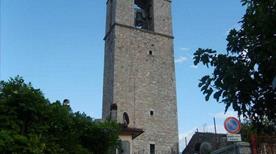
Torre di Correto di Spoleto
Cerreto di Spoleto
(19 Km)
The Tower of Cerreto di Spoleto was part of the medieval defensive system of this municipality. The building is also known as the bell tower because inside it is a huge bell of 16 tons.
Torre del Cassero
Cantalice
(27 Km)
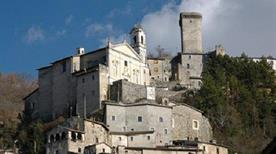
The tower of the Cassero, dating back to the 11th century, was part of a castle from the Middle Ages. Over the centuries the tower has been the subject of various renovations, this can be seen both from the rectangular shape and from a partial cylindrical shape. The structure was higher than the other Cantalice fortifications.

Palazzo Carli
Cascia
(7 Km)
Seat of the Library of the Historical and Cultural Office, it is an old mansion owned by the city, enriched by an internal Italian garden