
Teatro Del Giglio
Lucca
A theater of tradition, which has hosted the best Italian companies with concerts, dances, operas. The company Teatro del Carretto, within the Teatro del Giglio co - produces shows of international importance.

Teatro di San Girolamo
Lucca
This theater dates back to 1819 and it is related to the complex of Teatro del Giglio. The auditorium has 174 seats and the planning of the program offers concerts, drama and opera. Renovated and refurbished by the architect Giovanni Lazzarini.
Teatro Comunale Accademico
Lucca
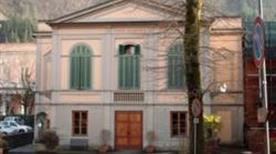
It was built in 1790. It has hosted major events of music and prose. It is a typical scene “all' Italiana” (oval-shaped auditorium with 29 stages divided into two orders and a lodge). Today, there are theater plays, operas and concerts.

Auditorium del Suffragio
Lucca
The hall dates back to the XVI-XVII century. It has a capacity of 200 seats. It hosts theatrical and musical performances organized by the Boccherini Academy, a famous institution of Lucca.
Claudio Poleschi
Lucca
Gio' Art
Lucca

Flora Bigai Arte Contemporanea
Lucca

Galleria d'Arte Moderna e Contemporanea
Lucca
it is located within the historic Palazzo delle Muse, a collection of over 3000 works of great artists of the twentieth century. Recommended for lovers of writing as the most consistent core of the collection consists of works of graphic art.

Museo di Arte Contemporanea
Lucca
Museum of Contemporary Art Lu.C.C.A. (Lucca Center of Contemporary Art)
The museum is set up within Palazzo Boccella, an old building a few steps from the Market Square. Here are held exhibitions of contemporary art. Worth visiting!
Pinacoteca "Lorenzo Viani"
Lucca
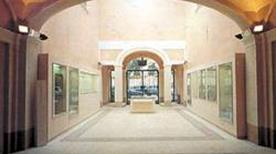
It is part of the Museum of Villa Paolina, the summer residence of Paolina
Borghese Bonaparte. The gallery has paintings of the twentieth century.

Museo Civico di Storia Naturale del Liceo Classico "N. Machiavelli"
Lucca
The Civic Museum of Natural History of the High School “Nicolò Machiavelli” is located inside the Nicolò Machiavelli classical high school of the municipality of Lucca. The building dates back to the 18th century and is the oldest high school in the province. Inside it houses a large collection of botany, zoology and mineralogy. The museum is open to the public.

Gipsoteca dell'Istituto d'Arte "Augusto Passaglia"
Lucca
The Passaglia Gipsoteca, located inside the State Institute of Art “A.Passaglia”, is of eighteenth-century origins. It has a large collection of documents and works of mythology made of plaster, found directly from the archaeological areas. It represents a fairly important cultural point in Lucca, which is open to the public.
Casa Museo 'Giacomo Puccini'
Lucca
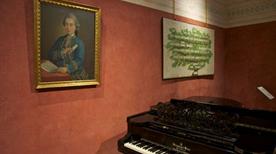
The birthplace where Giacomo Puccini was born on 22 December 1858 and in which the composer lived all the years of his childhood was transformed into a museum in 1979, was reopened to the public on 13th September 2011, after major restoration work. The museum houses original furnishings, precious objects, including the Steinway & Sons piano on which Turandot composed, autograph scores of youth compositions, many letters, paintings, photographs, sketches, memorabilia and precious documents that testify to the composer's work.

Museo del Risorgimento
Lucca
It occupies part of the Palazzo Ducale and illustrates the period between the unification of Italy and the First World War. A rich collection where you can see weapons of various ages from different countries.
Museo della Cattedrale
Lucca
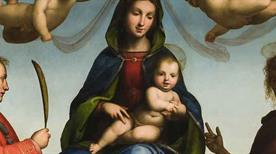
Since 1992, at the Museum of the Cathedral of Lucca, the furnishing works of the Cathedral of San Martino have been preserved. The works are arranged in chronological order, in order to better expose historical changes to the public. A room is dedicated to the Holy Face preserved in the cathedral of San Martino. The Museum of the Cathedral of Lucca is located on a building complex.

Museo e Pinacoteca Nazionale di Palazzo Mansi
Lucca
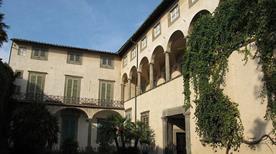
The Museum and the National Art Gallery are located inside Palazzo Mansi. The palace dates back to the 16th century. The Museum was set up to present to the public a collection of the family heritage by the Mansi Family, owners of the building since 1616. The Palace underwent deep restorations, completed in 1977. These works gave the building a very luxurious look.

Museo della Liberazione 1943-45
Lucca
The Liberation Museum 1943 — 1945 is located in some rooms of Palazzo Guinigi, in the historic center of Lucca. The Museum was built in 1988 by a group of veterans of World War II. In the five rooms of the Museum there are photographs and writings, uniforms and relics, illustrating the contribution made by the citizens of Lucca to the liberation of the territory of the province of Lucca.
Museo di Palazzo Mansi
Lucca
It hosts a major national art gallery in the building that dates back to 500, later were recovered the original furniture, tapestries and frescoes on the walls.

Baluardo Santa Maria
Lucca
The Bulwark of Santa Maria is part of the imposing defensive circle of the walls of Lucca. It is called so because it presents an effigy depicting Mary on one of the corners. The walls, together with the bulwarks and towers, were built in the Renaissance. Along the whole route there are rows of ornamental trees that make the perimeter the most beautiful walk in the city.
Madonna dello Stellario
Lucca
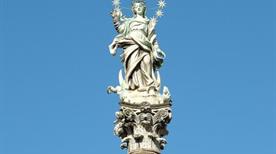
The Column of Our Lady of the Stellario is the work of the sculptor Giovanni Lazzoni and is a baroque insert of great importance. The statue was placed above the Column in 1687 and appears to be the first monument to the Immaculate Conception built in Italy.

Baluardo San Pietro
Lucca
Porta San Pietro is a door of the walls of Lucca, it was erected between 1565 and 1566, by Alessandro Resta, and is part of the Renaissance wall circle. The Porta San Pietro opens with three doors, topped in the center by a shield with the coat of arms of St. Peter with the engraving “libertas” and on the sides it has two lions inserted in niches.
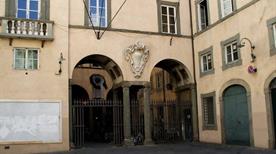
Palazzo Santini
Lucca
Palazzo Santini is a very important element of the history of Lucca. It is a very special architectural structure: stucco decorations, heraldic emblems and coats of arms of Lucca (including the coat of arms of the Santini) that make it a point of historical interest for everyone the Lucca, but not only. Currently, the building is home to various structures of the Municipality of Lucca.

Castello di Nozzano
Lucca
The Castle of Nozzano dates back to the twelfth century, and was attributed to Matilde di Canossa. Built for defensive reasons, for many years, the building was part of the continuous wars carried out between the Lucca and the Pisans. As a result, the castle was destroyed and rebuilt twice. However, today we find it in good condition, even if only the external part can be visited.

Villa Oliva
Lucca
The first documents date back to the sixteenth century when the villa belonged to the Buonvisi. The villa suffered several damages during World War II and the restoration was due to the engineer Cesare Oliva. The garden of the villa is characterized by a double slope and the connection takes place through small flights of stairs. The entire property is divided into three zones. In 1770 it was restored by Francesco Buonvisi.

Palazzo Brancoli Busdraghi
Lucca
The construction of Palazzo Brancoli dates back to the 17th century and inside there is a huge private garden. In the old documents of the city, the garden appeared for the first time in 1843, having, in fact, a very special structure. Nowadays it has an irregular shape with access to the north side and numerous flowering species as well as a small rose garden. Currently, it is the headquarters of a hotel, available to all interested parties.

Palazzo Bernardini
Lucca
Palazzo Bernardini is located in the homonymous square and was designed by Nicolao Civitali in the 16th century. The building is linked to Florentine architectural schemes. A curiosity: one of the stones in the window that is on the right of the door is curiously arched. According to a singular popular legend, this 'Devil's Stone' would refuse to adhere to the façade to remember the destruction of a sacred image that arose in that place before the rise of the palace.
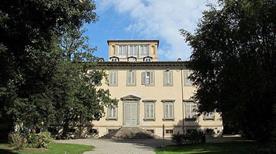
Villa Bottini
Lucca
It was built in the middle of the 16th century, in the historic center of Lucca. For a time, it was the property of Napoleon's sister, Elisa Bonaparte. The shape is of a parallelepiped positioned in such a way that you can have a garden full of green spaces. Over time, the garden has also been modified according to the preferences of the time. Today the structure is the place of representation for the Municipality and seat of the Cultural Office for Lucca. It is currently open and is accessible to the public.

Palazzo Gigli
Lucca
Palazzo Gigli has an authentic and very interesting structure. Over time, even if restored, we can see the original system. The Palace belonged to the Gigli family until 1661. Today it is home to the Cassa di Risparmio di Lucca.

Palazzo Cenami
Lucca
Palazzo Cenami was built in the '500 by Nicolao Civitali, on commission of the Arnolfini family. Seventy years later, the palace was purchased by the Cenami family. Its structure is typical of the 16th century and you can notice Florentine elements. Currently, the palace hosts several local exhibitions and is open to the public.

Palazzo Micheletti
Lucca
Built in the mid-sixteenth century by Bartolomeo Ammannati, it has a baluster wall that encloses a green garden. The palace is joined to the church of San Giovanni (one of the oldest in the city), with the garden of the palace and with the fourteenth-century Casa dell'Opera del Duomo, today the seat of the Banca del Monte di Lucca.
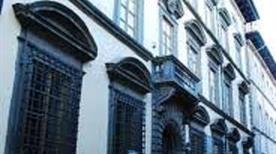
Palazzo Mazzarosa
Lucca
The Palace was built in the '500 and took its name from its owner in 1597, Alessandro Mazzarosa. The latter made it change, transforming it into a typical aristocratic residence, the elements of which are noticed even today. On the facade there is the coat of arms of the family, the portrait of the Holy Face and many others of the '500.
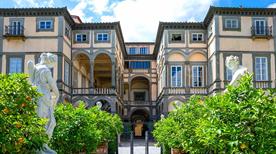
Palazzo Pfanner
Lucca
This palace is located on the edge of the Walls of Lucca and was built in 1660. It is known for its wonderful gardens in which there are in addition to seasonal blooms badger plants, pine trees, fruit trees and magnolias. On the sides of the wooden portal there are two niches containing on the right the statue of Hercules and on the left that of Cibele. For its rare beauty, this palace was also used as a set for numerous film films.
Palazzo Pretorio
Lucca
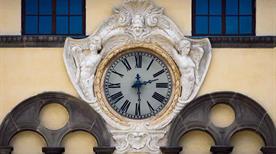
This building was built on the corner with Via Vittorio Veneto and is the most remarkable example of the Renaissance period in Lucca. Inside the loggia you can admire the monument to Matteo Civitali, designer of this building and the busts of the explorer Carlo Piaggia and the Garibaldino from Lucca Tito Stroacchi.
Palazzo Orsetti
Lucca
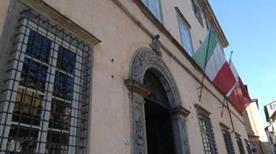
The Orsetti Palace was built by the Diodati family. Today the municipality is located in the palace of Orsetti. Outside the building we observe a beautiful garden, inside which there are trees and in the center a well. The garden is bordered by high walls. On the ground floor you can see some beautiful rooms with wall paintings from the 19th century. On the first floor there are beautiful rooms, among which the most important are that of Mirrors and the Music Room.
Palazzo Tucci
Lucca
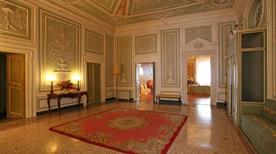
Palazzo Tucci is a structure of the sixteenth century although it underwent radical restoration in 1779 by Giuseppe Tucci and, as a result, nothing remains of the medieval aspect. The restoration project was given to Diodati, one of the best architects of the time, who gave the palace an entirely Baroque style. Today the palace is home to a hotel that hosts many tourists who wish to visit it.

Palazzo Ducale
Lucca
The building was built in 1401, and over the years it was home to several very important institutions, as well as the home of noble families. The final aspect we see today is the result of B. Ammannati's work in 1578. Today it continues to be the seat of the Provincial Administration, including other important offices in the city.
Casermetta San Paolino
Lucca
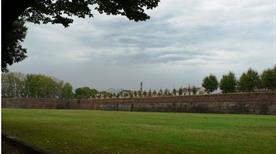
In the walls that surround the city of Lucca, there are numerous buildings that were once used for war and today are instead used as bars, restaurants, circles or are simply abandoned. One of these buildings is precisely the Casermetta Baluardo San Paolino.

Duomo
Lucca
Dedicated to St. Martin, the saint known for the episode of the mantle, it is located in the square. Inside the church there is the Temple of the Holy Face, a shrine built in 1484 with an octagonal plan and eight columns.
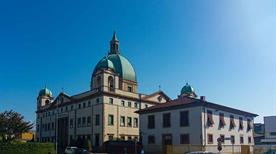
Santuario di Santa Gemma
Lucca
The Sanctuary was built in 1771 in honor of Santa Gemma Galgani. The project began with Italo Baccelli and, for war reasons, was completed by Adriano Marabini. The interior of the Sanctuary is the result of the work of many artists of the time who created famous works: the two mosaics and the altarpiece. The building is open to the public.
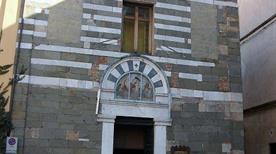
Oratorio di San Benedetto in Gottella
Lucca
The Oratory dates back to the 13th century and its medieval elements are well notable. It is a stone structure, full of presbyteral decorations and fragments from the early Middle Ages, reached the building over the years. It is currently the seat of the Catholic Brotherhood of Legnaioli available to the public.

Oratorio di Santa Giulia
Lucca
The oratory of Santa Giulia is rectangular in plastered masonry. It is one of the religious buildings in Tuscany. Its origins date back to the 13th — 14th centuries. Its facade is in Gothic marble. Inside, you can admire a great Cross from the thirteenth century, which was painted on the table.
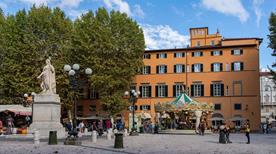
Piazza Napoleone
Lucca
Piazza Napoleone was built in the early 19th century and is the main square of Lucca. It was Lazzarini and Bienimé who designed it. It took the name of the emperor because it was commissioned by the latter's sister, Elisa Bonaparte Baciocchi. The square underwent several restorations over the years, changing its façade from the original one. Today it hosts the Doge's Palace and several local events.

Piazza dell'Anfiteatro
Lucca
Piazza Anfiteatro is built on the remains of the ancient Roman amphitheater of the 2nd century and is located in the city of Lucca. The square was born in the Middle Ages and was called “I speak”, indicating the place where citizens' meetings were held. To date, the floor of the square is raised by about 3 meters compared to the Roman arena. The square is normally frequented by tourists who appreciate its history and structure.
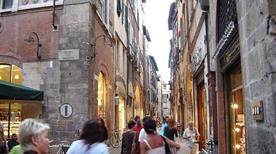
Via Fillungo
Lucca
It 's the main street of the city inside the walls, and one of the most representative symbols of the city as center and heart of tourism, trade and handicrafts
Piazza Antelminelli
Lucca
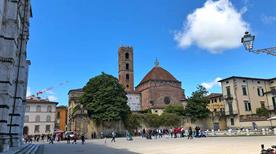
The square is of fourteenth-century origin and was called Anteminelli because of the homonymous houses that were demolished to make room for the square. It is distinguishable from the fountain located in the center, which was designed and built by Nottolini in 1932. Today it is surrounded by numerous historical monuments, important points in the area and much visited by tourists.
Porta Santi Gervasio e Protasio
Lucca
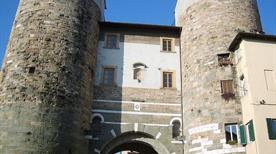
The Porta San Gervasio and Protasio or the so-called Porta dell'Annunziata dates back to the 13th century. It was built between 1255 and 1260. The building has special architectural and decorative elements from the Middle Ages. It consists of a gap and there are two towers. The gap is 8 m high. It was restored in 2006-2007.
Torre delle Ore
Lucca
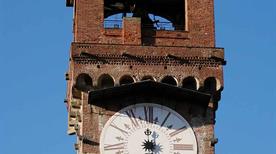
The Torre delle Ore is located in Lucca, and is the highest in the city. The first watch was built in 1390, but thanks to technological evolution, the watch was modified several times by changing both the dial and the bells. Today it is among the most visited monuments in the city.
Torre e Palazzo Guinigi
Lucca
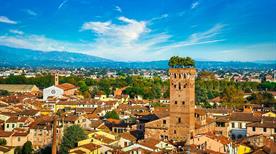
The Guinigi Tower was built in the second half of the 15th century and belonged to Nicolao Guinigi, a member of a rich family of merchants. The 44.25 meters high building was built of stone and brick and is special since at the top there is a hanging garden wanted by the Guinigi as a symbol of rebirth. It is worth visiting, as in addition to the garden, we can also admire the splendid panorama of the city and the surrounding mountains.
Porta di Borgo
Lucca
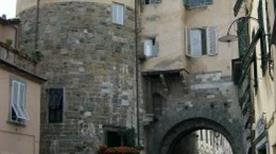
The Gate of Borgo is a door of the ancient walls that surround the city of Lucca. It faces north and was built between 1198 and 1265. The Gate is located in the direction of Porta Santa Maria, at the end of Via Fillungo. The Gate has a structure in which there are two side towers and a central opening. Both parts of the Gate are now used as private homes. In addition, inside the door there is the fresco depicting the Madonna with Child.
Porta Santa Maria
Lucca
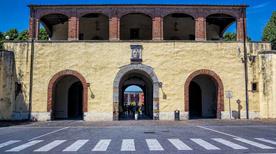
The Porta Santa Maria was created between 1549 and 1592 and is part of the Renaissance wall circle of Lucca. The door is dedicated to the Virgin Mary and in fact it depicts a marble statue of the Madonna inserted in a niche on the door itself. Originally there was only one opening and later the two side openings were added. In addition, you can see the statues each depicting a panther, the symbol of the city of Lucca.
Baluardo San Martino
Lucca
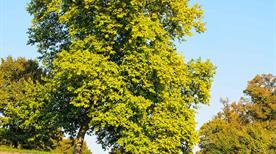
The Buluardo San Martino dates back at the same time as the urban walls of Lucca, to the 16th century. It is a refuge fortification that tells a lot about the history of Lucca. Today it is in a good state of preservation for those who want to visit it.
Porta di San Jacopo
Lucca
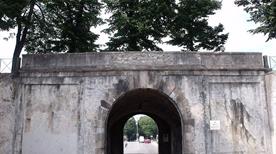
The Porta San Jacopo was built around 1930. Also known as Porta IV Novembre, it is one of the Tuscan tourist attractions in the municipality of Lucca. Inside it we observe a writing, from the fascist era, today still partially readable.
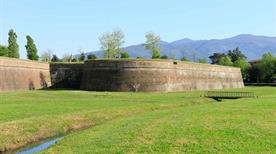
Baluardo San Paolino
Lucca
The Bulwark of San Paulino is named so precisely in honor of the patron saint of the city. He was the first to evangelize the city and was then buried in the inner core of the walls. The bulwark has a regular shape, with equal faces and angles. Today access takes place from the entrance of the barracks. The International Center for the Study of Urban Circles (CISCU) has been located in the ancient bulwark barracks since 1967.
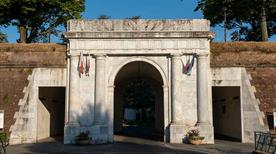
Porta Vittorio Emanuele
Lucca
The Porta Vittorio Emanuele is also called Sant'Anna because of its proximity to the homonymous church. It was opened at the beginning of the 20th century to improve the traffic situation in the aforementioned area. Today it has two passages for cars and two for pedestrians.

Sortita Porta San Pietro
Lucca
The Sortita Porta di San Pietro, located in the city of Lucca, is among the oldest gates of the same. The door takes this name as it was enlarged to allow the tramway trains to transit. The exit from the walls takes place precisely thanks to this short gallery that still exists and is, today, also visited by tourists.

Baluardo di San Donato
Lucca
The Baluardo San Donato is part of the system of the Walls of Lucca and dates back to the 16th century. It is an ancient fortification that, together with the other bulwarks of the area, tells a lot about the history of Lucca. The state of conservation is quite good. In addition, the property is easy to visit.
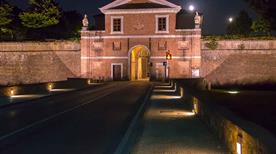
Antica Porta San Donato
Lucca
The Ancient Gate of San Donato was built at the end of the 16th century. The structure was designed by Vincenzo Civitali and has late Romanesque elements coming from the walls (the two marble lions). It is part of the great wall system of Lucca and, today, houses the tourist information offices in the area.
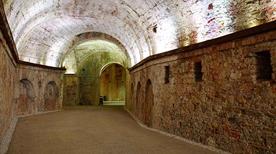
Baluardo Santa Croce
Lucca
The bulwark of Santa Croce is the last to be built in the city of Lucca and dates back to 1547. Its structure is such as to facilitate movement within it and make it more effective. Over the years, the bulwark has changed its function. In fact, the Camillo Aita outdoor school has been located on the internal platform since the early twentieth century, whose pavilion classrooms are also distributed along the adjacent embankment towards S. Giustina.

Baluardo San Colombano
Lucca
The Bulwark is part of the urban walls of Lucca. It is a fortification dating back to the 16th century, now transformed into an elegant café-restaurant.

Baluardo San Regolo
Lucca
This bulwark rises in the area, called in ancient “Piaggia Romana”, which was initially destined for the cemetery of the plagued, the sentenced to death and heretics, and subsequently used for the game of football. This structure was raised for defensive reasons. The interior of the bulwark was rebuilt in 1966 and is accessed from the Botanical Garden. Inside the bulwark you can see the rooms for the storage room of weapons and powder boxes.

Mura di Lucca
Lucca
Access is permitted within the city by the walls, passing through six gates, which from north and clockwise are: Porta Santa Maria, Porta San Jacopo, Porta Elisa, Porta San Pietro Porta Porta Sant'Anna and San Donato.

Acquedotto Storico Lorenzo Nottolini
Lucca
The Aqueduct, by Lorenzo Nottolini, dates back to the first part of the nineteenth century, commissioned by the Duchess of Lucca. Its length extends over almost 3.2 km, characterized by over 400 arches. It had a very important function for the area at the time, but after a few years it lost six of its pillars due to the construction of the A11 motorway. Today, the aqueduct has only a monumental function, and it is freely open to visitors.
Baluardo San Salvatore
Lucca
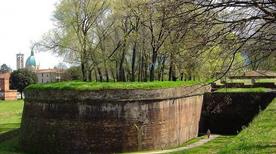
The Bulwark, built in the 16th century, is part of the system of the Walls of Lucca. Over the years it was restored and modified, as inside there was a fortification called the “Bastard”, the traces of which can be seen and observed even today. It is currently in a good state of preservation.

Porta Elisa
Lucca
Porta Elisa was built at the beginning of the 19th century. It is a neoclassical structure with Doric elements, dedicated to Elisa Baciocchi, Napoleon's sister. At the time it worked like a small 'Arc de Triomphe' and made it possible to access the Via Elisa. It is currently in good condition and can be noted along the Piazzale Don Aldo Mei.

Gabinetto di St.Naturale e Fisica
Lucca
La Torre Pendente
Pisa
(17 Km)
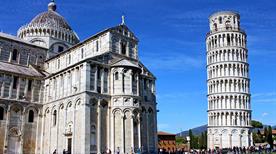
Presumably, the tower was designed by Bonanus, and in the XII century construction has begun. Already at the times, the construction works were interrupted several times because of the slope.
Battistero
Pisa
(17 Km)
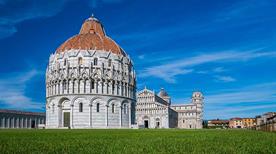
In the twelfth century was built as the second building in the field, according to the plans by Diotisalvi. It has a circular plan. The baptismal font is situated in the exact center, over three steps, and it is the work of Guido di Como by XIII cent
Piazza dei Miracoli
Pisa
(17 Km)
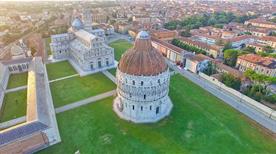
The square is located on the north-west side of the city. Here there are four monuments that are an allegory of life: the Baptistery - Birth: the Cathedral - Christianity, the Leaning Tower - the life and the cemetery - death.
Museo del Camposanto Vecchio
Pisa
(17 Km)
Museo dell'Opera del Duomo
Pisa
(17 Km)
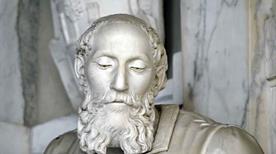
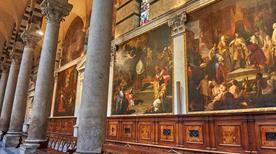
Located in the Palace of the Canonici of the Cathedral, it exhibits works by the monuments of Piazza dei Miracoli with bas-reliefs, capitals and the Treasury of the Cathedral with silverware, furniture and a collection of Egyptian antiquities from theEtruscan and Roman Galleries of the Cemetery.
Palazzo della Sapienza
Pisa
(18 Km)
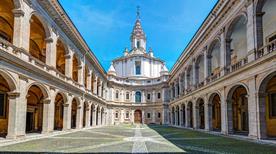
The palace has Renaissance origins, but it was deeply restored during the '900. The beginning of construction dates back to the last years of the '400 and was completed towards the Metta of the '500. There are a lot of criticism regarding the construction of the building, the windows on the first floor are insufficient and poorly positioned with the consequence of low light in the rooms. The two magne classrooms also suffered a lot of criticism for their structure. Currently the building is the seat of the Faculty of Law of the University of Pisa.

Palazzo Gambacorti
Pisa
(18 Km)
The building was built during the last years of the '300 and is one of the most famous palaces on the Lungarno. The engineer T. Pisano was commissioned to build this building on behalf of the homonymous family. The main facade is made in Gothic style with delicate mullioned windows while the back facade is typical seventeenth-century with very tall windows and a beautiful portal equipped with the Medici coat of arms. Inside you can see frescoes depicting the maritime victories of Pisa.
Palazzo Agostini
Pisa
(17 Km)
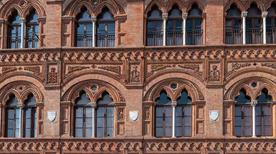
The palace is one of the most beautiful on the Pisan promenade, owned by the Agostini family since the end of the '400. The facade of the building is decorated with anthropomorphic terracotta elements and heraldic symbols and is one of the examples of Gothic architecture in Tuscany. In addition to the coat of arms of the Agostini, in the palace there are also the coats of arms of the other families who lived in the palace.

Ospizio dei Trovatelli
Pisa
(17 Km)

Palazzo Reale
Pisa
(18 Km)
The palace was erected in the late '500 on commission of Francesco I de' Medici. The Florentine master B. Buontalenti was commissioned for the project. The building is located in a prestigious area of Pisa where many centuries before the Marquises of Tuscia lived. In addition, it was Pietro Leopold I's favorite home to spend the winter. The restorations that took place during the centuries gave it its current appearance.

Palazzo da Scorno
Pisa
(18 Km)
The building is located in the center of Pisa and has medieval origins. According to reports and documents found, the building dates back to the twelfth century, however, only in the 17th century, it was transformed into a building. On the facade we can observe two large arches of Verrucana stone. During the reconstruction of the 1960s, the two mullioned windows were rebuilt on the ground floor, while the central column on the first floor was replaced by another with a particular and characteristic marble capital.

Palazzo Quaratesi
Pisa
(18 Km)
Via Santa Maria, in Roman and Medieval times, was one of the main streets that connected Piazza Duomo with the River Arno. In the Medici and Lorraine times in Via Santa Maria many kind residences were built, among which the Palazzo Quaratesi, an important example of Pisan Manneristic architecture. The Quaratesi Palace was designed by Pietro Francavilla.
Palazzo delle Vedove
Pisa
(18 Km)
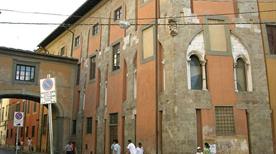
The palace takes its name from its function at the time, it was used by the widows of the famous Medici family. The origins of the building are much older, in fact, from the reports found, its construction dates back between the twelfth and fourteenth centuries. It has an elongated shape with a rectangular base. Only a few elements of the ancient building are still visible, for example a quadrifora in marble cut in the center and six spans visible on the facade of Via Santa Maria.
Arsenale Mediceo Lungarno Ranieri Simonelli
Pisa
(18 Km)
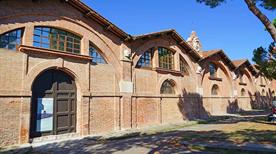
It was built at the behest of Cosimo I de' Medici, who wanted to build an arsenal for the ships of the powerful Tuscan fleet. It was composed of eight naves on average 60 meters long, 8 meters high and about 10 meters wide. Today in the restored area there are some exhibitions that present a part of important archaeological findings. These are shipwrecks and furnishings of the ancient Etruscan and Roman port area located in the area of the current railway station of Pisa - San Rossore.
Gabinetto di Disegni e Stampe
Pisa
(18 Km)

Statua di Kinzica
Pisa
(18 Km)
The Kinzica statue is a bas-relief of a sarcophagus from the 3rd century AD Kinzica de' Sismondi was the daughter of a nobleman who according to legend, saved the city of Pisa from the invasion of the Saracens. The face of the statue was reworked in the twelfth century, when it was decided to dedicate the statue to Kinzica De' Sismondi.

Palazzo Toscanelli
Pisa
(18 Km)
Palazzo Toscanelli has sixteenth-century origins with an elegant white façade and a marble rusticated portal. It was commissioned by the Lanfranchi family in the '500, on a project by Michelangelo, even if the documents that testify to it have not yet been found. The present appearance is given to her by the renovation of the '800. In 1821 the palace hosted the famous English poet George Byron. It is currently the headquarters of the State Archives.

Palazzo Ruschi
Pisa
(17 Km)
The current palace was erected on very ancient structures, testify to this by the large columns still well preserved in the ground floor. Until 50 years ago, it was inhabited by the Ruschi family, the only owners of the building.
Palazzo Roncioni
Pisa
(18 Km)
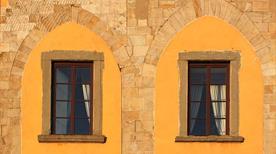
In this historic building they lived important figures, including Vittorio Alfieri, Madame de Stael and Ugo Foscolo who fell in love with the beautiful Isabella Roncioni here, but also suffered his disappointment of love that I inspire him to write the book 'Last Letters by Iacopo Ortis'. In the main floor we can observe the frescoes by the painter Tempesti and a marble fireplace by the sculptor Baratta. This building is the only one on the Lungarno that preserves the airport on the river.
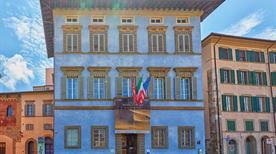
Palazzo Blu
Pisa
(18 Km)
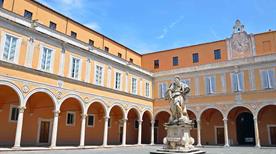
Palazzo dell'arcivescovado
Pisa
(17 Km)
The palace dates back to the '400 and stands on the remains of an even older building, dating back to at least the twelfth century. It is located in Piazza dell'Archbiscovado and, certainly, it is one of the most impressive palaces in Pisa. The style is typically Florentine, and has a simple façade decorated with exposed stone profiles on the edges and windows. In the inner courtyard you can see the busts of some Archbishops of Pisa and, at its center, a statue of the 18th century depicting Moses.
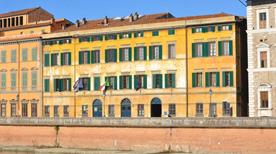
Palazzo Vitelli
Pisa
(18 Km)
Palazzo Vitelli, like many other palaces that overlook the Arno, is the result of the merger from the destruction of the age-tower houses built before the eleventh century. During the restoration of the building, archaeologists found the remains of at least six tower-houses typical of the Middle Ages, some of which are still visible in the courtyard. Currently the building is home to the offices of the University of Pisa.

Palazzo dell'orologio Torre del Conte Ugolino
Pisa
(17 Km)
Located on the north part of the Piazza dei Cavalieri, is the current home of the Library of the Scuola Normale Superiore. The building was altered a few times during its history - most of it was finished in 1605-1608, while the small bell tower on top was added in 1696.
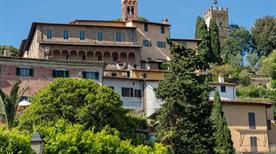
Castello
Buggiano
(19 Km)
Medieval village with castle and Palazzo Pretorio dating back to 1200

Sculture d'Acqua
Montecatini Terme e Tettuccio
(23 Km)
The water vital element of Montecatini Terme is celebrated by numerous fountains not only inside the thermal baths, but also along the arteries and in the main squares. The tourist is welcomed from the entrance of the town with the Fontana Mazzoni, in the square of the Railway Station. Then continue with the Guidotti Fountain in Piazza del Popolo and with that of Shingu. The route ends with the Pol Bury Fountain located at the top of the thermal parks.

Chiesa di Santa Maria della Spina
Pisa
(18 Km)
In the small Gothic church, situated on the banks of the Arno, was once kept a thorn from the crown to the crucifixion of Christ. The church of the sixth century has been restored many times.
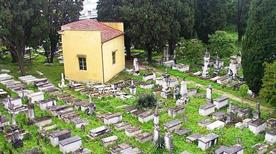
Cimitero Israelitico Largo Cocco Griffi
Pisa
(17 Km)
The Jewish cemetery of Pisa dates back to the second half of the 17th century, this land was granted by the Grand Duke of Tuscany in exchange for the one, not far away, where the Jewish cemetery was initially hosted. In the cemetery there are also numerous tombs of Jews from Spain and Portugal.
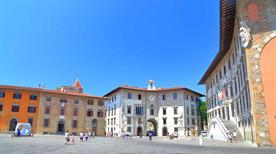
Piazza dei Cavalieri
Pisa
(18 Km)
The square houses the Scuola Normale di Pisa. The Carovana palace has been built according to plans by Giorgio Vasari. In the square one can find the church of Santo Stefano dei Cavalieri, an equestrian statue of Cosimo I, and the Clock Tower
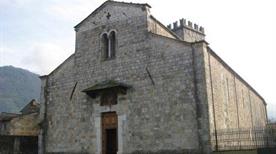
Pieve di Camaiore
Camaiore
(16 Km)
The Parish Church of Camaiore was built in the nineteenth century. The building, after some restorations, took on a Romanesque style. Only in the 1930s, the original façade was represented, which we can see to this day.
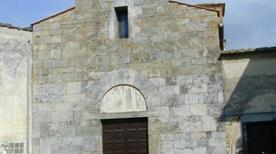
Chiesa di San Jacopo in Zambra
Cascina
(18 Km)
The Church of San Jacopo in Zambra was built in the 9th century in the homonymous locality. It represents one of the best preserved churches located in the Italian territory. It still presents the structure of the single internal apse classroom as well as the ancient traces of the flooring.
Sinagoga
Pisa
(18 Km)
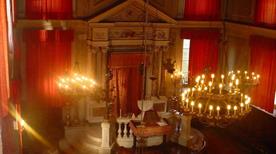
The Synagogue of Pisa dates back to the beginning of the 17th century. It was first modified in 1785 and completely renovated in 1863 by Marco Treves. Once the facade was built, the interior was also renovated, maintaining, however, the same division of spaces.
Chiesa di Santo Stefano dei Cavalieri
Pisa
(17 Km)
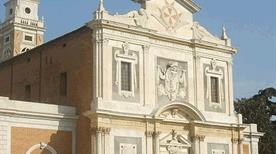
It was built to a design by Giorgio Vasari in 1565-68 as a church of the Knights of Santo Stefano.
Chiesa di San Rocco
Pisa
(17 Km)
Ex Convento delle Benedettine Lungarno
Pisa
(18 Km)

Borgo di Montecarlo
Montecarlo
(14 Km)
The historic center of Montecarlo, dating back to 1333, is located on an isolated hill and is surrounded by a beautiful city wall. The Monte Carlo hill is particularly famous for the production of remarkable quality oil and fine DOC wines.

Cittadella e Arsenale Repubblicano
Pisa
(18 Km)
The Citadel of Pisa is located in the part of tramontana and was an ancient fortification erected at the end of the city walls, towards the sea. In the early fifteenth century, the Guelph Tower was built. Near the Citadel, we can still admire the remains, the Republican and Medici arsenals, which are brick arches built in the defense wall along the Arno. Finally, we also find the fourteenth-century buffered arches of the sheds.

Museo Nazionale degli Strumenti per il Calcolo
Pisa
(18 Km)
The Museum of Calculation Instruments was founded in 1989 with the aim of preserving and restoring the scientific instruments received up to us. The exhibition is divided into three parts: scientific instruments, calculators and large calculators. The exhibition is accompanied by exhaustive explanations that help the visitor to better understand the route.
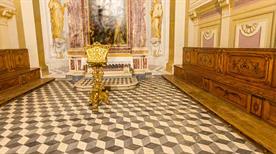
Museo Nazionale di Palazzo Reale
Pisa
(18 Km)
The Museum of the Royal Palace, residence of the dynasties of the Medici and of the Lorraine, it preserves collections, some owned by the Medici-Lorraine and other by private individuals. A rich collection including paintings by Italian artists of the fifteenth and the nineteenth century.
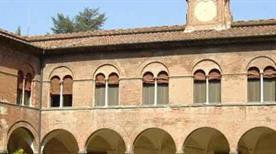
Museo Nazionale di San Matteo
Pisa
(18 Km)
Interesting is the story of the collections of this museum. This is the culture of the city to recover antiquities from the early eighteenth century and the collections of of Cemetery of the Accademia di Belle Arti in 1816.
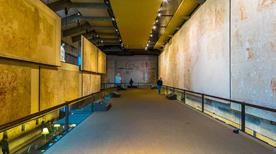
Museo delle Sinopie
Pisa
(17 Km)
It is located inside the New Hospital Building (1257).
The preparatory drawings (large preparatory drawings: the original idea the masters) have been found beneath the frescoes of the Cemetery. They are useful for the study of masterpieces.

Museo ed Orto Botanico
Pisa
(18 Km)
The Museum is housed in an eighteenth century palace in the botanical garden. The garden has a collection of plants and trees also of historical significance, with a magnolia planted in 1787.
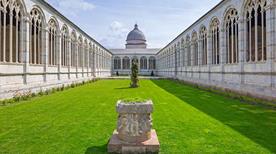
Camposanto Monumentale
Pisa
(17 Km)
The Cemetery is converted into an art gallery with the most precious heritage:
thefrescoes by artists such as Piero di Puccio, the "Master from Triumph of Death", andpreparatory drawings or preliminary sketches of the masters.

Museo Anatomico della Facoltà di Veterinaria
Pisa
(18 Km)

Gipsoteca del Dipartimento di Scienze Archeologiche
Pisa
(18 Km)
The Gipsoteca of the Department of Archaeological Sciences was established during the nineteenth century at the headquarters of the University of Pisa. It houses a collection of chalks wanted by Gherardo Gherardini, which was later increased by Lucio Mariani and Silvio Ferri. The installation was transferred to the church of San Paolo all'Orto proposing finds ranging from the Greek archaic age to specimens of the Hellenistic and Roman ages.
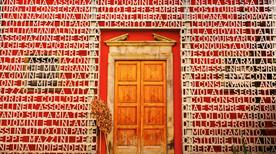
Domus Mazziniana
Pisa
(18 Km)
Domus Mazziniana is the building where the Italian politician, philosopher and journalist Giuseppe Mezzanini lived. The main purpose of the building is to spread and deepen the studies and works of the character through the collection of documents belonging to his life. The house was declared a national monument on 20 April 1910.

Collezioni Egittologiche dell'Università di Pisa
Pisa
(18 Km)
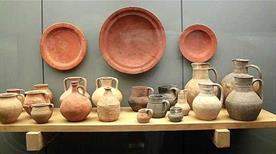
Antiquarium
Massarosa
(13 Km)
The first discoveries of the archaeological area were made in the 18th century. The Civic Antiquarium Museum of Massarosa is currently located in a former primary school and presents: fragments of pottery from the 11th to the 16th century, finds, coins and architectural fragments from Roman times, ceramics medieval and renaissance. Currently, the museum is closed to the public for reasons of restoration.
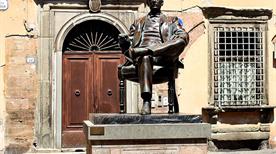
Casa Museo dei Puccini
Pescaglia
(14 Km)
The House Museum of Puccini is located inside the ancient sixteenth-century house that belonged to the ancestors of the well-known Italian composer Giacomo Puccini, where he spent his childhood and youth. Precisely for this reason the Museum aims to exhibit materials and relics that tell in chronological order the life of the great artist.
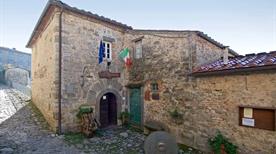
Museo del Castagno
Pescaglia
(14 Km)
The first collection of the Museum that testifies to the cultivation of chestnut was exhibited in 1979. Since then, several tools made from chestnut wood have been collected and have been exhibited in two sections. The area dedicated to the cultivation of chestnut for food was very interesting.
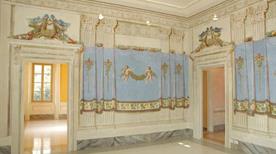
Pinacoteca Lorenzo Viani
Viareggio
(20 Km)
The Lorenzo Viani Art Gallery is located inside Villa Paolina on the ground floor. The Villa Paolina was named so in honor of Paolina Borghese Bonaparte. It was built in 1822. It is one of the most important in the area and currently houses a large collection of works, about 64 pieces on display, related to contemporary figurative art, paintings and sculptures. The Art Gallery is located in four rooms. All the furniture in the room is very nice with furniture from the period. Admission to the art gallery is free of charge for all interested parties.
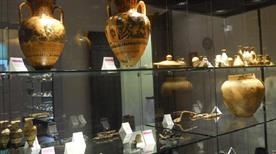
Civici Musei di Villa Paolina Bonaparte
Viareggio
(20 Km)
Villa Paolina was named so in honor of Paolina Borghese Bonaparte. It was built in 1822 and is one of the most important villas in the area. It houses a large collection of prehistoric archaeological objects from the area of north-western Tuscany. Neanderthali finds are of great interest. In addition, the Museum also presents the art and history of popular culture.
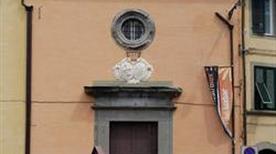
Cinema Teatro Lux
Pisa
(17 Km)
From the chapel of SS. Salvatore, built at the beginning of the '300 arose the headquarters of the Cinema Teatro Lux. Depending on the show or event it completely changes the environment of the theater. An active center of research and production of the arts.

Stazione Leopolda
Pisa
(18 Km)
Once the first railway station of the Grand Duchy, later used as a vegetable market.Today it hosts conferences, trade fairs, exhibitions, shows with a room-tests for theaterand dance. A real center for cultural activities.
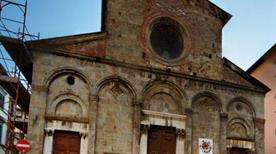
Teatro Sant'Andrea
Pisa
(18 Km)
The church of Sant'Andrea dates back to 1104 and is located in Via Palestro in Pisa. The church was damaged during World War II, was restored and reopened to the public only in 1948. It is currently home to the Teatro Sant'Andrea, and it hosts many theatrical performances.

Teatro Verdi
Pisa
(18 Km)
it is considered one of the most prestigious in Tuscany. The Teatro Verdi it continues with its traditional program of drama, opera, ballet and concerts which combines to many special projects today.
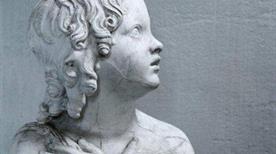
Museo della Figurina di Gesso e dell' Emigrazione
Coreglia Antelminelli
(23 Km)
The Museum of Chalk Figurine and Emigration was established in 1975 at the behest of the Municipal Administration. It was born as a result of the migration phenomenon of the sale of chalk figurines that took place in the Serchio valley between the 18th and 20th centuries. A large section is dedicated to eighteenth-century figurines and copies of Greek-Roman sculptures of great value.

Museo dell'Istituto di Anatomia Umana Normale
Pisa
(18 Km)
The Museum of Human Anatomy was established under Leopold II of Lorraine. Inside it houses collections of osteology, syndesmology, splanchnology, angiology, archaeology such as mummies and funeral kits and wax models. Some of these findings are very important for research and study.

Centro Arte Moderna
Pisa
(18 Km)
it was born in 1976 thanks to its founder Nilvia Sbrana. It hosts temporary exhibitions of contemporary art and a permanent exhibition of artists that are worth seeing!
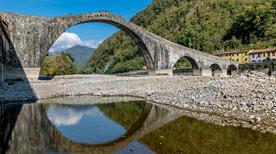
Ponte del Diavolo
Borgo a Mozzano
(15 Km)
The Devil's Bridge or Ponte della Maddalena is located from the 14th century on the Serchio River. It is said 'Devil's Bridge' thanks to the legend that saw its builder come to terms with the devil. These agreements provided that the bridge could be completed in one night, as long as the builder brought him in return the first soul that crossed it. I ran to report this pact to the parish priest of the country, the builder devised a ploy that saw a dog show up first, who was thrown into the waters of the river by the Devil. The story is still handed down that the dog is seen passing on the bridge in October evenings.
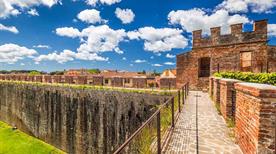
Mura antica
Pisa
(18 Km)
The wall is still visible in some of its parts. The main area of the city, around the Piazza del Duomo is connected to it. The Door of Parlascio is the most beautiful of the city walls
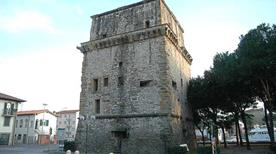
Torre Matilde
Viareggio
(19 Km)
Torre Matilde, located in Viareggio, is of sixteenth-century origins. In its structure, military elements are easily noticeable, that is, for the purpose for which it was built. It took its name from Matilde di Canossa and construction began precisely in his honor. Over the years he underwent several restorations to get to his current appearance, the result of the work of 1982. Currently, it is home to various cultural activities in the area.

Torre dell'Orologio
Vicopisano
(19 Km)
The Clock Tower was built during the twelfth century. The structure has a remarkable height, 25 meters, and is used as a bell tower, despite all the damage it has suffered over the centuries. The clock was joined to the building a few centuries after construction, and was modified several times.
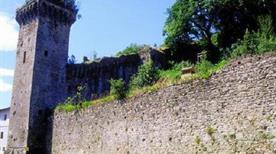
Torre del Soccorso
Vicopisano
(19 Km)
The Torre del Soccorso, part of the Rocca Estense of Lugo, represents an important cultural and architectural heritage. The tower has performed several functions over the centuries. Currently, the building houses the Municipal Offices inside it.
Museo di Arte Sacra
Bientina
(20 Km)
The museum of sacred art has collections of sacred furnishings in noble metal ancient from the 16th — 17th centuries. It opened on 4 December 1993 and has over 120 exhibits of fine works of art. It also has precious liturgical vestments from the period between the XVI-17th centuries. In addition, the 20 wooden relics that are dated at the metta of the 18th century.
Torri e Mura Nord
Vicopisano
(19 Km)