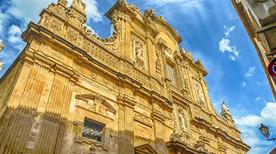
Cattedrale di Sant'Agata
Gallipoli
(15 Km)
Dating back to the 17th century, it is a Baroque church named after Sant'Agata. It is located in the center of the island.
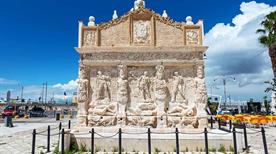
Fontana greco romana
Gallipoli
(15 Km)
The Roman Greek Fountain dates back to the 3rd century BC although many historians believe it was built in the Renaissance age. It is located near the Gallipoli Bridge that connects the old city with the new village. The main façade is five meters high and has four caryatids supporting the lintel. In the bas-reliefs carved with local stone are represented the metamorphoses of three Greek mythological figures: Biblide, Salmace and Dirce. The other façade was used as the support of the main one depicting the carved coat of arms of Gallipoli.
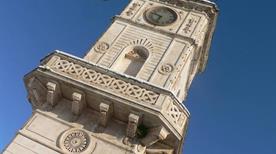
Torre dell'Orologio
Gallipoli
(16 Km)
An important monument of the historic center of Gallipolino is the Clock Tower. Built around the early 1700s the clock was subsequently incorporated. The structure consists of a small sailing bell tower where two bronze bells were originally placed, all surmounted by two coats of arms, the Bourbon one and that of the city of Gallipoli.
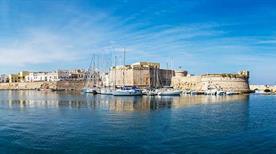
Castello Angioino
Gallipoli
(15 Km)
Already built on pre-existing Roman fortifications from the eleventh century, it was rebuilt in the thirteenth century in the Byzantine era. It was remodeled several times by the conquistadors who followed one another over the centuries.
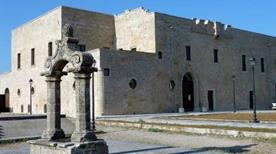
Castello Baronale
Collepasso
(11 Km)
The building was built at the end of 1500, by the will of Baron Pietro Barone Massa. Currently, the building is owned by the Municipality.
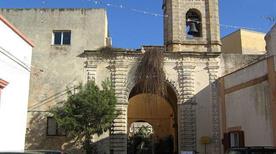
Castello di Montesardo
Alessano
(22 Km)
The castle was built between the 15th and 16th century and is located in the oldest part of the country. The building underwent several transformations, it was first purchased by the Romasi barons, then, at a later time by the Vocationist Fathers. It is currently used as a nursing home for the elderly.
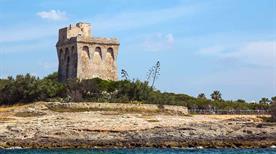
Torre Sabea
Gallipoli
(15 Km)
Sabea Tower or Old Tower was built between the 16th and 17th centuries with the function of defending the coast from the threats of the Saracen pirates. Located north of Gallipoli, it became a military garrison in 1570 with the task of signaling the arrival of foreign ships.
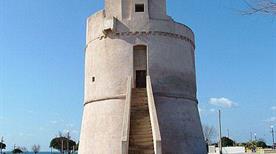
Torre Suda
Gallipoli
(8 Km)
Torre Suda was built around the 16th century and its name comes from the fact that the tower, after having stopped military functions, was used as a water cistern for the inhabitants of Gallipoli. The Tower after the breathability seemed to sweat, hence the name. From this tower, the homonymous location was also named, which is a popular destination for many tourists during the summer.
Torre Alto Lido
Galatone
(18 Km)
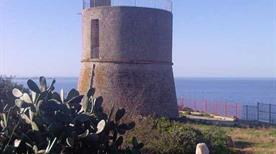
The Tower of Alto Lido was built in 1565 by Viceroy Don Pietro da Toledo. Since it was about 71 meters above sea level, the tower had the function of controlling the coast. The building has a truncated conical structure, with a cylindrical plan. Inside there are two rooms and a wall staircase.
Masseria del Fano
Salve
(19 Km)
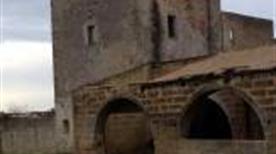
The farm of Fano stands at the top of the eastern side of the Canal, a short distance from the archaeological site of the “Chiusa”. It dominates the entire area and offers panoramic views across the surrounding area.
Villaggio Protoappenninico di Spigolizzi
Salve
(20 Km)
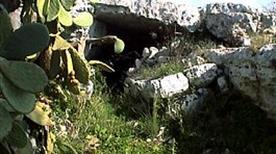
The ProtoApennine Village of Spigolizzi was created In the 15th century to defend itself against the attacks of the Turks. The Salvesi built a small but well-equipped Fortilizio, thanks to which they valiantly resisted the assaults of the Barbarian privateers.
Torre Pali Diroccato
Salve
(17 Km)
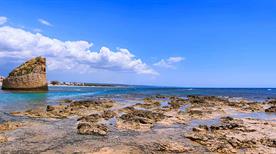
Torre Pali is one of the numerous coastal watchtowers built in the 16th century by Charles V to defend the Salento territory from the invasions of the Saracen pirates. At the time of construction, the tower was on the mainland, but due to coastal erosion, it is now completely surrounded by sea waters.
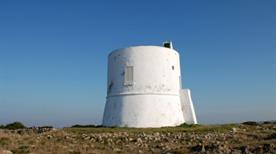
Torre del Pizzo
Gallipoli
(9 Km)
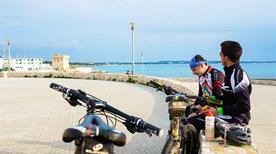
Torre San Giovanni la Pedata
Gallipoli
(13 Km)
Torre San Giovanni la Pedata was built around the 16th century in Lido San Giovanni di Gallipoli. From the beginning he had the function of defending the coastal stretch by the Saracen raids. It is characterized by a truncated pyramidal base ending in a square plan. It is accessed inside by a small door and consists of two floors communicating through a staircase to the wall.
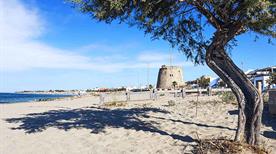
Torre Mozza Diroccato
Ugento
(13 Km)
The Mozza Tower is located in the town of Salento in the province of Lecce. The building was built in the 16th century on commission of King Charles V. During World War II, the tower was used by soldiers as a machine gun station. Over the years, this was restored.
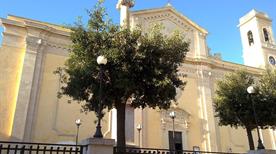
Chiesa Madre di San Nicola Magno
Salve
(19 Km)
The Mother Church of St. Nicholas the Great dates back to the 6th century; restored and expanded for the first time between 1577 and 1593, it assumed its present appearance in 1672. It was most likely built on the ruins of a temple dedicated to the god Janus, the ancient church, dedicated to SS. Salvatore, corresponds to the portion of the span that currently precedes the high altar.
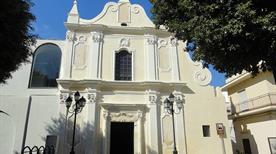
Chiesa di Sant’Antonio da Padova
Salve
(20 Km)
The Church of Saint Anthony of Padua was built in the second half of the twentieth century, expanding the ancient chapel of Santa Maria. The facade, in Lecce stone, has a round arch entrance surmounted by a central rose window and a large cross. The interior houses two frescoes from the second half of the sixteenth century representing the Annunciation and the Last Judgment.
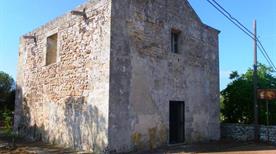
Chiesa di Santu Lasi
Salve
(20 Km)
The Church of San Biagio, locally known by the name of Santu Lasi, has a sober facade, with central portal and window, on which the coat of arms of the municipality of Salve is carved. The interior houses a stone statue of San Biagio and frescoes from various eras.
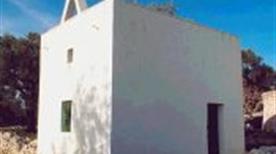
Cappella di Sant'Anna
Salve
(19 Km)
The chapel of Sant'Anna, built in the late 18th century by the Alemanno family, is located on the road that connects the town to the marina of Pescoluse. It is characterized by the simple architectural lines typical of rural buildings. Inside you can admire an interesting fresco depicting Sant'Anna.
Cappella del S.S.Crocifisso
Salve
(20 Km)
The Chapel of the SS Crucifix was built in 1593 by Don Ferrante Delli Falconi. This is characterized by its sober architectural lines, typical of rural religious buildings. Currently, the chapel is completely bare inside.
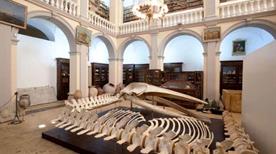
Museo Civico "E. Barba"
Gallipoli
(15 Km)
The “E. Barba” Civic Museum was founded in 1823 by Carmine Fontò who offered the first public donation of his books. Below also the Dominican and Franciscan convents of the city donated their collections. The Museum was subsequently entrusted to Emanuele Barba who also set up a zoological cabinet there.
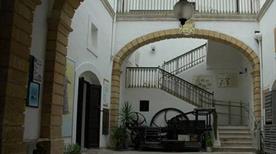
Quadreria "E. Giannelli"
Parabita
(8 Km)
The “E. Giannelli” Quadreria is located within the rooms of Palazzo Ferrari. The museum exhibits forty-three paintings and ten sculptures. The works belong to various authors such as Vincenzo Caprile, Giuseppe Costa, Ennio Marzano, Camillo Miola etc. in this collection are located some beautiful canvases belonging to Giannelli, where they come represented the marinas of the Gulf of Naples and Salento.
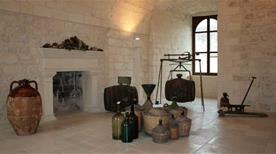
Museo del Vino
Parabita
(8 Km)
The Wine Museum is located inside a millstone, built towards the end of the nineteenth century in the historic center of Parabita. The exhibition traces, through instruments and ancient objects, the cycle of wine production. You can then admire demijohns, barrels, furates, bascules and other numerous tools that are useful in winemaking.
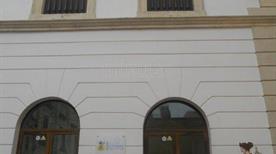
Museo Civico Archeologico "S. Zecca"
Ugento
(6 Km)
The “S. Mint” Civic Archaeological Museum is spread over two floors and welcomes rich testimonies and materials of Paleontology and Messapian civilization of the area. The most important work is represented by a faithful copy of the famous statue of Zeus, found in the 1960s in Ugento.