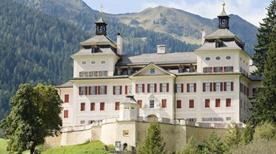
Museo Provinciale della Caccia e della Pesca
Racines
(30 Km)
This very special museum is located inside the Baroque castle of Wolfsthurn. The exhibition is divided into three floors that provide information on the art of hunting and fishing. In the cellars there is a space dedicated to children, in which they can learn by playing so many curiosities about the animal world.
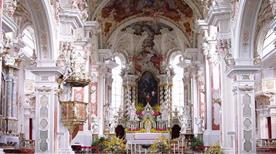
Pinacoteca dell'Abbazia di Novacella
Varna
(10 Km)
The Art Gallery is located inside the Abbey of Novacella, which was built in 1142. Inside the picture gallery there are some Gothic tables and altars created by master Friedrich Pacher. Of great importance for their valuable value are the manuscripts, liturgical objects and musical instruments. The Art Gallery is open to the public and also organizes guided tours.
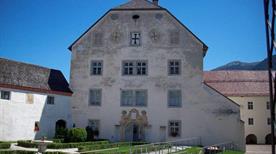
Museo "H. Multscher" e Museo Civico
Vipiteno
(23 Km)
The “H. Multscher” Museum is located next to the Parish Church of 'Our Lady of the Swamps'. Inside it preserves the famous doors of the altar by Hans Multscher and some pieces belonging to the former Civic Museum, among which we can admire some coats of arms and chests belonging to the ancient families of the Vipiteno. Of great interest are the plates of Hans Multscher, which were lost during the fascist period, and only in 1959 they were returned to the city of Vipiteno again. Today, they are among the most precious objects of the Multscher Museum.
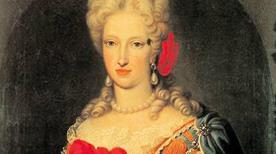
Museo Civico
Chiusa
(23 Km)
The Civic Museum is located in the rooms of the former Capuchin Convent of Chiusa, which was reopened to the public in 1992. The foundation of the Museum is due to the Queen of Spain Maria Anna who wanted to fulfill the desire of her father, a Capuchin friar native of Chiusa. The most significant part of the Museum is that represented by the Treasure of Loreto composed of donations from art collections by Italian, Flemish and Spanish artists.
Museo Etnografico
Brunico
(18 Km)
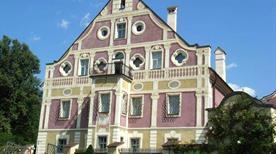
The Ethnographic Museum turns out to be one of the oldest provincial museums in South Tyrol. The museum trail traces the stages of everyday rural life and offers the opportunity to explore the different South Tyrolean walks of life.
Castello di Tures
Campo Tures
(30 Km)
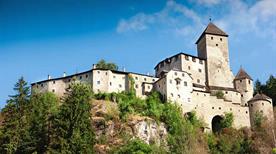
Restored after the second world war, the Castle Tures offers to tourists all its medieval splendor.Is located in Val di Tures, near the homonymous village Campo Tures.
Museo Civico di Brunico
Brunico
(17 Km)
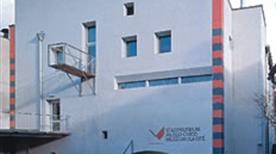
The Brunico Civic Museum is centrally located at the foot of the castle hill. A rich exhibition program of modern and contemporary art enlivens the museum activity. Five to seven exhibitions a year present artistic positions that mainly refer to the regional environment. Graphics, painting, sculpture and photography alternate to meet the interests of a wider audience.
Castello Vescovile
Brunico
(17 Km)
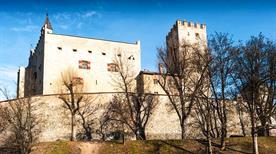
Wherever you approach the city, the first thing you notice is the great Episcopal Castle. Located on an easily accessible hill, the manor overlooks the houses of the old town. In the right wing are the bishops' rooms, in the left wing the administrator's apartment and, originally, also the staff rooms.
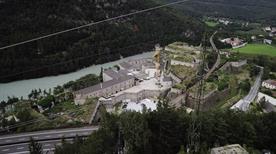
Forte
Fortezza
(9 Km)
The fort was built between the 18th and 19th, during the expansion of Napoleon. The building is part of the Austrian fortifications system on the Italian border. The fort, being located near the river, was also used for the transport of goods.
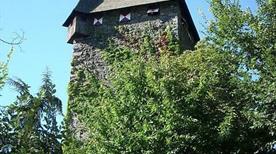
Castello Branzollo
Chiusa
(23 Km)
The Branzollo Castle or Torre del Capitano is located in the historic center of Chiusa. It was built in the thirteenth century and then, between the fourteenth and seventeenth centuries, it served as customs. It was the seat of the Burgavrio of Prince Bishop during 1467. Destroyed by a fire in 1671, it was completely rebuilt maintaining the structure and characteristics of the past.
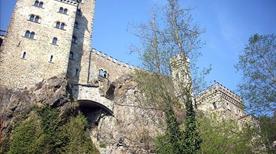
Castello Tina o Gernstein
Chiusa
(21 Km)
The Tina or Gernstein Castle was built in the late twelfth century by Enrico di Garro. It is known by the local population as 'Schloss Gernstein' and has a structure consisting of small towers with crenellated and well-defined walls. Its function was to control the ancient road that connected Bolzano to Brixen. After a period of decay, the Castle was purchased by Friedrich von Gerstein — Hohenstein, who gave the building a romantic imprint.
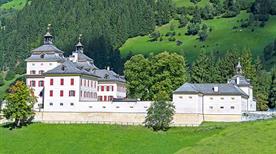
Castello Wolfsthurn
Racines
(30 Km)
The castle was built in the 12th century by the Wolf family, but its present form was given to it in 1727. These works have transformed him into a stately building of Baroque workmanship. On its facades, 365 windows open.
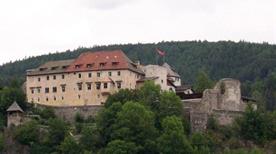
Castel Badia
San Lorenzo di Sebato
(13 Km)
The ancient construction dates back to the 10th century AD and was built at the behest of Count Otwin von Lurngau. Initially it had the function of a courthouse, but then it was transformed into a monastery and was donated to the Benedictine nuns. Unfortunately, there have been some damages over the years, which changed the original structure. The castle is located on a hill and is easily visible.
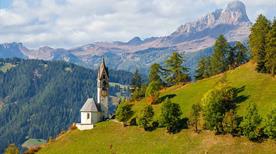
Chiesetta di Santa Barbara
La Valle
(23 Km)
Symbol of The Valley, this church was built in 1490 in a prime position to dominate the surrounding valleys, with a great view of all the beautiful peaks of the Dolomites . On the outside wall there is a painting representing the crucifixion.
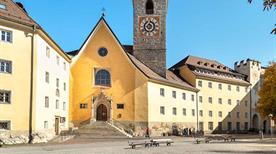
Convento delle Orsoline
Brunico
(16 Km)
The Ursuline Convent, built at the beginning of the fifteenth century, in Gothic style, is located near the Gate of the Ursulines, through which you access the city. In the past, it was home to customs where the goods were weighed and stored. The tower that overlooks this door is decorated with different images and coats of arms, the most important of which, probably the work of the painter Hans da Brunico, was partially damaged during the enlargement works of the arch of the door in 1758. The Ursuline Crypt is the oldest part of the whole convent building, and dates back to approx. 1410.
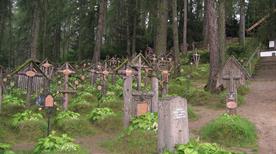
Cimitero di Guerra
Brunico
(17 Km)
The Austro-Hungarian Cemetery of Bruneck is located in a wooded area. During the First World War in Bruneck, several military hospitals were housed in which numerous wounded, sick soldiers and prisoners of war of many nationalities died, who were then buried in this cemetery.
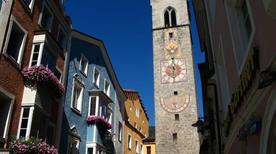
Torre delle Dodici
Vipiteno
(24 Km)
The Tower of the Twelve, considered a symbol of the city, was built between 1468 and 1473. The building is located in the center of the city and since 1472 divides the old city from the new one. The 46 meters high tower was built in the Gothic style. In the courtyard of the town hall there is a stele of the God Mitra and also a Roman milestone. The tower continues to maintain its splendor, which distinguishes it from other buildings.