
Museo delle cere
San Marino
The museum collects more than 40 scenes from the history of San Marino and Romagna in general.
Museo delle Curiosità
San Marino
Among strabismus glasses, the longest nails in the world, flea traps and 60 cm hooves to win the high tide of Venice, the Museum of Curiosities offers a unique collection of crazy inventions and rare items in a large space of 600 square meters. As if that were not enough, the shuttle service active in the summer months is offered by an authentic Ford courier from 1913.
Museo delle armi antiche
San Marino
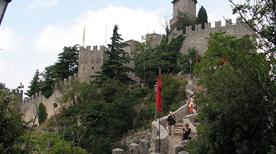
It is located in the Second Tower and is opened since 1956 and houses a rich collection of weapons taken over the years by collectors: it is in fact possible to admire more than 2000, divided into 4 thematic sections. On the first floor are the Evolution of Weapons in Auction, Armor and Armor Parts, Evolution of Firearms and White Weapons and Fire Weapons 18th - 20th century.
Museo di Stato
San Marino
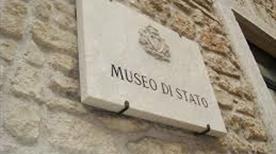
The State Museum was formed in the 19th century following many donations initially promoted by Count Luigi Cibrario.
Museo dell'Auto d'epoca
San Marino
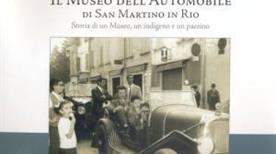
In Falciano it is possible to admire Maranello Rosso, the museum of vintage cars (and more) branded Ferrari. Founded in 1989, it has a gigantic headquarters of about 3000 square meters and wants to be a narration of the history of the brand, both as a race car and as a road car, starting from the life of Enzo Ferrari. The collection is enriched by the Abarth section, which contains 40 cars by the Italian-Austrian designer.

Museo delle Armi Moderne
San Marino
It is housed in the rooms of Palazzo Manzoni Borghese, in front of the Basilica of the Saint. It is home to more than 2000 firearms from World War I and II. In the collection, which can be visited from 15 June to 15 September, there are Italian, European weapons and more. Permanent exhibition of San Marino handicraft: very interesting for lovers of handicraft, this permanent exhibition offers a rich collection of artifacts typical of the manual work of the centuries-old artisan tradition of the village of San Marino.

Statua della Libertà
San Marino
Located in the homonymous square, in front of the Government Palace, is a statue in white marble of Carrara, donated to the Republic by the Countess of Berlin Otilia Heyroth Wagener. Freedom is personified in a crowned warrior who progresses proudly, her right hand stretched forward and her left carries a flag. The statue is recognizable on the 2 cents coin.
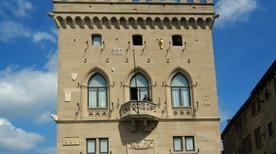
Palazzo del Governo
San Marino
Known by the name of Palazzo Pubblico, it is the place of official ceremonies and institutional and administrative bodies. It stands on the ground of the old building, the Domus Magna Comunis, knocked down at the end of the '800. Designed by the architect Francesco Azzurri and erected between 1884 and 1894 with an inaugural speech by Carducci, it traces the austere style of the municipal palaces of 1300 and is depicted on the 2 euro coin.
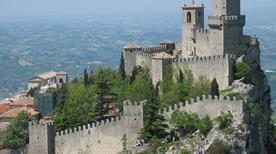
Castello di San Marino
San Marino

Basilica di San Marino
San Marino
It stands in Piazza Domus Plebis, where there was, already in the fourth century, a parish church dedicated to the Saint. After the demolition, in 1807, it was erected in neoclassical style by the architect Achille Serra. The high altar is adorned with the statue of the Saint by Tadolini (student of Canova) and on his right, in a case, his skull is preserved. The Basilica is depicted on the 10-cent coin.
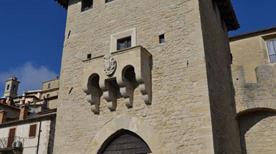
Porta di San Francesco
San Marino
Built in 1361 and the subject of many changes and modifications throughout history, it is an ancient guard post of the Republic of San Marino. Under the door are readable inscriptions that invited strangers not to enter the city with weapons, so as not to run into severe punishments. On the back of the door are the coats of arms of San Marino and the Feltresca Family.

Santuario Santa Maria delle Grazie
Rimini
(14 Km)
The Sanctuary of Santa Maria delle Grazie dates back to the fourteenth century. The origins of the Sanctuary come from a miraculous and legendary event that happened on top of a hill, where a shepherd carved a Madonna in the body of a tree while grazing the flock. He failed to finish his face and for this he was helped by the angels. So in the miracle hill the Sanctuary and a chapel with the name of Madonna delle Grazie was built. The simulacrum was later taken to Venice where it is still kept in the church of San Marziale.
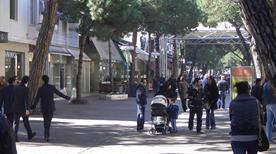
Viale Ceccarini
Riccione
(18 Km)
Viale Ceccarini is the beating heart of the social life of Riccione: shopping street, events, fairs, wellness centers, the most varied restaurants, as well as the lush nightlife... many events that involve the city avenue during the summer: there are in fact concerts, shows, and the now famous “Pink Night” and the engaging “Festival del Sole”.
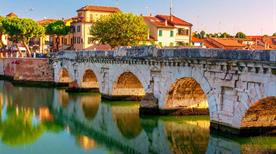
Ponte di Tiberio
Rimini
(17 Km)
Built in Roman times its construction was over in 21 d. C. during the reign of Emperor Tiberius. In sober and solemn style, built in Istrian stone,it consists of five arches of different sizes.

Anfiteatro romano
Rimini
(17 Km)
Elliptical in shape, it was built peripheral to the city center in the second century AD. Of large size, it could accommodate up to 10,000 spectators. An amphitheater that was initially used mainly for gladiatorial shows.
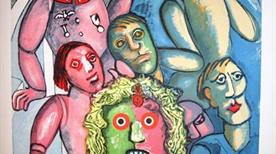
Biblioteca Gambalunghiana
Rimini
(17 Km)
Opened in 1619, at the bequest of Alexander Gambalunga it is the first public library of the peninsula. Suggestive are the two magnificent globes wanted by the first librarian Michele Moretti with the heavenly terraqueous dated 1622.
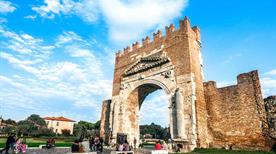
Arco d'Augusto
Rimini
(17 Km)
The oldest Roman arch of the peninsula. It was built in 27 BC in honor of Emperor Augustus. Of sober and solemn style, it was the end of the Via Flaminia, which connected the city with the capital of the Roman Empire.

Castel Sismondo
Rimini
(17 Km)
The Castel Sismondo or Rocca Malatestiana was built between 1437 and 1466, at the behest of Sigismondo Pandolfo Malatesta. The Castle consists of the Palace of Isotta, the large courtyard, the central body of services and the Maschio. Outside there are square towers and powerful walls. The property served as a fortress and palace. In 1999 the fortress was restored, it is currently open to the public.
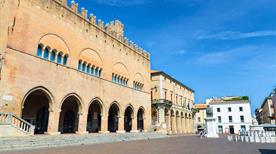
Palazzo dell'Arengo
Rimini
(17 Km)
The Palazzo dell'Arengo was built in Romanesque-Gothic style and was called Palatium Comunis. In the late Middle Ages, the People's Council of Rimini met in its rooms. The last renovation was done during the twentieth century. In 1204 the loggia was built at the behest of Modio dei Carbonesi who at the time was the podestà of the city. The interior room on the first floor is enhanced by a truss ceiling and large polyphor windows.
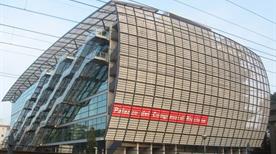
Palazzo dei Congressi
Riccione
(18 Km)
A state-of-the-art structure, for technology, image, communication... in favor of a well-organized, accessible and accessible city on foot, the PalaCongressi of Riccione has established itself as one of the most valuable European facilities for exclusive events.

Palazzo del Turismo
Riccione
(18 Km)
It overlooks Piazzale Ceccarini, a strategic location and hosts the Department of Tourism. The Palace of Tourism is an unmissable stop, with its information points and its rooms open to exhibitions, events, congresses of all sorts that will provide interesting ideas for your stay.

Villa Lodi Fe
Riccione
(18 Km)
Small villa dating back to the 1920s, of which preserves the structure of chalets, as well as style and decorations. Built by the will of Decio Monti of Bologna, it later passed to the family of which it bears its name. It is located in the Pope John Paul II Park and is currently owned by the Municipality of Riccione, becoming the seat of the Ilaria Alpi Prize and the Riccione Teatro event.

Villa Mussolini
Riccione
(19 Km)
Initially called Villa Margherita, it bears the unmistakable name of the famous family that inhabited it. Located on Viale Milano 31, with a direct outlet to the beach, it was the house chosen by women Rachele for the summer holidays of the duce, knowing the passage of important statesmen and distinguished men visiting the fascist dictator. In 1997 it became the property of the Cassa di Risparmio di Rimini and assigned to the Municipality of Riccione on a free loan that made it available for exhibitions and exhibitions.
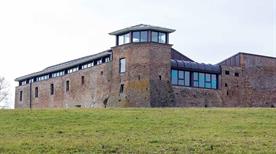
Castello Agolanti
Riccione
(18 Km)
Also known by the name of “Tomb”, it is a fortification built in the fourteenth century by the will of the Agolanti family and linked to the fate of this family until the 18th century. The sources of the time referred to this structure as “one of the most beautiful buildings in the Rimini area” (Ubaldo Antonio Marchi, 1973). Given its strategic position, in 1743 it became headquarters of the Austrian army. After several hand-shifts, earthquakes, in 1982 it became the property of the municipal administration and extensive renovations were required.
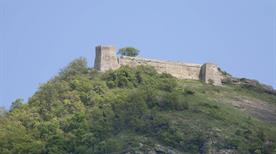
Rocca Maioletto
Maiolo
(13 Km)
Rocca Maioletto turned out to be one of the hard to conquer strongholds of Valmarecchia and Montefeltro. It stands on a rock of sand and clay and dominates the village below. It was the property of the Church to become the home of the Casteldelci and Montefeltro.
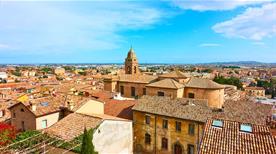
borgo di Santarcangelo
Santarcangelo di Romagna
(15 Km)
The heart of the ancient town is set on a soft hill called Colle Giove; even today the typical structure of the medieval fortified village is well recognizable. The Middle Ages left an indelible mark in the high districts of the historic center, on which dominates the solid fortress, a strategic bulwark on the surrounding plain.

Chiesa Parrocchiale di San Martino in Riparotta
Viserba
(16 Km)

Forte di San Leo
San Leo
(9 Km)
The Fort of San Leo, also known as Rocca di San Leo is located in the homonymous municipality in the province of Rimini, in Emilia-Romagna. It is located on top of the rocky cusp that overlooks the town of Leontine and dominates the Valmarecchia. The fort is very impressive as it was built right on top of the mountain.
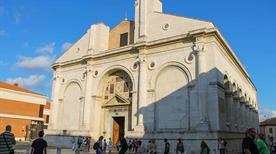
Tempio Malatestiano
Rimini
(17 Km)
Already present in Rimini in the ninth century it is by far the largest church in the city. Of Gothic style, it had many changes over the centuries of which the greatest is the huge dome that It was added during the Renaissance.
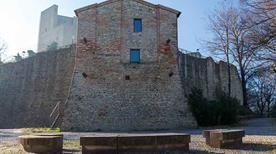
Rocca di Montefiore Conca
Rimini
(14 Km)
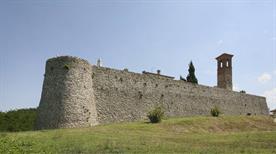
Castello di Montescudo
Montescudo-Monte Colombo
(11 Km)

Rocca Malatestiana
Verucchio
(28 Km)
The Rocca di Verucchio is one of the largest fortifications of the period from the 12th to the 16th century. Due to its location, the building is also known as Rocca del Sasso. Inside it houses a special collection of medieval weapons. While in the center of the fortress, there is a very large hall, which is currently used for concerts and weddings.

Palazzo Marcosanti
Poggio Torriana
(11 Km)
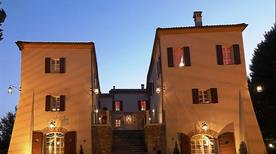
Palazzo Tosi
Poggio Torriana
(10 Km)
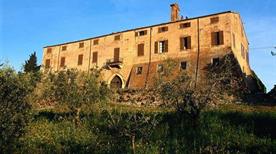
Palazzo Marcosanti
Poggio Torriana
(11 Km)
Palazzo Marcosanti was originally an imposing fortress built in the late 13th century. It was owned by numerous noble families, including the Malatesta, the Della Rovere and others, until in the early nineteenth century it became the property of Paolo Marcosanti. Today the noble building is rented for wedding parties.
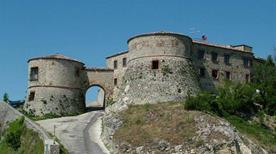
Castello Due Torri
Poggio Torriana
(8 Km)
The Due Torri Castle is part of the complex of fortifications belonging to the Malatesta family. It changed its name twice in the last millennium, in the past it was called Castello Sorticata, later Castello di Torriana and finally acquired the current name. It was built around the year 1000, and passed it became the property of the Municipality of Rimini around 1608. Today, the property is used as a restaurant.

Borgo di Albereto
Montescudo-Monte Colombo
(6 Km)
The Borgo di Albereto is in medieval style. During some restorations carried out in 1954, some medals depicting Sigismund and the Malatesta Temple were found. In addition, you can visit the bell tower and what remains of the oratory of San Bernardo.
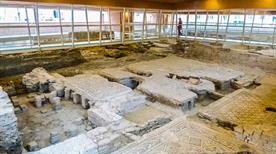
Domus del chirurgo
Rimini
(18 Km)
After 18 years of restoration, the Surgeon's Domus was returned to the city of Rimini. It is a Roman house dating back to the II AD. Characterized by two floors, the small entrance leads to a corridor, on the side of which there is an interior garden and on the other side extended the various rooms. Following the excavations and studies of Domus it is possible to bring the home back to a military doctor from Eastern origin who was probably called Eutyches.

Tesoro della Cattedrale
Rimini
(17 Km)
The Treasure of the Cathedral is located in the San Gaudenzio Hall adjacent to the Cathedral of Rimini. Inside it displays paintings, sacred vestments and goblets belonging to the Duomo. The most significant materials are represented by the reliquaries of the 14th and 15th century and by some illuminated codes.
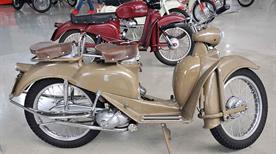
Museo del Motociclo
Rimini
(15 Km)
The Motorcycle Museum was founded in 1993 and turns out to be a center provided with about 10,000 volumes of the history of motorcycling. Over 250 motorcycles made from the late nineteenth century are observed in the exhibition space until the late 80s of the twentieth century. The Museum also has a rich library.
Museo della Città
Rimini
(17 Km)
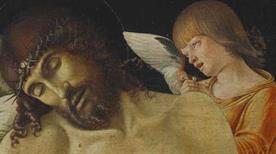
The Museum of the City of Rimini was opened in 1990 at the headquarters of the former convent of the Jesuit Fathers. The structure was renovated after World War II by Pier Luigi Foschi. The museum site is divided into sections and among the most important are the medieval and archaeological site. Among the most significant works stands out “The Pietà “by Giovanni Bellini and the canvas of “San Girolamo” by Guercino.
Museo degli Sguardi
Rimini
(14 Km)
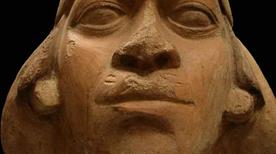
The Museum of Looks is located in the villa built in the 18th century by Giovanni Antonio de Alvarado. The museum site also collects various materials from the collections of the Museum of Graces that boasts archaeological and ethnographic works of Africa, Oceania and Asia.

Museo dell'Aviazione
Rimini
(8 Km)
The Aviation Theme Park was opened on 2 April 1995. It is currently the largest in Italy and certainly one of the most important in Europe. Built on a hilly plot of over 100,000 square meters, it offers visitors a rare review of aircraft that, for a precise choice, are representative of the post-war period and the events that characterized it.

Un museo dell'arredo urbano
Longiano
(18 Km)
The charming village of Longiano houses the Italian Museum of Cast Iron, unique in its kind. Inside an ancient deconsecrated church are placed on display amazing cast iron streetlights melted between the second half of the 19th century and the early 900, coming from Italian and foreign cities. A precious example of industrial art.
Museo del Territorio
Riccione
(18 Km)
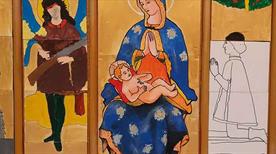
A visit to this museum reality is essential if you want to know in depth the history of Riccione: in fact, the Museum offers a collection of fossil finds useful to reconstruct the geological history of the territory , passing through the evolution of life until the conquest by the Romans.

Museo Archeologico di S. Giovanni in Compito
Savignano sul Rubicone
(19 Km)
The Archaeological Museum of St. John in Compito dates back to 1930 and is one of the oldest institutes in the area. Since 2005, the Koinè association has been responsible for promoting the socio-cultural aspects of this headquarters. In it we find a vast amount of objects that are of invaluable artistic and cultural value.
Museo Fernando Gualtieri
Talamello
(14 Km)
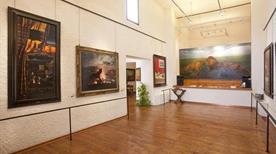
The Fernando Gualtieri Museum welcomes about fifty works donated to the Municipality of Talamello by Fernando Gualtieri, in a period from 2000 to 2008. The artist, born in France, received the honorary citizenship of Talamello in 1982. The museum dedicated to him was inaugurated under the title “The Splendor of the Royal “in 2002.
Museo Storico della Linea Gotica
Sassocorvaro Auditore
(17 Km)
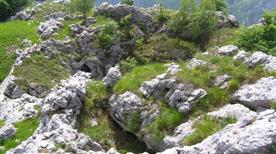
The Historical Museum of the Gothic Line was created in 1992 by Professor Giovanni Tiberi. The Museum reconstructs the history of the battle of the Gothic Line of 1944. In the museum we find more than three thousand finds of discoveries discovered on the ancient battlefield along with various precious documentations of the time.

Torre Malatestiana
Montescudo-Monte Colombo
(8 Km)
The Malatesta Tower was built around the fourteenth century. The ancient fortress has a wide cultural history related to the peasant world. Twenty-two bronze medals were found inside the building, modeled by hand, in which the effigy of Sigismund Pandolfo Malatesta and the Malatesta Temple were depicted.
Museo Civico Archeologico e Paleontologico
Macerata Feltria
(97 Km)
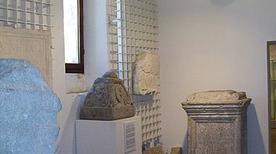
The Civic Archaeological and Paleontological Museum is located in the Palazzo del Podestà, which dates back to the fourteenth century. The finds are arranged in eight rooms, each divided by historical period. All materials trace the historical settlements of the eastern Montefeltro area. Each object has a reference card, which provides all the information about it. In addition, from the building where the museum is located, you can enjoy a wonderful view.

Pinacoteca Civica
Santarcangelo di Romagna
(15 Km)

Torri e Mura
Longiano
(18 Km)