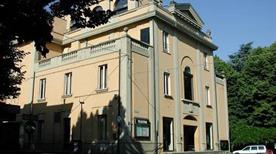
Teatro Testoni
Casalecchio di Reno
(28 Km)
In the early days it was used as a Theater and a Casa del Fascio even if the structure, simple and linear, does not recall the modernist modules in vogue at that time. This space was intended for fencing exercises and gymnastic exercises. Renovated in the 1960s and 1980s, the Teatro Testoni is counted among the most active rooms in Italy.
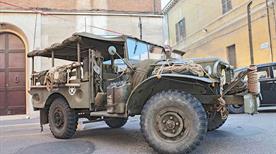
Museo della Guerra
Castel del Rio
(14 Km)
The War Museum was established in 1978 inside the Alidosi Palace. The museum site houses about 1600 pieces and a complete library of 1500 volumes. It is divided into several sections that address the themes of the Great War and World War II, partisan activity and the deportation of the citizens of Castel Del Rio.
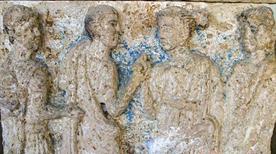
Museo Nazionale Etrusco "P. Aria"
Marzabotto
(16 Km)
The National Etruscan Museum “P. Aria” is dedicated to Count Pompeo Aria who organized the core of the first museum collection. The exhibition is spread over four rooms where the nineteenth-century excavations and various architectural terraces coming from the various acropolis of the resort are exhibited.
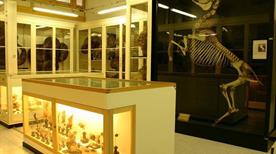
Museo di Anatomia degli Animali Domestici
Ozzano dell'Emilia
(28 Km)
The Museum of Pet Anatomy presents images and reproductions of pets. Skeletons and various boards are also used. This institute is among the oldest in the province, not only in the Municipality. In fact, it was founded in 1882 by Professor Clemente Papi, and precisely this makes it one of the most important. Today, however, it is possible to see a considerable part of it, compared to the original one collected.

Istituto Nazionale per la Fauna Selvatica
Ozzano dell'Emilia
(31 Km)
The National Institute for Wildlife has several locations, but the most important is that of Ozzano dell'Emilia, in Bologna. He is tasked with protecting the environmental goods composed of wild animals, analyzing their way of life, evolution and relationships with other local animals. In the Institute we find a post-university qualification school on biology and wildlife conservation and work teaching courses for the coordination of wild animals for graduated technicians.
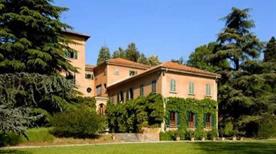
Villa Marescalchi
Casalecchio di Reno
(27 Km)
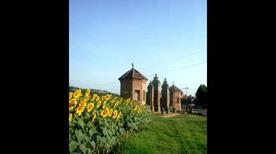
Villa il Toiano
Casalecchio di Reno
(26 Km)
It is a typical sixteenth-century senatorium villa, which integrated the stately residence with the buildings for the servitude and for the peasants who took care of the agricultural fund. The villa is characterized by four porticoes, one on the side, the most impressive of which support the elegant triangular gables of the main facades.
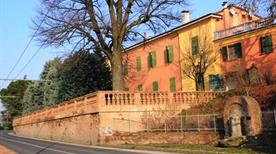
Villa Ghillini
Casalecchio di Reno
(28 Km)
The elegant noble residence, of very ancient origins, represents a rare example of living continuity from the first century BC to today. The building became the Castello di Casalecchio, which, from its dominant position controlled the road, the bridge, the ford over the Rhine and the entire plain below.
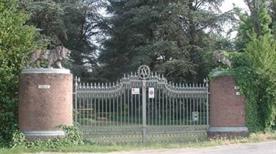
Casa Volpe
Casalecchio di Reno
(69 Km)
Casa Volpe is a settlement with its own identity, thanks to the unitary structure of the exterior surfaces.
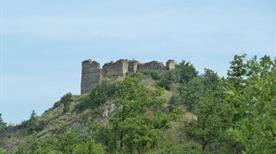
Castello di Canatagallo o Castellaccio
Castel del Rio
(14 Km)
The Castle was built by one of the most important families in the area, the Canatagallo from whom it also takes its name. This family had several fortresses and castles built. This specifically dates back to the tenth century and, given its position and form, it is thought to have had a defensive function. Currently we can only see the ruins.
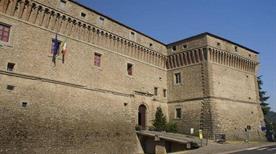
Castello Alidosi
Castel del Rio
(14 Km)
Castello Alidosi was built around the 14th century and was home to the Alidosis family who called it “Castrum Rivi”. Unfortunately, only a few remains remain of the imposing Castle, after the earthquake occurred in 1542. The family later decided to build a palace in the fief with lozenge ramparts and a courtyard with a loggia inside.

Casamento di Medelana
Marzabotto
(22 Km)
The building of the Casamento was built around the fifteenth century and was an important complex in the town of Medelana. From its structure we can see the embellished and decorated windows that give a special charm to the building. It is currently in excellent condition and open to tourists.

Palazzo dei Capitani della Montagna
Vergato
(18 Km)
The Palace of the Captains of the Mountain was built between the fourteenth and fifteenth centuries and was the seat of the Captains of the Mountain, officials who ruled from 1414 to 1796. The facade has coats of arms dating from the 4th and 6th centuries and among these is visible that of the municipality of Vergato, depicting a wild boar in a swamp with two oak branches tied by a ribbon. The building was built during the post-war period and was enriched with four stained-glass windows by Luigi Ontani in 1998.
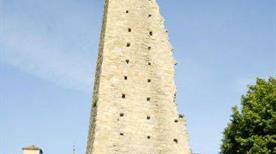
Antica Torre
Castel di Casio
(24 Km)
The ancient tower of Castel di Casio is located in the historic center. It is a medieval tower, the top of which exceeds the rooftops of the houses.

Eremo di Tizzano
Casalecchio di Reno
(29 Km)
The Hermitage of Tizzano is a small church located in the Municipality of Casalecchio di Reno. The building was built in 1741 and is considered one of the most important buildings of that period. Inside the building there is a crucifix located in the left chapel, built in the second half of the 16th century. In this parish, on 3 May of each year the feast of the crucifix is celebrated.
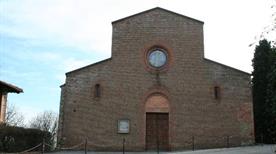
Chiesa di San Lorenzo
Castel San Pietro Terme
(24 Km)
The church dates back to the eighth century, is in Romanesque style. You should definitely see the crypt of Varignana, located below the church and always dating back to the eighth century.
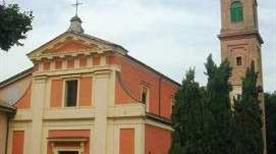
Santi Antonio ed Andrea di Ceretolo
Casalecchio di Reno
(29 Km)
In the 18th century, the Church of Ceretolo located on the homonymous Hill, was dedicated to St. Andrew and was part of the jurisdiction of the canons Renani di Casalecchio. with four side chapels and a small choir. Some valuable paintings and canvases have been lost.

San Giovanni Battista
Casalecchio di Reno
(28 Km)
The church, built after the war, the most prestigious from the architectural point of view is that of San Giovanni Battista, designed by the architect Melchiorre Bega. On the upper wall of the facade stands out a stained glass with sculptural bronze decorations particularly original and impressive.
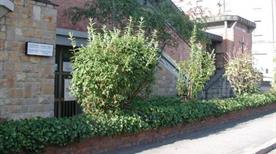
Santa Lucia
Casalecchio di Reno
(28 Km)
The Church was designed by Architect Giuseppe Coccolini and built in just two years, from 1965 to 1967. The simple and simple exterior presents as a decorative architectural element a balcony, marked by short pillars.
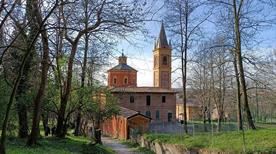
San Martino
Casalecchio di Reno
(28 Km)
The Church of San Martino was founded by the Martinian Friars in the 7th century at the foot of the Hill called Monte Castello. The construction, renovated several times over the centuries, owes the current accommodation to a project by Edoardo Collamarini, famous Bolognese architect.
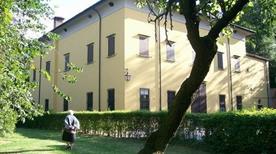
Villa Marullina
Casalecchio di Reno
(28 Km)
Currently from the entrance to Via Calzavecchio you access the Park, less rich in centuries-old trees, less large, but ordered in its new function. In fact, the Villa, restored in respect and maintenance of its architecture and its artistic interior decorations, is used as welcoming and prestigious offices of various companies.

Ponte a Schiena d' Asino
Castel del Rio
(14 Km)
The Donkey Back Bridge of Castel del Rio was built around the fifteenth century on commission by Obitzo Alidosi to master Andrea Gurrieri. The Bridge symbolized the power and solidity of the Alidosi family and presented itself with a structure called “donkey back” with its 42 meters arch. Inside, five rooms were built used by the guards for the collection of gabelles.
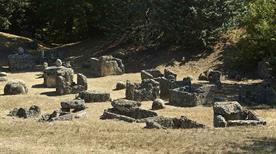
Citta' etrusco-celtica
Marzabotto
(16 Km)
The ancient Etruscan city located in the Municipality of Marzabotto, was established in the 5th century BC. The city was discovered in 1551, by Friar Leandro Alberti, thanks to the discoveries of mosaics, coins, and ruins of ancient building structures. In the archaeological site there are some shops, the foundations of some buildings, the acropolis, two necropolis and some sacred places. Near the site is also the Etruscan Museum.
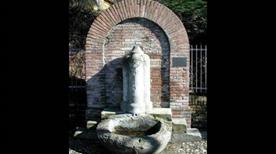
La Bamboza
Casalecchio di Reno
(28 Km)
On the Via Porrettana, adjacent to Villa Ghillini, there is an ancient fountain that once offered refreshment to travelers and horses with its fresh water from the Rio della Pizzacchera. The witty villagers immediately called it the 'Bamboza' because of its resemblance to that mannequin on which the seamstresses shape their clothes.

Il Cassero
Castel San Pietro Terme
(27 Km)
The Cassero is the monument that officially marks the birth of Castel San Pietro in 1199, as a bulwark to defend the territory of Bologna. It is a massive construction, adorned with Ghibelline merli, the work of various interventions.
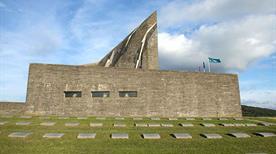
Cimitero Militare Germanico della Futa
Firenzuola
(15 Km)
The Germanic Military Cemetery of the Futa was inaugurated in 1969 and its design and construction was attended by the architect Dieter Oesterlen and Walter Rossow, Ernst Kramer as landscape designers. For the construction, the serene stone typical of the quarries located near Firenzuola was used. In this cemetery the corpses of 31,000 German soldiers who died during World War II are preserved.
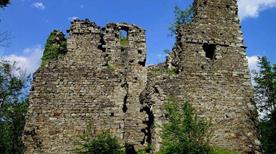
Rocca Cerbaia
Cantagallo
(30 Km)
The Rocca Cerbaia dates back to the 11th century. It stands on a hill, 400 m above sea level. Despite today there are only ruins left, it had a certain importance in the past, especially since it was home to Counts Alberti and then of Emperor Federico Barbarossa. One of the reasons why there is so little of the structure today is the fact that it was always used as a centerpiece in times of war.
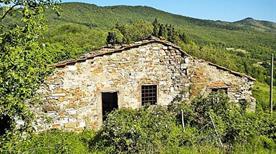
Castello di Montauto
Cantagallo
(30 Km)
The Castle of Montauto is assumed to date back to 1164 and was used as a home by the Alberti. Later it became owned by the Florentines. Unfortunately, it is in total abandonment and is used by locals with agricultural function. Despite this, it is possible to visit it and see what is left of it.
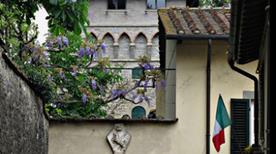
Villa il Torrino
Scarperia
(26 Km)
The Villa was born from an ancient tower that was restored according to the style of the 1930s and 40s of the twentieth century. Also part of the complex is a beautiful park created by the architect Vittorio Collacchioni, who is the current owner. The building is very special thanks to the presence of precious ceramics, centuries-old plants, antique furniture and objects of great value.
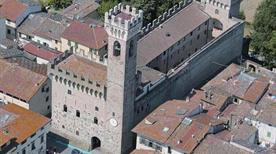
Palazzo dei Vicari
Scarperia
(26 Km)
Palazzo dei Vicari is very well preserved even if it dates back to the '300. Initially there was only the tower, then the other parts of the complex were added that made it a well-compact structure. Today, the Museum of Sharp Irons is located in this building.
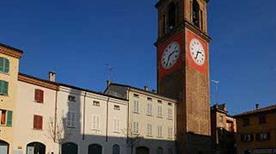
Centro Storico
Firenzuola
(13 Km)
Museo della Pietra Serena
Firenzuola
(13 Km)
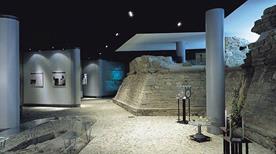
The Museum of Pietra Serena was founded in 1999 and represents the celebration of the famous stone of Firenzuola and the ancient stone stone tradition. The museum site is divided into several sections among which the work in the quarry stands out and that of the artifacts of the daily newspaper. The last spaces are dedicated to art stone and its work by the master stonemasons.

Museo del Paesaggio Storico dell' Appennino
Firenzuola
(13 Km)
The Museum of Historical Landscape of the Apennines is housed inside the ancient Abbey of St. Peter a Moscheta. It performs the function of a documented center on the history of the Apennines that is interested in all the transformations of the landscape.

Torre di Castel di Casio
Castel di Casio
(24 Km)