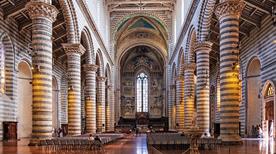
Duomo
Orvieto
(28 Km)
Built in 1263 after the miracle of the blood which flowed from blessed bread while a Bohemian priest said mass in the Basilica of of Cristina in Bolsena

Necropoli Etrusca del Crocifisso del Tufo
Orvieto
(28 Km)
The Etruscan Necropolis of the Crucifix of the Tuff is a large archaeological area dating from the 6th to the 3rd century BC, located at the base of the Orvieto cliff and is built from tuff blocks. The area is named after an eighteenth-century crucifix, which was carved in this area. The Necropolis has a regular plan and roads organized on orthogonal axes, characteristics that reflect the urban organization of the time.

Città Sotterranea
Orvieto
(28 Km)
A journey to the discovery of the underground cisterns, caves and underground tunnels excavated, by the man. A guided tour of "Orvieto Underground" is the most keen to get in touch with this cultural aspect.

Il Pozzo di San Patrizio
Orvieto
(28 Km)
The historic St. Patrick's Well is a masterpiece of engineering consisting of two one-way helical ramps, completely autonomous and served by two different doors, which allowed the extracted water to be transported without getting in the way.

Palazzo dei Sette
Orvieto
(28 Km)
The Palazzo dei Sette was built in the thirteenth century and it was the seat of one of more important magistrates of the town, the "Seven Gentlemen".
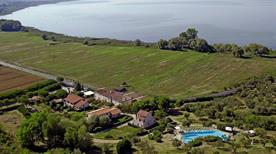
Antica Posta di Braccio
Panicale
(11 Km)
Renaissance palace located south of the park of Lake Trasimeno, near Sant'Arcangelo. Visible the halls with a cross vault and monumental fireplace in Nenfro. An ancient coat of arms of Braccio I Baglioni. Wells of the time provided by an active source.
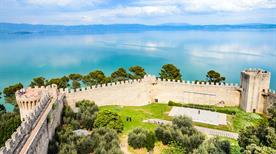
Rocca
Castiglione del Lago
(22 Km)
The Rocca del Castiglione del Lago is a magnificent structure whose construction was started in the twelfth century. Its walls are polygonal in shape and is equipped with 4 towers. The peculiarity of the Rocca is the number three that is repeated on various occasions. As in the town where three squares live together, three main streets, three gates. The fortification was the most important structure of Lake Trasimeno.

Chiesa di San Salvatore
Tuoro sul Trasimeno
(29 Km)
The church of San Salvatore is a romanesque building dating from the twelfth century. It has a beautiful stone portal with reliefs depicting animals and plant decorations, dates from the second half of the twelfth century.

Centro di documentazione permanente su Annibale e la battaglia del Trasimeno
Tuoro sul Trasimeno
(29 Km)
The Centre, inaugurated in the early months of 1996, brings together a permanent exhibition on the subject of Hannibal and the various theories about the Battle of Trasimeno.By utilising the various stopping-places along the route, it is possible to identify the areas where the confrontation took place, and to visit the "ustrina", the huge pits which Hannibal had dug to burn the corpses.
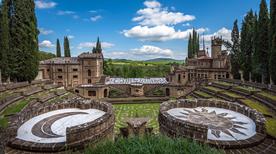
La Scarzuola
San Venanzo
(14 Km)
La Scarzuola is better known as the place where Francesco D'Assisi found home. Since the twentieth century the 'ideal city' built by Tomaso Buzzi has been located in it. The well-known architect wanted to represent, through this magnificent structure, the eschatological allegory of existence.

Castello Monte Gualandro
Tuoro sul Trasimeno
(29 Km)
The Castle of Monte Gualandro, surrounded by pine trees, cypresses and olive trees, is located after the town of Tuoro, the last village before the border of Umbria and Tuscany.
Built between the thirteenth and fourteenth centuries, with inserts Etruscan and Roman, consists of four towers and a large door that leads to the east.

Campo del Sole
Tuoro sul Trasimeno
(29 Km)
Campo del sole is an impressive architectural ensemble, an open-air museum, unique in its kind, which is located in Punta Navaccia. Designed by the famous artist Pietro Cascella, the project was carried out on several occasions since the summer of 1985 to the autumn of 1989 and represent the figure of a large spiral made up of 27 columns-sculptures.
Parco Museo Minerario
Abbadia San Salvatore
(28 Km)
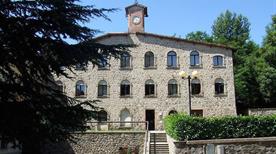
The Mining Museum of Abbadia San Salvatore consists of five rooms of which: Room 1 composed of Geology, Room 2 with Amiata and Mercury, Room 3 with the history of the Abbadia S.Salvatore mine, the Room 4 with drawings, objects and more, and to finish room 5 with other activities.
Museo Civico Archeologico
Sarteano
(14 Km)
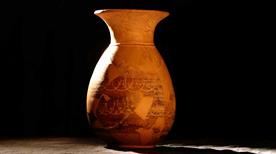
Located in the sixteenth-century Palazzo Gabrielli, the Civic Archaeological Museum was founded in 1997 in Sarteano.

Museo di Palazzo "Piccolomini"
Pienza
(30 Km)
The Museum of Palazzo “Piccolomini” is located on the first floor of the eponymous Palace built in the fifteenth century as the residence of Pope Pius II. The museum area exhibits works that portray Enea Silvio Piccolomini and houses living materials, such as the bedroom of the well-known Pope. The adjoining library contains books, bubbles and writings from the period of Pope Pius II and Pope Pius III.
Museo Diocesano
Pienza
(30 Km)
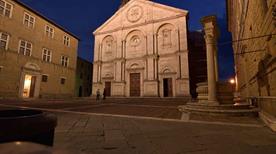
The headquarters of the Diocesan Museum of Pienza was inaugurated in 1998 inside the Bishop's Palace. The museum is divided into eleven rooms along which are exhibited ecclesiastical works coming from the Duomo and the surrounding territory. The most important work is located in the fourth room and depicts the “Stories of Our Lady”, of Saint Margaret of Antioch and Saint Catherine of Alexandria, donated to the Pope by Thomas Paleologist.
Museo diocesano della cattedrale
Chiusi
(10 Km)
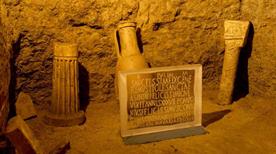
The Diocesan Museum of the Cathedral was established in 1932. Towards the end of 1986 it was expanded and renewed at the hands of Alberto Giglioli. In 1990, four new rooms were opened in the Palazzo Vecovile.
Museo della Collegiata
Chianciano Terme
(18 Km)
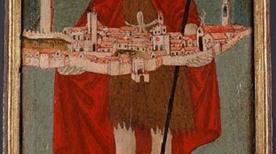
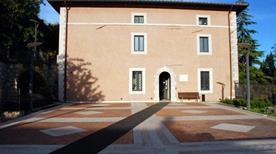
The Collegiate Church Museum is located inside the eighteenth-century Arcipretal Palace of Chianciano Terme. Among the most important works is a Polyptych by the Master of Chianciano, in which a splendid Madonna and Child is depicted. Also interesting is the table that represents Giovanni Battista while supporting the ancient Chianciano.
Museo Civico Archeologico delle Acque
Chianciano Terme
(19 Km)
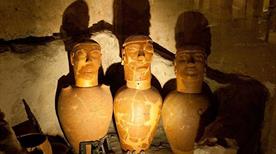
The Archaeological Museum of Water is located near the historic center of the city. The exhibition is dedicated to issues concerning the history of the territory of Chianciano. Great interest are the ancient tombs dating back to the last years of the 7th century BC, the necropolis of Morelli as well as a princely tomb reported to life size.
Museo Archeologico delle Acque
Chianciano Terme
(18 Km)
Opened in 1997, it collects archaeological material discovered in the municipal area as a result of capillary research; it exhibits numerous Etruscan findings.

Museo Etrusco delle Acque
Chianciano Terme
(19 Km)
With Chiusi Chianciano Terme as well as UNESCO heritage sites, Terme, medieval center boasts the most important center of ETRUSCAN civilization, world headquarters of the Etruscan Museum of Water
Museo del Fiore
Acquapendente
(25 Km)
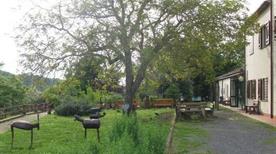
The Flower Museum is located inside the Monte Rufeno nature reserve. It offers a variety of exhibition routes to be able to discover the beauties that nature gives to the territory. A rich journey into the world of flowers, animals and man.
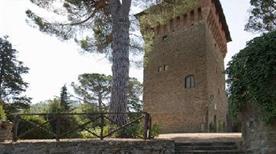
Castelluccio
Pienza
(20 Km)
Also called Castelluccio dei Bifolchi, it was fortified in the fourteenth century with two corner towers still intact. In 1787 it was transformed into a 'fortified farm'. Since then, it has gone through various owners.
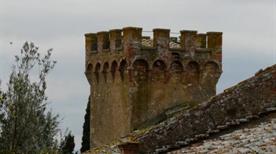
Rocca di Monticchiello
Pienza
(26 Km)
The Rocca di Monticchiello dates back to the 13th century and is located on the walled village of the homonymous municipality. Only the Sienese formwork remains of the construction, consisting of walls and stone beccatelli. The walls were equipped with a walkway, and were interspersed with various towers of varying sizes.
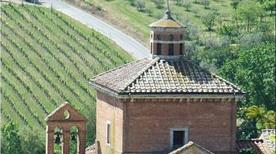
Tempio della Madonna della Rosa
Chianciano Terme
(18 Km)
The most beautiful church in Chianciano, designed by Baldassarre Lanci, in 1569, architect of the Duke of Urbino. Inside, the image of Our Lady of the Rose is painted on a wall.

La tomba della quadriga infernale
Sarteano
(12 Km)
The tomb of the "quadriga infernale" lies in Sarteano in the necropolis of the Pianacce and is one of the most significant testimonies of the Etruscan painting of the 4th century BC.
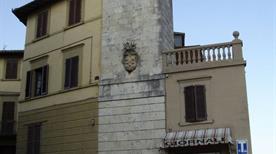
Torre dell’Orologio
Chianciano Terme
(19 Km)
An imposing medieval tower on which is represented the coat of arms of the Medici family, added when the Signoria of Florence had the ultimate control of the town.

Chiesa di Pieve di Confine
Tuoro sul Trasimeno
(29 Km)
The Church is located in the border between Perugia and Cortona, in the west part of the town of Tuoro sul Trasimeno. It is a romanesque building, of the XIth century, and nowadays is stil well preserved.