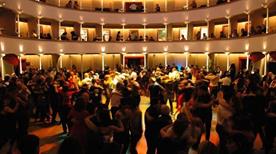
Teatro Verdi
Cesena
It belongs to Florence 's 800, it was among the seven largest theater in Italy. It was opened in 1854. In 1998, the Teatro Verdi goes to the Foundation Orchestra Regionale Toscana, becoming, therefore, the seat of ORT during the rehearsals and concerts.

Teatro Alessandro Bonci
Cesena
Building erected in the mid of the 1800s, is presented with a neoclassical facade, elegant but not opulent. It is built on the ancient noble theater Spada and, after a long negotiation for its purchase and presentation of the project, entrusted to Vincenzo Ghinelli, its construction took place very quickly over a period of three years. It is characterized by a classic semi-circular auditorium and five tiers of boxes, and the last of them which is entirely reserved for the gallery.
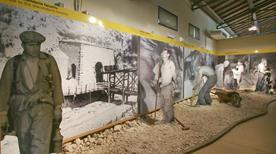
Museo della Miniera
Cesena
It's located at Formignano, on the foothills hills outside the city of Cesena, in the area of a sulfur mine which had been closed for years. This mine and its relative village are at the heart of the project, in progress, which aims to reconstruct the process of extraction of minerals and their processing was being done once in the mines. Waiting for the project to be finalized, today, is set up an exhibition composed of photos and documents that bear witness to what was the daily life of the miners and their families.
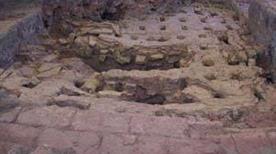
Museo della Centuriazione
Cesena
It's located at about 6 kilometers from Cesena, is a permanent exhibition which bears witness to the territorial organization that was, in fact, the Roman land. The project also includes the presence of a farmhouse in which to see the instruments from the period, while among the activities of interest, there is the opportunity to follow a path between countries and churches which is dotted with signs explaining the methods of work and the history of the centuriazione cesenate.
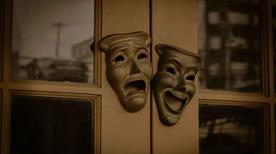
Museo del Teatro
Cesena
Located at the Teatro Bonci, is the place where you preserve the memory of the centuries-old tradition of music and theater in the city of Cesena. Posters, playbills, drawings and photographs, costumes, sets, video recordings ... the part of the Archive is really complete and documented, while among the most curious aspects are to report the stage machinery used to produce visual and sound effects before the advent of technology.

Raccolta d'Arte Votiva
Cesena
A museum that consists of about 700 valuable ex-votive tablets : a striking testimony to the faith of the people of Cesena to the Vergine del Monte which is dedicated to the Abbey of Santa Maria del Monte, located on the hill Spaziano. The exhibits range from the fifteenth century to the present time, but they are continuing to rise, cause of the continuing of the tradition even today.
Museo Archeologico
Cesena
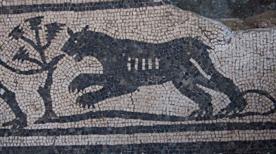
It's located at the Chiostro of San Francesco and exposes some of the finds from archaeological excavations on the area of Cesena. For the majority are Roman, but there are testimonies of the prehistoric period as well as that of humanism. Of particular value are the silver plates of the fourth century and the ceramics of the malatestan era.
Museo di Scienze Naturali
Cesena
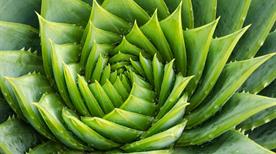
Located at the Loggetta Venetiaziana and the Torrione of Piazza Zangheri, the museum compares historical and contemporary exhibits that allow immediate assessment of the evolution that in the last hundred years have had the flora and fauna of the territory of Cesena. The home of the museum is very charming, in a building that opens onto the square and the Rocca offer picturesque views of the city.
Pinacoteca Comunale
Cesena
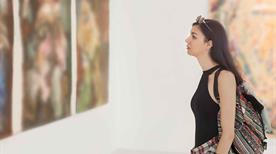
It's located at the Centro Culturale San Biagio in the complex of the same name. Inside you will find several paintings on wood and canvas, but also sculptures dating from the late middle ages, mostly of them sourced from the region. Also interesting is the contemporary section named after Luigi Veronesi, abstract painter of which are exhibited several works alongside those of artists such as Guttuso, Cagli, Schifani and many others.
Museo degli Strumenti Musicali
Cesena
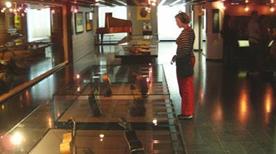
Small but interesting propety which is actually owned by the municipality. It has collection of musical instruments and a laboratory instrument maker with working materials used to produce tools from design to finished product. Very curious is the section dedicated to books and original sheet music of the Band of Cesena: a testimony of the musical culture that was very much felt in the land of Romagna.
Archivio dell'Immagine
Cesena
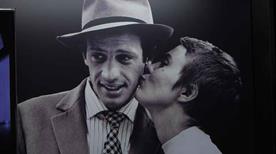
Located in the Centro Cinema Città in Cesena, holds many archives of characters linked to the cinema, television and photography. Many subjects and original screenplays, as well as photographs of the scene, often donated by filmmakers and professionals so that they are made ??available to scholars and fans.
Rocca Malatestiana
Cesena

Palazzo Comunale
Cesena
Also called Albornoz Palace, named after the Spanish Cardinal Gil Álvarez Carrillo de Albornoz which began its construction in the fourteenth century, the building as it is today is the result of the union of two old buildings: the Public Palace and the Palace of the Governor. Overlooking the Piazza del Popolo, are kept within the original eighteenth-century furnishings of fine workmanship. Of particular impact those that adorn the so-called Hall of Mirrors.
Rocca Malatestiana
Cesena
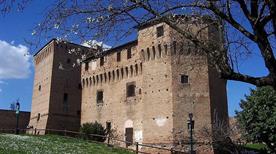
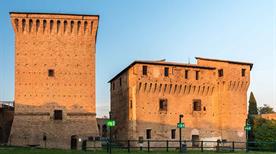
Building constructed immediately behind the town, that had a troubled genesis, in the course of the century necessary for its realization, its appearance has changed several times. The building plan is roughly pentagonal, is characterized by five towers that identify immediately the military character of the complex, used, later, as a prison until 1969. The view of the city of Cesena is exceptional, which can be enjoyed from its superior walkways.
Palazzo del Ridotto
Cesena
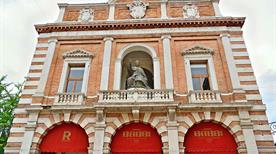
Medieval building with a characteristic aspect, its construction dates back to 1400, although several elements, such as the bell tower, have been modified and restored in the eighteenth century. Of these years is also the interesting facade, built by Cosimo Morelli on behalf of Pope Pius VI. The building today is the seat of the municipal art Gallery in the city, home for temporary exhibitions and conferences.
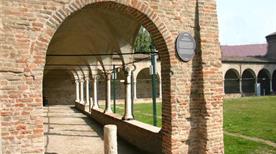
Chiostro di San Francesco
Cesena
It's the only one remaining of the two cloisters which stood to the north and south of the Malatesta Library. Quadrangular, the sides had originally formed by twelve columns. Today there are visible just two of these sides and the place is often used as a place for musical events and performances taking ,in an environment like this, really impressive atmosphere.

Barriera Cavour
Cesena
A particularly significant place in the city: here stood a door that marked the spot where the ancient roman road of Salt came from Cesena going to Cervia. After the Unification of Italy in its place two pavilions were built in neoclassical style which are still visible today. The concept underlying their construction was to provide visitors coming from the station, the best possible picture of the city.

Salone degli Incanti - Ex Pescheria
Cesena
A large area of over 500 square meters in Via Pescheria, a road that takes its name from the original destination of the building which, today, houses a Gallery home to several art and photographic exhibitions in the city. The environment of the former fish market gives the place a really wonderful and unique aspect.

Complesso del San Biagio
Cesena
Its foundation dates back probably to the end of the fourteenth century, but over the centuries the complex has had a very troubled life. It was originally a convent, which reached its peak of activity in the seventeenth century. In 1810, however, the monastery was closed and the everything fell into decay. Subsequently renovated several times, it was home to an orphanage until 1960 and now is back to being a reference point for Cesena, also home to the Centro Cinema San Biagio.
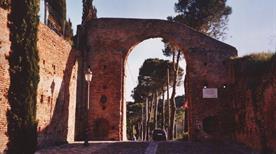
Porta Montanara
Cesena
In ancient times (the door dates from the fourteenth century) coming from the hills were accessed from here (from this door) to the city. When in the seventeenth century was modified the defense system of the Murata, was built the Porta Nuova, which today is still called Montanara. The silhouette incorporated in the Sferisterio of the old one is still visible.

Porta Fiume
Cesena
One of the doors that mark the city walls. Dating back to the XIV century and restored after being damaged during the second world war, has a rectangular shape and it's open at the pedestrian crossing. From here there is access to the Bridge of St. Martin, built in the X - XI over the river Savio and ending originally at a subsequent port which is now destroyed. Over the years the river has also changed its riverbed, and the bridge passes, now, over a road.
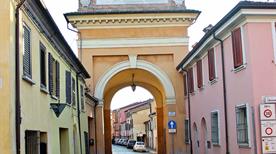
Porta Santi
Cesena
Another Door that remains of the seven that dotted the ancient city walls of Cesena. The current neo-classical architectural characteristics are those given to the monument by Curzio Brunelli, who brought forward the reconstruction in 1819.

Biblioteca Malatestiana
Cesena
Included in the "Memory of the World of Unesco", is one of the best preserved in Italy humanities libraries, able to attract scholars and visitors from around the world. Its construction was completed in 1454, era in which date back many of the original features that still remain today, from the magnificent portal of access to and from the banks of reading that adorn the aisles of '"Aula del Nuti", named after the architect who built it.
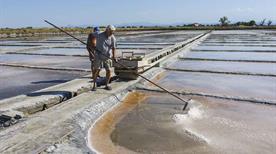
Museo del sale
Cervia
(14 Km)
Organized from 1989 inside the Sale-Torre Warehouse, owned by municipal, it was completely renovated, refurbished and inaugurated on 24 April 2004. Through tools, images and projections, the Museum testifies to the phases of the collection of salt, before the advent of the mechanization of the extraction process, dated towards the end of the 50s of the century last.
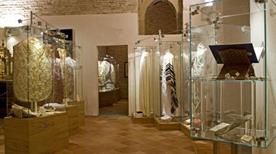
Museo Diocesano dell'Arredo Sacro
Bertinoro
(11 Km)
The Museum of Sacred Furnishing is set up in the interiors of the Interreligious Museum, and presents a collection of ecclesiastical character. It is a great collection of sacred fabrics and furnishings dating from prehistory. The exhibition is composed of objects belonging to the three religions: Judaism, Christianity and Islam.

Museo Archeologico di S. Giovanni in Compito
Savignano sul Rubicone
(11 Km)
The Archaeological Museum of St. John in Compito dates back to 1930 and is one of the oldest institutes in the area. Since 2005, the Koinè association has been responsible for promoting the socio-cultural aspects of this headquarters. In it we find a vast amount of objects that are of invaluable artistic and cultural value.
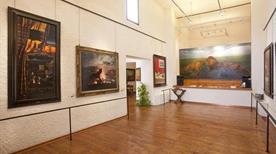
Museo Fernando Gualtieri
Talamello
(28 Km)
The Fernando Gualtieri Museum welcomes about fifty works donated to the Municipality of Talamello by Fernando Gualtieri, in a period from 2000 to 2008. The artist, born in France, received the honorary citizenship of Talamello in 1982. The museum dedicated to him was inaugurated under the title “The Splendor of the Royal “in 2002.

Tesoro della Cattedrale
Rimini
(27 Km)
The Treasure of the Cathedral is located in the San Gaudenzio Hall adjacent to the Cathedral of Rimini. Inside it displays paintings, sacred vestments and goblets belonging to the Duomo. The most significant materials are represented by the reliquaries of the 14th and 15th century and by some illuminated codes.
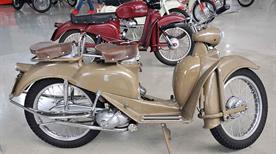
Museo del Motociclo
Rimini
(33 Km)
The Motorcycle Museum was founded in 1993 and turns out to be a center provided with about 10,000 volumes of the history of motorcycling. Over 250 motorcycles made from the late nineteenth century are observed in the exhibition space until the late 80s of the twentieth century. The Museum also has a rich library.
Museo della Città
Rimini
(26 Km)
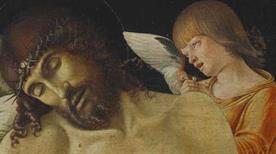
The Museum of the City of Rimini was opened in 1990 at the headquarters of the former convent of the Jesuit Fathers. The structure was renovated after World War II by Pier Luigi Foschi. The museum site is divided into sections and among the most important are the medieval and archaeological site. Among the most significant works stands out “The Pietà “by Giovanni Bellini and the canvas of “San Girolamo” by Guercino.
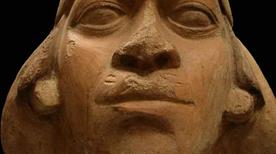
Museo degli Sguardi
Rimini
(26 Km)
The Museum of Looks is located in the villa built in the 18th century by Giovanni Antonio de Alvarado. The museum site also collects various materials from the collections of the Museum of Graces that boasts archaeological and ethnographic works of Africa, Oceania and Asia.

Museo dell'Aviazione
Rimini
(27 Km)
The Aviation Theme Park was opened on 2 April 1995. It is currently the largest in Italy and certainly one of the most important in Europe. Built on a hilly plot of over 100,000 square meters, it offers visitors a rare review of aircraft that, for a precise choice, are representative of the post-war period and the events that characterized it.

Museo del Teatro Romagnolo
Forli'
(19 Km)
It is housed at the beautiful Neoclassical Palace Gaddi, in Corso Garibaldi. Dedicated to theatrical art and musical instruments, it was born thanks to the important donations made by the heirs of the great Forlì tenor Angelo Masini. It also houses relics coming from the municipal theater of Forlì (destroyed during the Second Great War).
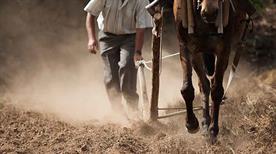
Museo Etnografico "B. Pergoli"
Forli'
(19 Km)
Inaugurated in the 1922 (after the Romagna combined exposures of 1921) and it represents one of the oldest Italian museums in the material culture. Visiting it means taking a trip into the past, discovering timeless traditions and aculture of a country which is now lost. It's divided into two separate sites, but it is currently open only to the section located at "Palazzo Merenda" in Corso della Repubblica.
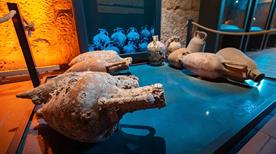
Museo Archeologico A. Santarelli
Forli'
(19 Km)
Important civic museum of archaeological nature formed in the second half of the nineteenth century by Antonio Santarelli. The exhibition hosts important archaeological finds and allows you to understand the dynamics of the population of the province of Forlì from the Lower Paleolithic to the seventh century.
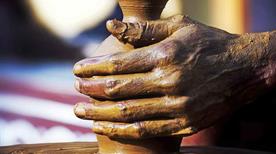
Collezione "G. Verzocchi"
Forli'
(19 Km)
In Corso della Repubblica, it is also known by the name of Galleria Verzocchi - The work in contemporary painting. The collection is unique and special, as it focuses on the theme of work. The entrepreneur Giuseppe Verzocchi, in fact, in the second after the war, asked about seventy Italian painters to create a work inspired by the world of work. You can also admire works by Guttuso, Carrà and Giorgio De Chirico.
Museo di San Mercuriale
Forli'
(19 Km)
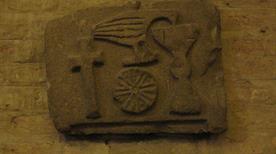
It's placed in rooms adjacent to the famous Abbey of St Mercurial in Piazza Saffi. It's a relatively small diocesan museum, which currently houses some paintings dating from the fifteenth to the eighteenth century and some impressive liturgical furnishings.

Pinacoteca Civica
Forli'
(19 Km)
Inaugurated in 1838, is an important driver of the Civic Museums of Forlì and is housed in Piazza Guido da Montefeltro (at the museum complex of San Domenico). Named after Melozzo degli Ambrogi, is divided into twenty rooms and houses works of great artists such as Domenichino, Guercino, Francesco Menzocchi, Livio Modigliani and Lorenzo di Credi.
Museo del Risorgimento
Forli'
(19 Km)
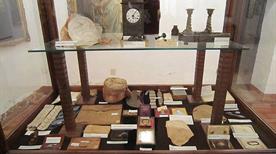
It's housed at the beautiful neoclassical Palazzo Gaddi, in Corso Garibaldi. Created in 1888, houses important relics that belonged to some great patriots (Piero Maroncelli, Antonio Fratti, Achille Cantoni, Giuseppe Garibaldi and Vincenzo Bellini). The Museum, is made by sections dedicated to the Napoleonic era and the world wars.
Armeria Albicini
Forli'
(19 Km)
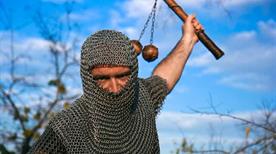
Located in Corso della Repubblica, it's a major museum that bears the name of the family that gave the town its fine collection of weapons. The collection consists of more than four hundred pieces (some of them dating back to the fifteenth century). You can admire: pikes, halberds, maces, muskets, crossbows, and chain mail. Remarkable is the armor belonged to Brunora II Zampeschi
Pinacoteca Melozzo
Forli'
(19 Km)
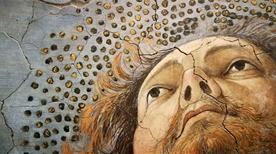
Located in Piazza Guido da Montefeltro (at the museum complex of San Domenico). It's famous for exposing the Flask with flowers, attributed to Tommaso Salini and defined "the most beautiful painting in the world" by Antonio Paolucci.

Un museo dell'arredo urbano
Longiano
(11 Km)
The charming village of Longiano houses the Italian Museum of Cast Iron, unique in its kind. Inside an ancient deconsecrated church are placed on display amazing cast iron streetlights melted between the second half of the 19th century and the early 900, coming from Italian and foreign cities. A precious example of industrial art.
Casa Museo "M. Moretti"
Cesenatico
(12 Km)
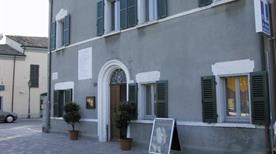
The House of the poet Marino Moretti is located on the shore of the harbor of Cesenatico. The building is the house where he was born, grew up and played his cultural activity. Inside are located on a collection of personal documents and works of the artist. At the same time the house plays the role of research and study center for modern and contemporary literature.
Antiquarium
Cesenatico
(11 Km)
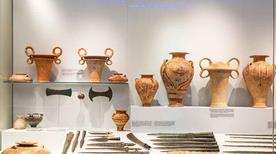
The Antiquarium was built in the seventies and is located in the Maritime Museum. Inside archaeological objects found in the surrounding areaare placed. One room is devoted to the two forts, now destroyed, the Fortress and the Tower of Pretoria, which for centuries dominated the landscape of Cesenatico.
Museo della Marineria
Cesenatico
(11 Km)
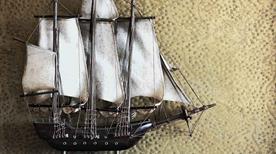
The Maritime Museum, founded in 1983, offers a display of objects that have characterized the history of seafaring in the course of history. The museum is divided into two sections: the Land Section and the float. The first offers an interesting information related to the traditional navy of High and Middle Adriatic while the second section contains 10 sailboats and 2 fishing boats and other objects related to seafaring.
Rocca di Montefiore Conca
Rimini
(41 Km)

Rocca Malatestiana
Verucchio
(3 Km)
The Rocca di Verucchio is one of the largest fortifications of the period from the 12th to the 16th century. Due to its location, the building is also known as Rocca del Sasso. Inside it houses a special collection of medieval weapons. While in the center of the fortress, there is a very large hall, which is currently used for concerts and weddings.

Palazzo Marcosanti
Poggio Torriana
(18 Km)
Palazzo Tosi
Poggio Torriana
(19 Km)
Palazzo Marcosanti
Poggio Torriana
(18 Km)
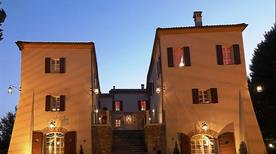
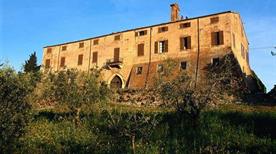
Palazzo Marcosanti was originally an imposing fortress built in the late 13th century. It was owned by numerous noble families, including the Malatesta, the Della Rovere and others, until in the early nineteenth century it became the property of Paolo Marcosanti. Today the noble building is rented for wedding parties.
Castello Due Torri
Poggio Torriana
(21 Km)
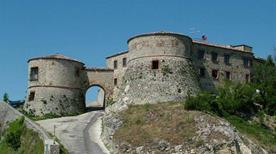
The Due Torri Castle is part of the complex of fortifications belonging to the Malatesta family. It changed its name twice in the last millennium, in the past it was called Castello Sorticata, later Castello di Torriana and finally acquired the current name. It was built around the year 1000, and passed it became the property of the Municipality of Rimini around 1608. Today, the property is used as a restaurant.

Rocca delle Caminate
Meldola
(19 Km)
The Rocca delle Caminate is a castle that dates back, according to written testimonies, to 997. It rises on a hill, entirely surrounded by greenery. You can see it in the distance from the country. Despite being very old, it is in excellent condition, thanks also to the fact that in the thirties it was the home of Benito Mussolini, the main reason why it was visited.
Palazzo Guarini Torelli
Forli'
(20 Km)
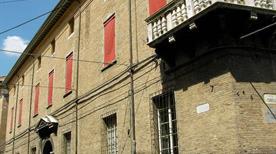
Built during the sixteenth century, this elegant architecture, is characterized by the austere facade enlivened by the presence of a particular taste balcony pre-baroque (visible on the right side of the building). The interior is decorated and furnished in the baroque and neoclassical style (with fine temperas created by Felice Giani). Privately owned, it can not be visited inside.
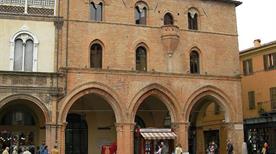
Palazzo del Podesta
Forli'
(19 Km)
Built under the direction of Matteo Di Riceputo, around the 1460 on the ruins of a fifteenth-century building, has a Gothic style. The facade of the palace is built of brick and is enhanced by a local porch completed with pointed arches (characterized by angular leaf capitals). Privately owned, it can not be visited inside.
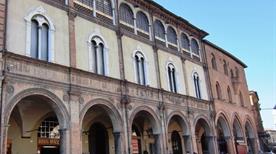
Palazzina Albertini
Forli'
(17 Km)
A beautiful building in a venetian style built in the late XV. It has a beautiful facade with exposed brick walls and a porch with round arches. The rooms on the first floor often house temporary exhibitions, while the living rooms of the second floor house the permanent exhibition "Res Communis" (embellished with a beautiful russian icon).
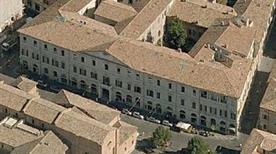
Palazzo de Calboli Largo de Calboli
Forli'
(19 Km)
Designed by Luigi Alberti (under the supervision of the architect Saviero Marini). It was built during the eighteenth century, according to the classical style. It has a large facade, characterized, in the central part, by a majestic pediment. Inside, it houses a fine staircase, embellished by sculptures representing Hercules with Hydra and Theseus and the Minotaur.
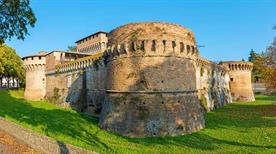
Rocca di Ravaldino
Forli'
(19 Km)
Also known as Rocca di Caterina Sforza, looks like a fortress of medieval origin (although it was remodeled during the fourteenth and fifteenth centuries). After being under siege for a long period, in January 12, 1500, the Rock fell at the hands of Cesare Borgia. As a result, Caterina Sforza, was taken prisoner and brought to Rome. La Rocca is accessible from Via della Rocca or Via Giovanni dalle Bande Nere.
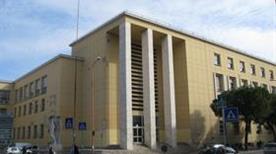
Palazzo dell'ex collegio aeronautico
Forli'
(18 Km)
The palace built in the shape of "M" in the rationalist style designed by architect Cesar Valle as expressly built in 1937 by order of Benito Mussolini, was the first aviation school in Italy.
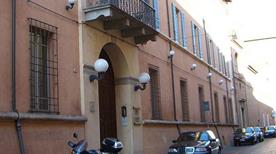
Palazzo Hercolani
Forli'
(20 Km)
Residence of the Hercolani family of Forlì until 1844 , the Hercolani Palace was bought by Count Sesto Matteucci whom restructured it in all its parts, making it one of the most imposing and beautiful buildings in the city.
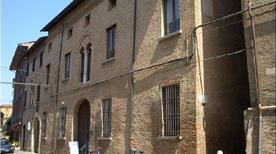
Palazzo Sangiorgi
Forli'
(20 Km)
It consists of two distinct parts, the Sangiorgi palace is one of the finest palaces in the city of Forli. The original use of the building was unknown for a long time until it was discovered that it was used as a barn.
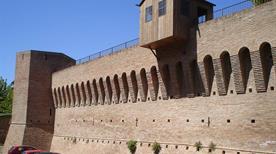
Castello Malatestiano
Gatteo
(11 Km)
The Castle of Gatteo was a pre-existing Roman camp. Over the years it has been subject to various transformations. It has a quadrangular shape.
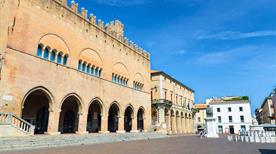
Palazzo dell'Arengo
Rimini
(26 Km)
The Palazzo dell'Arengo was built in Romanesque-Gothic style and was called Palatium Comunis. In the late Middle Ages, the People's Council of Rimini met in its rooms. The last renovation was done during the twentieth century. In 1204 the loggia was built at the behest of Modio dei Carbonesi who at the time was the podestà of the city. The interior room on the first floor is enhanced by a truss ceiling and large polyphor windows.
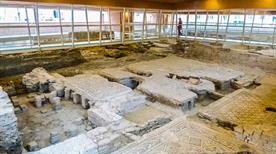
Domus del chirurgo
Rimini
(36 Km)
After 18 years of restoration, the Surgeon's Domus was returned to the city of Rimini. It is a Roman house dating back to the II AD. Characterized by two floors, the small entrance leads to a corridor, on the side of which there is an interior garden and on the other side extended the various rooms. Following the excavations and studies of Domus it is possible to bring the home back to a military doctor from Eastern origin who was probably called Eutyches.

Castel Sismondo
Rimini
(26 Km)
The Castel Sismondo or Rocca Malatestiana was built between 1437 and 1466, at the behest of Sigismondo Pandolfo Malatesta. The Castle consists of the Palace of Isotta, the large courtyard, the central body of services and the Maschio. Outside there are square towers and powerful walls. The property served as a fortress and palace. In 1999 the fortress was restored, it is currently open to the public.
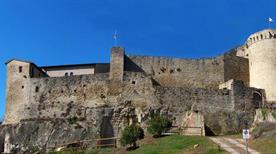
Fortezza di Castrocaro
Castrocaro Terme
(26 Km)
The imposing Fortress of Castrocaro Terme was opened to the public after a long restoration work to bring it back to a state of accessibility. It is a medieval construction and was born in the foundations of an ancient Group. Today it is managed by the Pro Loco di Castrocaro.
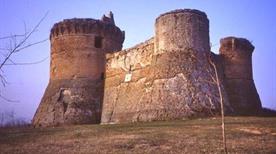
Rocca Montepoggiolo
Castrocaro Terme
(26 Km)
The Fortress dates back to 1471. The project was attributed to Giuliano de Maiano and in this included parts such as the four cylindrical towers, including the Maestra Tower, the highest of the four. The fortress has two entrances, one in the center of the Keep and the other in the west curtain. Based on its structure we can understand that it was a sighting building. Today we can see only a few ruins.

Bastione San Maria
Castrocaro Terme
(25 Km)
The Bastione San Maria is located in the town of Castrocaro Terme. What is located in the northeast is the only one that has reached us intact and has a part of the structure called 'areas of maneuver' or 'casematte', compared to the four original ramparts. The double-level tunnels and maneuver squares are also visible. It is currently open to visitors.
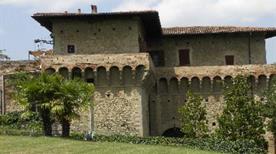
Castello del Capitano delle Artiglierie
Castrocaro Terme
(24 Km)
The Castle of the Captain of Artillery is a construction of the Middle Ages which dates back to around 1500. At first it had the purpose of military and defence, but over the years it was restructured and modified, changing its functions and becoming a home for the nobles. It is currently open to the public and is in excellent condition.
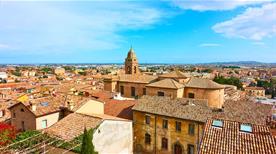
borgo di Santarcangelo
Santarcangelo di Romagna
(19 Km)
The heart of the ancient town is set on a soft hill called Colle Giove; even today the typical structure of the medieval fortified village is well recognizable. The Middle Ages left an indelible mark in the high districts of the historic center, on which dominates the solid fortress, a strategic bulwark on the surrounding plain.
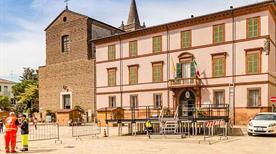
Cattedrale dell’Assunta
Cervia
(13 Km)
The altars are five, including the largest, dedicated to the Blessed Sacrament with the picture of Our Lady of the Assumption, John Barbiani, St. Joseph, Holy Heart, and Addolorata Lady of Good Counsel or snow.

Santuario Santa Maria delle Grazie
Rimini
(26 Km)
The Sanctuary of Santa Maria delle Grazie dates back to the fourteenth century. The origins of the Sanctuary come from a miraculous and legendary event that happened on top of a hill, where a shepherd carved a Madonna in the body of a tree while grazing the flock. He failed to finish his face and for this he was helped by the angels. So in the miracle hill the Sanctuary and a chapel with the name of Madonna delle Grazie was built. The simulacrum was later taken to Venice where it is still kept in the church of San Marziale.
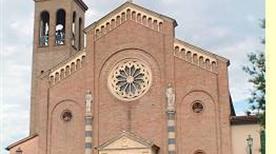
Chiesa di San Lorenzo Martire
Gatteo
(12 Km)
It rises in 1290 inside the Castle and later became a parish church. At the behest of Marquis Fabrizio Guidi she is moved to the church of Our Lady of the People.
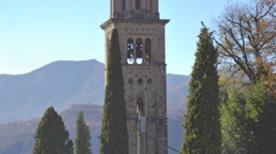
Campanile di Sant'Antonio
Gatteo
(11 Km)
The bell tower is all that remains of the oldest church of Gatteo Mare. The church was destroyed during World War II, then around 1944.
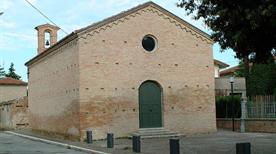
Oratorio di San Rocco
Gatteo
(11 Km)
A small church, the oldest in Gatteo Mare after the demolition of the church of San Lorenzo. With only one central nave, this hut church is rich in frescoes that make it a real artistic jewel.
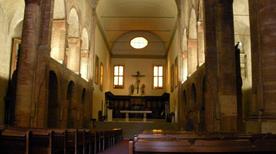
Abbazia di San Mercuriale
Forli'
(19 Km)
It's a symbol not only of the city but the entire Romagna. Begun in 1178, has a beautiful bezel by the Maestro dei Mesi of the "Duomo di Ferrara". The interior is simple and austere, typically Romanesque and houses valuable works of art.
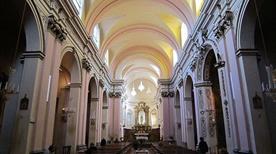
Basilica di San Pellegrino Laziosi
Forli'
(19 Km)
Also called the church of Santa Maria dei Servi di Forlì, the Basilica is famous for guarding the body of San Pellegrino Laziosi, it is a destination for pilgrims since it is the patron saint of sufferers of incurable diseases.
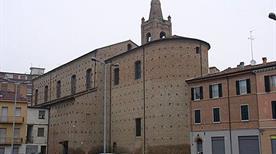
Chiesa del Carmine
Forli'
(19 Km)
Built in the fourteenth century, the Church of the Carmine is famous for its beautiful marble portal of the XV century. Despite its fourteenth-century origin, the current church is the result of an extensive renovation that took place in 1735 and 174
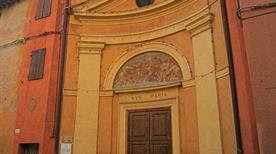
Chiesa del Miracolo
Forli'
(19 Km)
This magnificent building erected in 1797 stands in the place where in 1428 there was a miracled school. In a cold winter night a fire broke out. Tamed the fire, it was discovered that the only wall left intact was that of the Madonna and Child.

Chiesa di San Salvatore in Vico
Forli'
(19 Km)
Church founded in the thirteenth century, it was completely renovated in 1546 and then later in 1760 had the new facade. The church now has a beautiful brick facade with a rich portal and stone capitals.

Santuario di Forno
Forli'
(14 Km)
It's located in the countryside east of the city (towards Forlinpopoli) and has been called "the most singular monument of the Forlì territory." This building dedicated to the Virgin Mary, in fact, has an unusual circular shape. Built in the second half of the fifteenth century, by the albanian Pietro Bianco (a pirate converted into a hermit), the Sanctuary, contains a valuable statue of a Madonna with his Child.
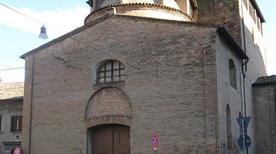
Oratorio di San Sebastiano
Forli'
(20 Km)
Near the beautiful church of St. James the Apostle (used as an exhibition center), there is the oratory dedicated to San Sebastian. Built in brick at the end of the fifteenth century, it housed the brotherhood of the Battuti Bianchi. It houses a remarkable fresco by Marco Palmezzano dedicated to the Crucifixion.

Piazza Aurelio Saffi
Forli'
(19 Km)
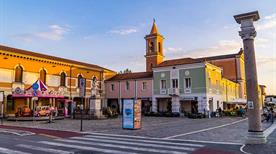
Piazza Ciceruacchio
Cesenatico
(12 Km)
Ciceruacchio Square is a square lovely and lively characterized by a profile of tiles of different colors that highlight the plan of a tower, which was destroyed during the Napoleonic Wars. In this square are often organized various events.
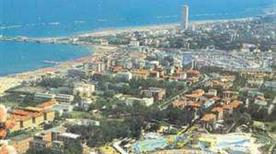
Viale Carducci
Cesenatico
(13 Km)
Viale Carducci is a road parallel to the sea along almost entirely dedicated to tourism through the construction of hotels, shops, restaurants, arcades, bars and pubs.
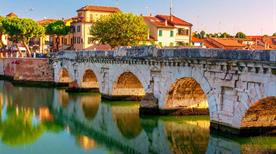
Ponte di Tiberio
Rimini
(26 Km)
Built in Roman times its construction was over in 21 d. C. during the reign of Emperor Tiberius. In sober and solemn style, built in Istrian stone,it consists of five arches of different sizes.

Anfiteatro romano
Rimini
(27 Km)
Elliptical in shape, it was built peripheral to the city center in the second century AD. Of large size, it could accommodate up to 10,000 spectators. An amphitheater that was initially used mainly for gladiatorial shows.
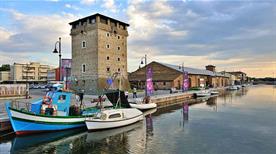
Torre di San Michele Biblioteca
Cervia
(14 Km)
Back in 1691, Count Michelangelo Maffei had an imposing building built, with a square shape, 22 meters high, called “Torre San Michele”. The building takes its name from the marble effigy dedicated to the Saint. Inside, the Tower was able to accommodate up to 300 soldiers. At the top of the structure, the banner of St. Michael the Archangel was waving. In 1862, after being also used as a Barracks, the Tower was abandoned; later, it was restored and transformed into the Municipal Library of Cervia.
Biblioteca Gambalunghiana
Rimini
(26 Km)
Opened in 1619, at the bequest of Alexander Gambalunga it is the first public library of the peninsula. Suggestive are the two magnificent globes wanted by the first librarian Michele Moretti with the heavenly terraqueous dated 1622.
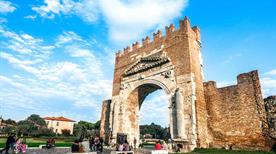
Arco d'Augusto
Rimini
(27 Km)
The oldest Roman arch of the peninsula. It was built in 27 BC in honor of Emperor Augustus. Of sober and solemn style, it was the end of the Via Flaminia, which connected the city with the capital of the Roman Empire.
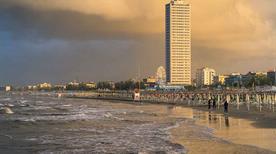
Grattacielo di Cesenatico
Cesenatico
(12 Km)
The skyscraper is located in Cesenatico on the Adriatic coast. Today is the reference point on the horizon for the entire topographic Riviera. Built in 1958, it was, until 1960, the tallest skyscraper in Italy, until the construction of the Pirelli skyscraper in Milan.
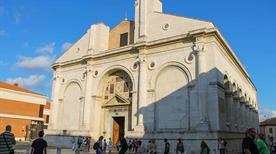
Tempio Malatestiano
Rimini
(27 Km)
Already present in Rimini in the ninth century it is by far the largest church in the city. Of Gothic style, it had many changes over the centuries of which the greatest is the huge dome that It was added during the Renaissance.

Torre di Castelnuovo
Meldola
(17 Km)
The Tower of Castelnuovo was built in the tenth century and belonged to the Caboli. Currently, there are only a few remains of the ancient fortification, including the castle, the bell tower dating back to the '400, and a small cemetery.
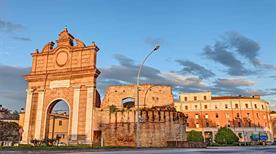
Porta schiavonia
Forli'
(20 Km)
At the northern entrance of Forli (right in front of the Montone River), stands the only city gate belonging to the ancient city walls, which has reached us. Documented already at the end of the thirteenth century, the Gate was demolished and rebuilt several times over the centuries. Made according to the Baroque taste, it is characterized by the presence of a monumental round arch.
Torre Civica
Forli'
(19 Km)
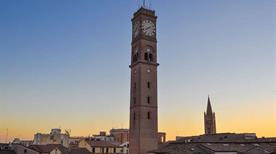
It's one of the symbols of Forli. Also known as the Municipal Tower or Clock Tower, this tower dominates the Communal Palace, in the heart of the city. Built on the ruins of a building from Roman times, it was remodeled and enlarged several times. Destroyed by the retreating nazis in 1944, it was rebuilt in the mid-seventies.
Torre Numai
Forli'
(19 Km)
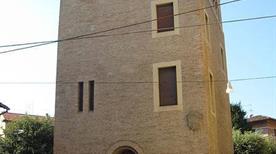
Built to defend the nearby Palace of Numai (which, by the way, is tied by an ingenious underground passage), is located in Via Pedriali, near Piazza Saffi. It was restored several times, until 1870, had the blackbirds, then replaced by a sloping roof at first and then with four pitches.
Porta Mare
Cervia
(13 Km)
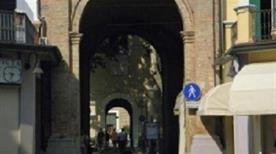
Porta Mare was built at the beginning of the 19th century and is the only building left of that period. He took this name, as it made it possible to access the sea. The structure has a round arch, which is still in excellent condition.

Torre Campanaria
Castrocaro Terme
(26 Km)
The Bell Tower, also known as the 'Campanone', was built on the plant of an ancient control tower. Later, the structure was transformed into Torre dell'Orologio, consisting of a large bell built in 1841 by the Balestra brothers of Cesena. Currently, the tower is in excellent state of preservation.
Porta Fiorentina
Castrocaro Terme
(25 Km)
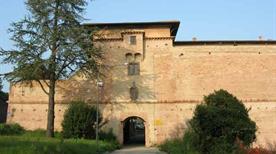
The Fiorentina Gate is located in the Castle of the Captain of Artillery and was built in 1400. This historic door was used, and is still used today, as a central point of passage for the city.
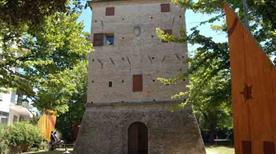
Torre Saracena
Bellaria Igea Marina
(16 Km)
It was built in the seventeenth century by the Papal States in defense of the inhabitants of the coast from the numerous raids by Saracen pirates.
Ir's the only one left intact of the six towers built in the area and over the centuries has been also used as a place of quarantine

Pinacoteca Civica
Santarcangelo di Romagna
(18 Km)

Galleria "G. Pedriali"
Forli'
(19 Km)
In Progress of the Republic. It hosts a valuable collection donated by Giuseppe Pedriali, in 1932. Among the most valuable works: an oil on canvas by Anthony Jansz Van Croos, oils on canvas by Giovanni Crivelli called the Sieve, an oil on cardboard by Pompeo Mariani and some oils on panel by Giuseppe Ciardi.
Museo Storico Sezionale "D. Foschi"
Forli'
(19 Km)
Located at the Palazzo del Mutilato in Via Piero Maroncelli. This exhibition was created thanks to donations from the local section of the '"National Association of War Invalids and Maimed" It houses various memorabilia (uniforms, weapons, medals, postcards, badges...) dating from different historical periods (the struggles for independence, Renaissance, world wars...).
Torri e Mura
Longiano
(11 Km)