Eremo Carmelitano S.Maria degli Angeli
Scandicci
(24 Km)
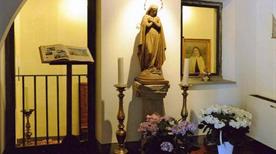
The monastery dates back to 1987 and welcomes a group of Carmelite nuns. The building, where different liturgical rituals are made, is furnished with modesty and simplicity. In its interiors, various icons, portraits, and numerous religious objects are preserved, which give a spiritual nature to the monastery.

Castello Montebicchieri
San Miniato
(23 Km)
The Castle was erected in the 13th century, and over the years, the building passed into the hands of several owners, who slightly modified the structure. Today, the castle houses the homonymous Church that presents fourteenth-century decorative and architectural elements.
Castello dell'Acciaiolo
Scandicci
(26 Km)
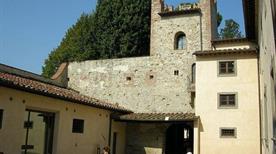
The castle was erected in the '300, and purchased in the 16th century by Senator Roberto Acciaioli, from whom it also took its name. Today's structure is the result of a series of interventions carried out over the years. Today, it is home to “Bistrot of the World”.

Rocca Nuova
Volterra
(22 Km)
The Rocca Nuova of Volterra was built in 1472 by the Medici family. It was designed to be a fortress with a square shape with four towers. It seems an individual complex but it connects to what is called the Rocca Vecchia with a system of balconies and walls creating a unique and particular architecture. The fortress was exploited as a military base and was later used as a prison since the Medici era.
Rocca Vecchia
Volterra
(22 Km)
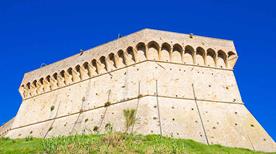
The Rocca Vecchia was built in 1292 at the behest of the municipality of Volterra. The building was added to the already existing Bishops' Castle. In the fourteenth century, a pentagonal structure was built that incorporated the thirteenth-century. The Rocca Vecchia is connected to the Rocca Nuova, designed later, with a system of balconies and walls.
Rocca di Berignone o Torraccia
Volterra
(22 Km)
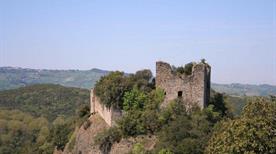
The Fortress of Berignone also known as “La Torraccia” is located in the forest complex of Berignone. After traveling a piece of SS68 it is only reachable on foot. It was used as the residence of the bishops of Volterra. Later it was used as a place of refuge during the war between Guelphs and Ghibellines. Today only part of the tower and fragments of walls remains, while the village disappears inside the surrounding forest.
Castello di Pignano
Volterra
(15 Km)
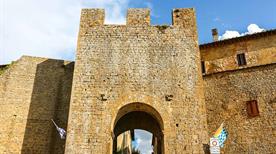
The Castle of Pignano is presumed to date back to the twelfth century. Its structure has been subject to various warfare and war attacks over the centuries. Today we can say that it is in good condition and is accessible to the public. It was used as a stately villa and farm, even though it was originally a rural castle.

Cassero
Poggibonsi
(14 Km)
The Cassero, with a pentagonal plan, is a renovated building to date overlooking the surrounding hills. Surrounded by an impressive crown wall. It is possible to visit it from 10 am to 7 pm during weekdays and holidays.
Loggia del Giudice
San Gimignano
(9 Km)
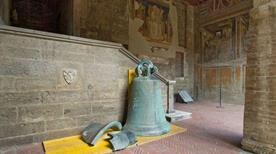
It is the entrance to Palazzo del Comune. It is well decorated with coat of arms representing the number of podesta that assumed leadership positions over the years. Justice was administered in the Loggia del Giudice (Loggia of the Judges).This Loggia has frescoes showing Saint Ivone ,the Lawyers patron overseeing justice to the poor while the rich standing at the door with gifts.
Borgo Castello di Monteriggioni
Monteriggioni
(23 Km)
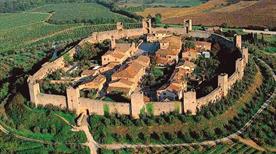
Just 10 minutes away by freeway from Siena, the Edge of Monteriggioni remains one of the most famous Italian villages, still intact, it is possible to visit it with tourist guides. With walls dotted with 14 towers, it is also remembered in the Divine Comedy.

Castello di Vicchiomaggio
Greve in Chianti
(23 Km)
Castello di Verrazzano
Greve in Chianti
(21 Km)

Castello di Querceto
Greve in Chianti
(28 Km)
The construction of the Querceto Castle dates back to the Lombard era. Since 1897 it has been part of the property of the Francois family. The Castle was transformed into a wine shop, where high quality wine is produced. The building, together with the company, can be visited.
Borgo Castello di Lamole
Greve in Chianti
(25 Km)
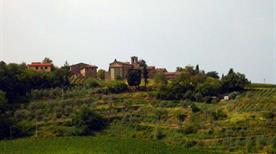
The Castle of Lamolesi was built between the tenth and twelfth century. Its structure is elliptical, 600 meters long. The castle looks like a group of houses that together constitute a defensive wall. Currently, in the castle there is a small restaurant and a shop that sells agricultural products.
Castello di Montauto
Impruneta
(27 Km)
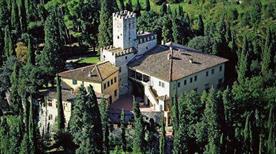
The Castle of Montauto was built in 980 AD with mainly defensive purposes of the locality on which it stood. Located on top of a conical hill and surrounded by a large park of cypress trees, during the 13th and 14th centuries it was home to the clashes and struggles between Guelphs and Ghibellines. Towards 1550, the Castle was transformed and expanded by the architect Domenico di Baccio d'Agnolo. There are therefore ornaments and frescoes of great elegance and preciousness that give the building splendor and shine.
Castello di Cafaggio
Impruneta
(23 Km)
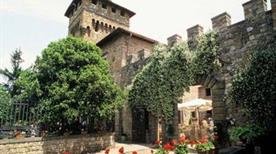
The Cafaggio Castle was built around 1300 near San Casciano in the Greve valley. The structure was composed of several houses and work rooms, thus constituting an independent village where products of different kinds were cultivated and worked. In fact, the Castle was located in a forest that was distributed for about one hundred hectares and there was not only wood but also flowers, mushrooms and plants. Around 1700 this fortress was the home of the well-known musician Giacomo Puccini.
Necropoli del Poggino
Castellina in Chianti
(25 Km)

Tumulo di Montecalvario
Castellina in Chianti
(21 Km)

Chiesa di San Salvatore
Castellina in Chianti
(21 Km)

Chiesa di San Martino a Cispiano
Castellina in Chianti
(22 Km)

Chiesa di San Giorgio alla piazza
Castellina in Chianti
(19 Km)
Consecrated in 1084, the Church of San Giorgio is located in Piazza nel Comune di Castellina in Chianti.
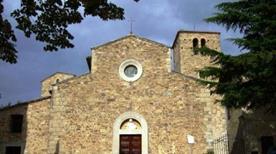
Pieve di Sant'Agnese in Chianti
Castellina in Chianti
(22 Km)
Since 1046, the parish church of Sant'Agnese is located inside a fortified complex, which includes the chapel of the company, the bell tower, the rectory and the cloister. The façade was rebuilt respecting the original profile, while the interior is presented in the form conferred after the last war and consists of three naves divided by five arches resting on pillars. South of the cloister there is a bell tower that in the past was a tower of defense.
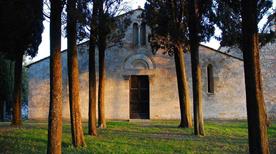
Pieve di Santa Maria Assunta a Cellole
San Gimignano
(8 Km)
The Parish Church already existed in 949. It was rebuilt twice over the years, first in the twelfth and then in the thirteenth century. As a glove it concerns consecration, this occurred in 1238. The building is characterized by a romantic style, and this is also noticeable from the facade. It is currently managed by the Diocese of Volterra.
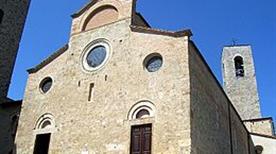
Cattedrale Collegiata
San Gimignano
(9 Km)
It is among the leading landmarks in San Gimignano. It is referred as Collegiata. It is the town’s main church .Has got numerous high quality 14th century paintings. Visitors are required to pay some charges for accessing it although discounts are offered to children.
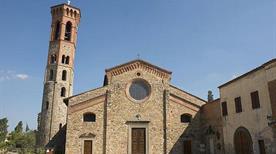
Badia di Settimo
Scandicci
(26 Km)
The Abbey, also known as the “Abbey of St. Salvatore and Lorenzo”, dates back to the tenth century. The structure has architectural elements of different styles, from Romanesque to Gothic and Renaissance. The interiors are carefully decorated and contain numerous liturgical objects and works of sacred art. The abbey is open to the public.
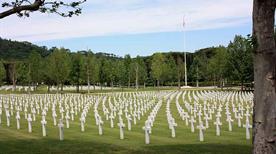
Cimitero Americano di Firenze
Impruneta
(21 Km)
The American Cemetery in Florence was built in 1959 and inaugurated in 1961 by American architects McKim, Mead and White. The Cemetery expands for 28 hectares and houses the remains of the American military who died during the Second World War and during the liberation of Italy.
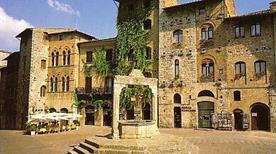
Piazza della Cisterna
San Gimignano
(9 Km)
It is regarded as the most famous and beautiful piazza in San Gimignano. Medieval towers and a wall of nobility houses surround it. Bounded by Palazzo dei Cortesi and Torre del Diavolo to the north. It was named after a water cistern located at its Centre. Offers a good view out past the Arco dei Becci passageway. Has a unique layout made in 13th Century.

Teatro Romano
Volterra
(22 Km)
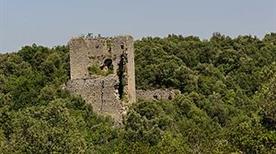
Rovine di Castelvecchio
San Gimignano
(16 Km)
The ruins can be seen from the south limit of San Gimignano municipal area. It was a very crucial civilian and military settlement in the past. It was formerly known as Castrum Vetus. In 1995, Castlelvecchio was officially recognized as a cultural heritage. Foreign visitors need to tour this place and appreciate how San Gimingnano and Italy at large was operating before modernization.
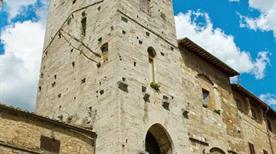
Torre del Diavolo
San Gimignano
(9 Km)
The unsettling and mysterious name has legend meanings. The owner of the tower discovered it was taller than it was on a return trip. He attributed the magic to the devil thus deriving the name, "Tower of the Devil". The upper floor of the tower has a number of holes visible from the walls.
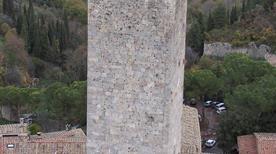
Torre Grossa
San Gimignano
(9 Km)
It is the tallest tower in San Gimignano, located in Piazza del Duomo near the Palazzo del Podestà. On the top floor you can enjoy a wonderful view of the town of San Gimignano.

Porta San Francesco
Volterra
(22 Km)
The Porta San Francesco is one of the main gateway to the city. The structure was built in medieval times during the construction of the new city walls deliberated by the Municipality of Volterra. In the past, the door had a different denomination and was known as Porta Santo Stefano or Pisana. Of all the Volterrane doors, Porta San Francesco is the only one that still preserves traces of frescoes on the internal arch.
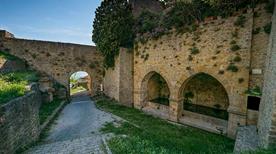
Porta San Felice
Volterra
(22 Km)

Porta all'Arco
Volterra
(22 Km)
The Gate to the Arch was built during the Vlll century BC by the Etruscans as part of the city walls. The Gate was built with tuff blocks and has a vivid shade due to the fact that three types of rock were used. It is made with different architectural elements, to testify to the numerous changes undergone over the years.
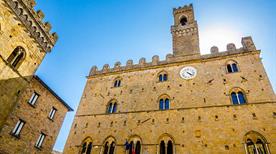
Torre del Porcellino o Podestà
Volterra
(22 Km)
The Porcellino Tower is part of the Palazzo Priori. The tower overlooks the palace and is one of the oldest. It is assumed that the palace and the tower were built in the period of municipalities, around the twelfth century. Nowadays it is among the most beautiful monuments in the area. The property is currently in excellent condition.
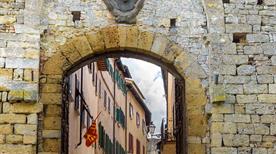
Porta Fiorentina
Volterra
(22 Km)

Porta di Docciola
Volterra
(22 Km)
The Porta di Ducciola was built in the 13th century. It was built to connect the city with the surrounding valley. It is composed of an internal and an external round arch. The water that flowed under it in the past served as a driving force to the medieval mills for the processing of wool.
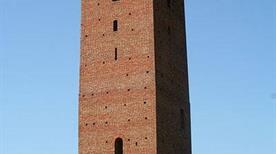
Torre di Federico II
San Miniato
(21 Km)
The Tower is the best known monument in the city of San Miniato. It was raised between 1217 and 1223, on commission of Frederick II of Swabia, for defensive functions. In 1944, it was completely destroyed by the Germans. Later, in 1958 it was rebuilt by the architect Renato Baldi and the engineer Emilio Brizzi.
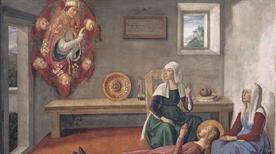
Museo d'Arte Sacra
San Gimignano
(9 Km)
It contains the works of famous sculptors like Giuliano da Maiano, Benedetto da Maiano and Bartolommeo di Fredi

Palazzo Comunale - Pinacoteca - Torre Grossa
San Gimignano
(9 Km)
It was built in the 13th century and became the head office of the comune. It is believed to have been designed by sculptor Arnolfo di Cambio. Sala di Dante where the general council met is one of the famous rooms of Palazzo. It is well decorated with tournaments, allegorical figures and beautiful hunting scenes. Lippo Memmi produced great Virgin and child painting that has made Palazzo del Podesta famous. Sala delle Adunanze Segrete is where the citizen government met. It is from this room that the fascinating climb to Torre Grossa begins.
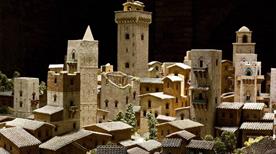
San Gimignano 1300
San Gimignano
(9 Km)
It is a privately owned museum. It provides an artistic impression of how San Gimignano would have looked back in 1300.It shows how a traveller would have seen it from a hilltop. The reproduction is made purely from clay, baked and painted with natural pigments.
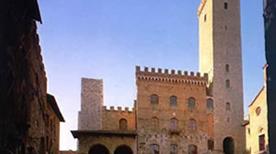
Museo Civico
San Gimignano
(9 Km)
The Museo Civico is a home of prestigious artworks from Siena and Florence. Most of the work is donated from the religious buildings around the city and from the entire public. It has various crucifixes and biblical scenes. Impressive panel painting done by Taddeo di Bartolo portraying San Gimignano can be found here. The surrounding walls give some brief description of him and how he was like in 1400.
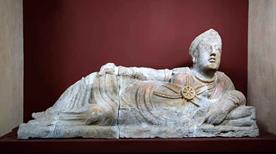
Antiquarium di Sant'Appiano
Tavernelle
(9 Km)
The well-known Antiquarium was placed inside the rectory of the Pieve di Sant'Appiano in 1991. The exhibition halls collect materials from the archaeological area of Semifonte and from the necropolis of San Martino ai Colli. Of great importance, it is a pagan idolet in stone, dating back to the second century AD.

Pinacoteca di Volterra
Volterra
(22 Km)
The Palazzo Minucci Solaini houses the Art Gallery of Volterra. Since 1982, it houses the Pictorial Municipal Gallery ordered by Corrado Ricci in 1905. It has works from different origins. A collection of artworks of the city.
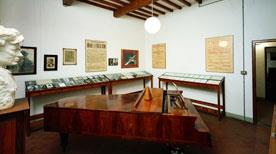
Museo-Casa "F. Busoni"
Empoli
(21 Km)
The “F. Busoni” Museum-House is located on the second floor of Ferruccio Busoni's birthplace. The structure houses various objects used by the musician during his work. The Museum exhibits a multitude of documents and family photos and the piano donated to him by the family on which he practiced during his past in Empoli.

Museo della Collegiata di Sant' Andrea
Empoli
(21 Km)
The Museum of the Collegiate Church of Sant'Andrea was founded by the Empoli Vincenzo Salvagnoli. The Museum site is divided into eight rooms arranged on two floors among which stand out the works of Giovanni Pisano with his “Madonna and Child” and the “Annunciation” by Francesco Botticini.
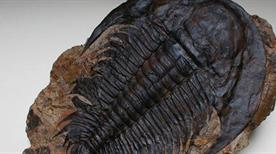
Museo Civico di Paleontologia
Empoli
(21 Km)
The Civic Museum of Paleontology of Empoli owes its origins to the Empoli Paleontological and Mineralogical Group, which in 1989 decided to establish a museum that welcomes the numerous finds collected during the course. of the years. The rooms preserve and display objects that document the history of the earth with about 30,000 fossils from all over the world.
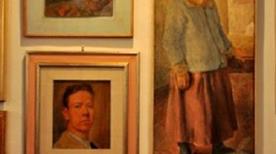
Galleria d'Arte Moderna e della Resistenza
Empoli
(21 Km)
The Gallery of Modern Art and Resistance was established in 1974 by the Municipal Council of Empoli. From the beginning it had the function of stimulating the interest of young people and citizens in relation to the Resistance and Modern Art. It is structured in three different rooms that welcome works by Sineo Geminiani, Virgilio Carmignani and works related to the Resistance. There are many paintings by Empolese artists who with their works represent the local history and culture of Empoli.
Museo Archeologico e della Collegiata
Casole d'Elsa
(23 Km)
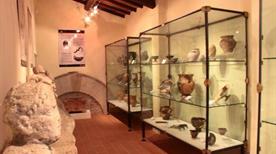
The collection exposes to the public both objects of the artistic heritage and the archaeological finds. The exhibition ends with a visit to the Collegiate Church, where they are kept: the masterpiece of the sculptor Marco Romano, the funeral monument to Bishop Tommaso Andrei of Gano di Fazio, the three paintings by Rutilio Manetti and the Majesty. The Archaeological Museum was founded in 1996, and is set up in three rooms, in which the history of the territory in the Etruscan age is represented.

Museo Archeologico del Chianti Senese
Castellina in Chianti
(22 Km)
The museum is located in Castellina in Chianti. Inside it is possible to see many archaeological and historical finds coming from the Chianti area. The museum is also part of the Musei Senesi Foundation.
Museo Parrocchiale della Propositura di S. Martino a Gangalandi
Lastra a Signa
(25 Km)
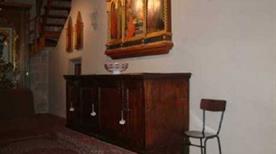
The Parish Museum of Prepositure is located in the interior of the Church of San Martino. The church has a Romanesque structure with fifteenth-century details. The museum was inaugurated and opened in 1986 and exhibits vicarial collections in its rooms. Among the collections the most particular one is the one set up in the former new sacristy in which relief works by Lorenzo Monaco are exhibited.
Museo del Tesoro di Santa Maria
Impruneta
(23 Km)
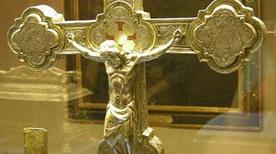
The Treasure Museum of Santa Maria was inaugurated in 1987 and is located in the Basilica of Santa Maria dell'Impruneta. The museum site is accessed through a door on the left side of the façade of the Basilica. The most significant treasures are represented by the “Reliquary of the Holy Cross” by Cosimi Merlini the Elder and a stylish cross by Lorenzo Ghiberti.
Galleria Continua
San Gimignano
(9 Km)

Oggetti E Soggetti D'Arte Di Melani Federico
Lastra a Signa
(25 Km)
Demiart
Palaia
(526 Km)