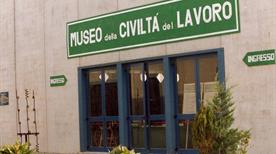
Museo della Civiltà del Lavoro
Campiglia Marittima
The Museum of Labor Civilization collects about a thousand working tools characteristic of the Val di Cornia. In addition to those of agricultural work and artisanal or industrial use, the Museum also houses several wagons, tractors, cogs and steam locomotives of the twentieth century. You can also admire a collection of twelve thousand artifacts from the farmer's work from the Giovanni Lazzerini donation.

Castello di Magona
Campiglia Marittima
The Castle of Magona was built in the early 16th century. After being the residence of Leopold II Grand Duke of Tuscany, he passed under the management of the Merciai family who turned it into a “Historical Home” open to all visitors.

Castello di Montesolaio
Campiglia Marittima
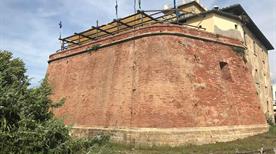
Forte di Marina di Bibbona
Bibbona
(21 Km)
The Fort of Marina di Bibbona was built in 1785 with a defence function. The facility controlled the entire coastal zone from possible enemy attacks. The building housed the rooms for the guard corps, which patrolled the coastal coast.
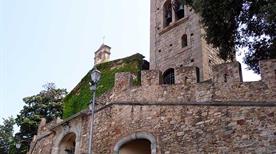
Propositura di San Lorenzo
Castagneto Carducci
(11 Km)

Pieve di San Giovanni Battista
Castiglione della Pescaia
(39 Km)
The parish church of San Giovanni Battista is a sacred building in Castiglione della Pescaia that was created in the 16th century from rooms used as a storage of weapons.
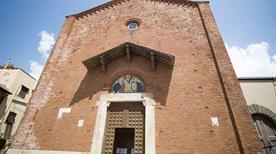
Cattedrale di Sant'Antimo
Piombino
(17 Km)
The most interesting sacred building in Piombino is certainly the Cathedral of Sant'Antimo. The fourteenth-century church, the current cathedral of Sant'Antimo, was built according to the forms of Sienese Gothic. The facade of the monument is made of red brick, of great interest is the beautiful cloister, the only example of architecture of the Principality.

Chiesa di San Leopoldo
Follonica
(19 Km)
Built in the nineteenth century and characterized by a porch and canopy facade made entirely of cast iron (the only religious building in Italy with such specificity), as are inter alia the furnishings and interior decorations.

Piazza Garibaldi
Massa Marittima
(22 Km)
Massa Marittima: Piazza Garibaldi The architectural and urban beauty of the historic center and its square, Piazza Garibaldi, tells the splendor of the medieval age that made this country famous in Italy and in the world.

Viale dei Cipressi
Castagneto Carducci
(22 Km)
Cisterna di Cittadella
Piombino
(17 Km)
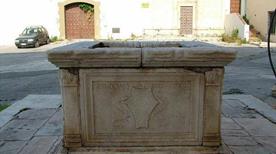
It is a typical white marble monument that dates back to the mid-fifteenth century. It was built by Andrea di Francesco Guardi. The construction is characterized, on three sides, by the depictions of three faces: that of Jacopo II, his wife and son. Instead, the fourth side engraved the Gentilizio Coat of Arms. Today it is in excellent condition.
Palazzo dei Priori
Piombino
(17 Km)
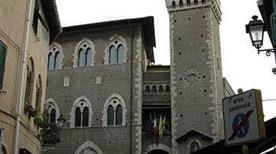
The Palazzo Comunale di Piombino is a thirteenth-century monument. Before that, the monument was known by the name Palazzo dei Priori. The Clock Tower and the bronze bell date back to the beginning of the 17th century. A Romanesque column is recessed in the right atrium. Of great interest is the Council Room, the lunette on the front door is frescoed with a painting depicting the Madonna With Child.

Casa delle Bifore
Piombino
(17 Km)
The House of Mullioned Window or Casa Minelli, is a small palace in Piombino, located in via Ferruccio next to the Palazzo Comunale. Its name comes from mullioned windows with pointed arches and column on the façade. The building is assumed to date back to 1200. Currently, the building houses the Historical Archive of the city of Piombino. Today, public initiatives are organized to promote their heritage, guided tours and educational activities in collaboration with schools and with other bodies and associations.
Museo Archeologico
Castiglione della Pescaia
(36 Km)
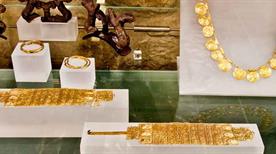
The Archaeological Museum is also known as the Museum of Isidoro Falchi, a doctor who carried out excavations at the end of the nineteenth century, discovering ruins of the Etruscan housing centers and the necropolis of the city of” Vetluna”. The objects, which belong to the State, are shown in the windows in a chronological and topographic order. The peculiarity of the Archaeological Museum is that it is also accessible to a blind public.
Teatro delle Rocce
Gavorrano
(28 Km)
Teatro del Mare
Piombino
(17 Km)
Museo delle Miniere
Montecatini Val di Cecina
(38 Km)
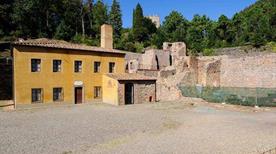
The thematic rooms of the Mining Museum are located at the fourteenth-century Palazzo Pretorio. The exhibition focuses on the resources of the subsoil of the Val di Cecina which, during the nineteenth century, saw its copper mine become one of the largest in Europe. The Museum offers on the ground floor a section dedicated to mining and galleries excavated in the mining site.

Museo del Castello e della Città
Piombino
(17 Km)
Museo del Mare
Piombino
(17 Km)
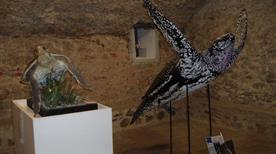
The Museum of the Sea is located at Palazzo Appiani, in Piazza Bovio. The building dates back to 300 and is also known as Palazzo Vecchio. The Museum was established in 1985 by the Institute of Marine Biology and Ecology of Piombino. Inside it collects and presents typical marine objects, parts of ships and ancient maritime artifacts. Today he also deals with monitoring the marine environment of the Mediterranean.

Mostra Permanente della Resistenza
Massa Marittima
(22 Km)
The Permanent Exhibition of the Resistance is located in the Council Hall of the Municipality of Massa Marittima. It was opened to the public in 1986 and was later reorganized on the occasion of the 60th anniversary of the Liberation. The exhibition is divided into two sections composed of panels accompanied by images that address the theme of the Massetana Resistance and the Massacre of Niccioleta.
Museo Civico Archeologico
Massa Marittima
(22 Km)
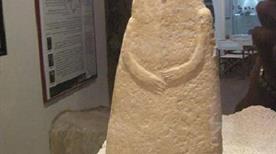
The Civic Archaeological Museum is located in the thirteenth-century Palazzo del Podestà since 1978, and exhibits materials from archaeological collections collected from 1875 by Gismondo Galli. The exhibition is divided into several sections where materials found in the Etruscan settlement of Lake dell'Accesa and in the necropolis of the territory are kept.

Antico Frantoio
Massa Marittima
(22 Km)
The Ancient Oil Mill dates back to the end of the eighteenth century and exhibits the memories of the peasant civilization of the territory of Massa Marittima, through a collection of testimonies of the ancient craft of processing oil. The Oil Mill Museum was founded in 1990 and also houses a drive wheel connected to the millstone of which Leonardo da Vinci was its creator.

Museo della Miniera
Massa Marittima
(22 Km)
The Mine Museum was founded in 1980 by a group of miners. It is located in the site of an ancient quarry composed of galleries used as a refuge during World War II. The exhibition path extends for about seven hundred meters where the different techniques of mineral extraction are exposed, and numerous machinery and working tools used up to a few are kept. years ago.
Museo di Arte Sacra
Massa Marittima
(23 Km)
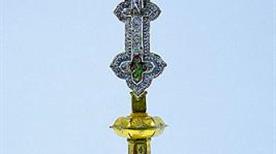
The Museum of Sacred Art was established in 2005 at the headquarters of the ancient church of San Pietro all'Orto. The exhibition halls retrace the most significant moments in the religious and civil history of the city, starting from the rule of the Prince Bishop until the decline of the city in the 16th century. The most important work is represented by Ambrogio Lorenzetti's painting 'The Majesty' on board.

Museo del Risorgimento
Massa Marittima
(22 Km)
The Museum of the Risorgimento was founded in 1911. In the museum there are materials that testify to the political, economic and social transformation of Italy in the 18th, 19th and 20th centuries. Inside we can admire paintings, sculptures, drawings, engravings, prints, weapons etc.

Zona Archeologica Etrusca
Massa Marittima
(24 Km)
The excavations started in the archaeological area in 1980, brought to light the remains of an Etruscan settlement organized in neighborhoods divided into different buildings and equipped with necropolis. Currently, only their foundations remain visible. Since 2001, the Archaeological Park was established, which includes the shores of Lake dell'Accesa and the dense surrounding forest.

Castello di Pietra
Gavorrano
(28 Km)
Terme S.Michele alle Formiche
Pomarance
(34 Km)
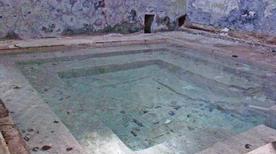
The spa of S. Michele alle Formiche dates back to the 16th century, and took its name from the adjacent homonymous monastery. The structure was restored during the 20th century, but has long been disused.

Torrione
Piombino
(17 Km)
Torrione Rivellino
Piombino
(17 Km)
Mura Leonardesche
Piombino
(17 Km)
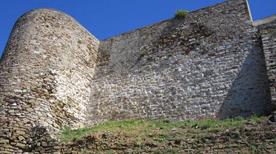
The Leonardesca Walls of Piombino were built in the fourteenth century with the aim of defending the city of Piombino from Mediterranean pirates. According to the studies carried out, the walls were built up to 10 meters in height, but unfortunately, today there are only a few sections of the ancient fortification left. The walls were the subject of study of Leonardo Da Vinci's military engineering at the beginning of the '500.
Le Mura
Piombino
(17 Km)
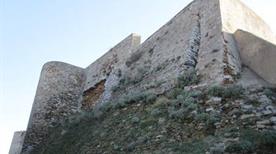
The walls of Piombino were built during the fourteenth century with the aim of protecting against raids of Mediterranean privateers and from the various threats of the hinterland. The structure was composed of walls that were about two meters wide and more than ten meters high. The most significant stretch is the one located along Via Leonardo Da Vinci.