
Piazza del Duomo
Catania
(21 Km)
Beautiful square and pedestrian promenade overlooking the cathedral, the palace of the Senate, Etnea Street, the fountain of the Elephant and the Amenano fountain.

Cattedrale di Sant’Agata
Catania
(21 Km)
Majestic baroque church, rebuilt in the '800. The bell tower was built a century later. Inside are the tombs of the kings of Aragon, the Chapel of St. Agatha and numerous works of art.
Parco Archeologico Greco-Romano
Catania
(21 Km)
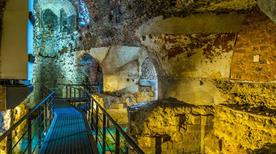
The Greek-Roman Archaeological Park of Catania, was established by the Sicilian Region, and deals with research, maintenance, enhancement and use of about a hundred archaeological sites and monuments, as well as the protection of several thousand finds.
Teatro Romano
Catania
(21 Km)
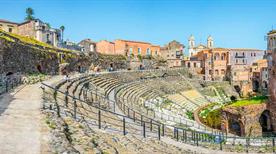
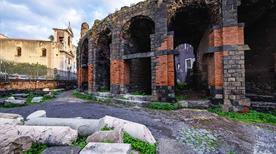
Also in the city center, in piazza S. Francis, this testimony of Roman culture, could accommodate 5,000 visitors. Nearby is the Odeon, a smaller theater that was, it seems, used for testing.

Castello Ursino
Catania
(21 Km)
Imposing Aragonese castle of the '300 that today houses the Museo Civico.

Anfiteatro Romano
Catania
(21 Km)
Could hold 15,000 spectators and was one of the largest theaters after the Colosseum. There were also real naval battles, filling the arena with water.
Teatro Massimo Bellini
Catania
(21 Km)
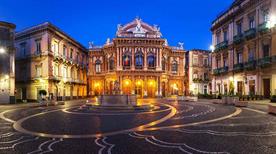
'900 Beautiful theater with a beautiful room for three thousand seats and superb acoustics.

Museo di Zoologia dell'Università di Catania
Catania
(20 Km)
Fontana dell’Amenano
Catania
(21 Km)
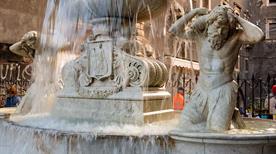
On Piazza del Duomo, opposite the Palace of the Elephants. In white Carrara marble, represent the river Amenano in the figure of the young boy pouring water. The water of the fountain ends up in the river that runs beneath the city.
Museo Artium
Santa Venerina
(24 Km)
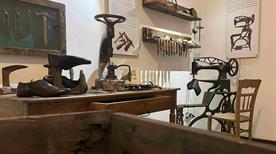
"Artium" representa un lugar donde se conservan las tradiciones ligadas a las artes y oficios de antaño que, además de tener un importante valor histórico, cultural y etnoantropológico, hunde sus raíces en las habilidades manuales del mundo artesanal que han caracterizado la tierra de Sicilia a lo largo de los siglos.
Las salas subdivididas por temas como en los antiguos talleres artesanales albergan, además de las herramientas típicas, una colección de obras pintadas sobre el tema de la "Antigua Artesanía" creadas y narradas por las hábiles manos de la artista Grazia Trovato en un ciclo que enriquece la reconstrucción de la artesanía tradicional siciliana.

Palazzo degli Elefanti
Catania
(21 Km)
A beautiful palace, the city hall on the Piazza del Duomo.

the Cisternazza
Zafferana Etnea
(21 Km)
Odeon
Catania
(21 Km)
Acquedotto Romano
Catania
(21 Km)
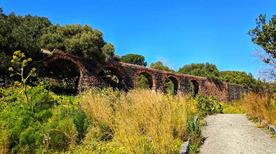
The Roman aqueduct of Catania was the greatest work of piping water in Roman Sicily.
Porta Garibaldi
Catania
(21 Km)
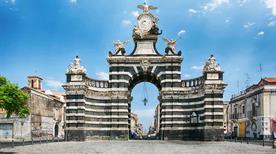
Arch raised in 1768 to celebrate the marriage of Ferdinand I and Marie Caroline of Austria.

Sito Storico Monastero San Benedetto
Catania
(21 Km)
It’ s possible to visit some amazing areas of the Benedictine cloistered Convent, the ruins of a roman domus recently found in its subsoil, the Church of Saint Benedict and its entrance: the stairs of the Angels. All this represents one of the most important baroque monumental complex. The tour includes the Macs – Museum of Contemporary Art of Sicily - located in the Convent ‘s little abbey.
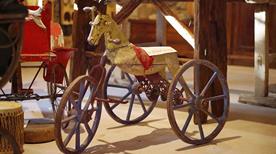
Museo del Giocattolo
Catania
(21 Km)
In the halls of Palazzo Bruca are exposed different toys for composition and origin, dating back to the '800 and the first half of the '900. There are several rooms dedicated to children's workshops, where performances and games are hosted.

Arte Nuvò
Catania
(21 Km)
Art Nuvò was born as a combination of exhibition space open to critics and historians and more. In addition to solo exhibitions of young talents and established artists, are exhibited works by various artists .
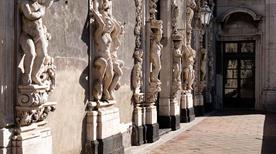
Palazzo Biscari
Catania
(22 Km)
Palazzo Biscari is one of the most important private buildings in Catania. It represents a unique case, for the structure, the plant and the decorations. It was built at the request of the Paterno Castello family, princes of Biscari from the end of 600`. Inside the building, there is the “party hall”, in the Rococo style, decorated with mirrors and frescoes.

Palazzo dell'Università
Catania
(21 Km)
Today's Palazzo dell'Università was built in 1696, by Giovan Battista Vaccarini, Francesco, Antonino Battaglia and many other architects of the time. The majesty of the structure occupies a large area. The building has well-groomed 18th-century architectural decorative elements. On the façade you can see the coat of arms of Aragon, while inside there are numerous frescoes, works by Giovan Battista Piparo. Since 1696, the building has been home to the University of Catania, from which it also took its name.
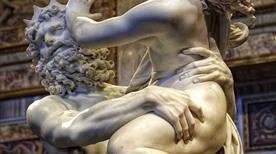
Fontana di Proserpina
Catania
(22 Km)
The fountain was built at the beginning of the 20th century, designed by Giulio Moschetti. The monument represents one of the most famous myths in the area, the rat of Proserpina, whose legend is linked to the history of the city.

La Cisternazza
Zafferana Etnea
(20 Km)
The Cisternazza is a monumental complex consisting of a cistern, a garden, a beautiful portal and a raised courtyard. “A Cistirnazza “, as is said in Sicilian, was erected by the bishop of Catania Andrea Riggio in the 17th century. The cistern is about ten meters deep and has an octagonal opening.

Villa Manganelli
Zafferana Etnea
(20 Km)
Villa Manganelli was built between the nineteenth and twentieth centuries by the Catania family Paternò-Manganelli. The building is built with the style typical of the Viennese Secession and is surrounded by a large park of trees. It is currently the property of the Etna Park Authority. Although many years have passed since its construction, the villa is in good condition.
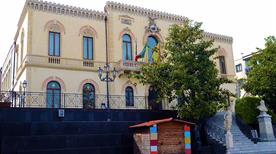
Palazzo Municipale
Zafferana Etnea
(21 Km)
The Municipal Palace was built in the late 19th century in a beautiful Art Nouveau style. After being made unusable by the 1984 earthquake, the building was restored and restored to its former glory.

Chiesa Santa Maria della Provvidenza
Zafferana Etnea
(21 Km)
The Church of Santa Maria della Providence was built in 1731, at the behest of the Dean of the Collegiate Basilica of Catania, Francesco Gagliano. It represents the Mother Church of Zafferana Etnea, as well as the most important monument of this city. Over the centuries, the property suffered several damage as a result of the earthquakes that occurred in 1818 and 1984. Thanks to the restoration works today we can admire the splendor of the building in its ancient form.
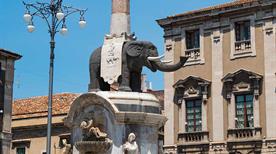
Fontana dell’Elefante
Catania
(21 Km)
Represents the symbol of the city 'U Liotru'. The black elephant carries on its back a white obelisk. We find the animal in the arms of cities and universities.
Teatro Stabile di Catania
Catania
(20 Km)
it is one of the most important cultural buildings of the town. It has three rooms: the Teatro Giovanni Verga (the main hall), the Teatro Angelo Musco and the Teatro Ambasciatori, offering the public a wide range of shows, in part self-produced.

Camera Teatro Studio
Catania
(19 Km)
The Camera Teatro Studio, active since 2002 in Catania on initiative of the Centro Teatrale Siciliano, focuses its work on the new theater and contemporary drama, as well as on the training of the public.

Teatro dell'Accademia
Catania
(20 Km)
It houses, in addition to the cabarets also the laboratory of laugh. A real school to become a real comic-comedian, a workshop for everyone who loves humor and irony, with an eye to clever satire.
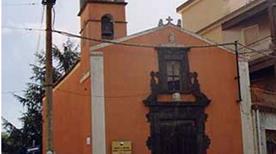
Chiesa di Sant'Antonio e Consolazione
Aci Bonaccorsi
(19 Km)
The church of Saint Anthony and Consolation is entirely frescoed with figures of Saints and scenes from the New Testament. The first construction of the building dates back to the period around the 11th and 12th century AD and was modified in the 18th century. Inside we can find several paintings and statues among which the most important are: the stoning of Saint Stephen Protomartyr and the statue of the Protomartyr. The church is one of the oldest in the area.
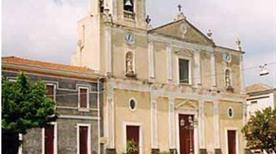
Chiesa Madre S.Maria dell'Indirizzo
Aci Bonaccorsi
(19 Km)
The Church dedicated to Our Lady of the Address is a construction of the fifteenth century. Outside the church there is a staircase, the stone portal on the side facade, worked with ornamental reliefs and the bell that was built in 1817. Instead, inside there are three naves enriched by refined decorations and works of high artistic value.
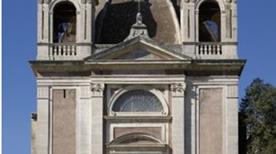
Chiesa di San Giuseppe
Aci Catena
(22 Km)
It was designed by Francesco Battaglia in 1730, who in those years took care of rebuilding Catania. The unique Byzantine Arabic style is noticeable in colors and shape. The garden once stretched around the whole building. Today it is a subsidiary of the Parish Mother Sanctuary Maria SS.ma della Catena.
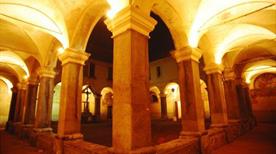
Municipio ex Convento S.Antonio da Padova
Aci Catena
(22 Km)
The Town Hall and former Convent of Saint Anthony of Padua was built in 1636 in Aci Catena. It is one of the most beautiful and elegant buildings to which the Catenotes contributed. The staircase gives an extreme harmony to the whole building and inside there are most of the best works in the country. The cloister is decorated in the lunettes with frescoes depicting the life and works of the Franciscan Saints. It is among the most visited and best preserved monuments in the city.

Santuario Maria Santissima della Catena
Aci Catena
(22 Km)
The Sanctuary has a very elegant architecture. Interesting to see are the apse, the transept, the dome and the two side chapels. Also worth admiring are the frescoes, in particular the icon of the Madonna, painted on stone, dating back to the 16th century. The Madonna looks majestic thanks to some details: a golden mantle surmounted by a precious crown and the child who wears in her arms that makes this icon a real work of art.

Eremo di Sant'Anna
Aci Catena
(22 Km)
The hermitage of Sant'Anna, was founded in 1751, by Friar Rosario Campione. The hermitage is located close to a hill from which you can admire a splendid panorama of the Ionian coast. The original plant was composed of a small church with two small rooms immersed in the vegetation to which later added a large cistern for the collection of water. In 1756, the cells and the chapel were added. Among the works in the church you can admire the Madonna with the Child and Saint Anne. Inside, you can observe the cloister and the Mediterranean garden.

Chiesa di San Michele
Aci Sant'Antonio
(21 Km)
The Church of San Michele was built on another church that already exists, although always dedicated to the Archangel of St. Michael. The treasure of the church is the original bell tower of 1753. After the 1693 earthquake from which it was destroyed, the building was rebuilt to a larger size.
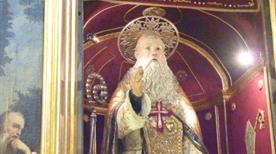
Duomo di Sant'Antonio Abate
Aci Sant'Antonio
(21 Km)
The Cathedral of Sant'Antonio Abate, built in the 18th century, is distinguished by a facade in limestone worked very finely. The interior of the Duomo is luxuriously decorated with frescoes by local artists.

Castello di Adrano
Adrano
(7 Km)
Built in the 11th century by Count Ruggero, it is one of the symbols of the city. What catches the eye is the Islamic style of the building, which is perceived in the main entrance and in the interior. It rises 33 meters long for 4 floors, the walls are 2.3-2.6 meters thick. The castle was abandoned after the 1600s earthquake that destroyed its interior. Over the centuries, it has been transformed having assumed several roles as the residence of noble families, as the seat of a prison then from 1958 to the present day and Museum.
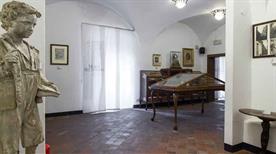
Museo Civico Belliniano
Catania
(21 Km)
In the Palazzo Gravina-Cruylas, the birthplace of Vincenzo Bellini, the five rooms are filled with memorabilia that trace the life of Bellini and his family, paintings, books, music sheets, musical instruments and the composer's death mask.
Museo Archeologico
Adrano
(7 Km)
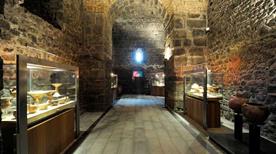
The Archaeological Museum is located inside the Norman Castle, symbol of the city, construction of the fourteenth century. In the Museum there are archaeological materials of Adrano, dating from the Neolithic age to the Middle Ages. In addition to these findings, the Museum also houses a rich library of historical collections - artistic and ethno-anthropological.

Teatro Sangiorgi
Catania
(21 Km)
Although belonging to the Teatro Massimo Bellini, Teatro Sangiorgi,
with its 477 seats,ensures the city with an offer of cultural diversity: contemporary music, chamber music, drama and operetta as well as experimental theater.
Museo di Mineralogia - Paleontologia e Vulcanologia di Catania
Catania
(21 Km)
It preserves fossils from Sicily and other Italian regions, and the world. There are admirable collection of fish fossils dating back seven million years and the skeleton of the little elephant of approx. 500,000 years ago.