
Castello Rocca Pia ruderi
Rocca Pia
The ruins that remain of the Rocca Pia Castle are located on a hill, surrounded by greenery. Precisely because of its location it was also called “Rocca Valle Oscura”. The building was built in the fourteenth century at the behest of the Cantelmo family. After the 18th he moved to the Tocco. The few parts left help us understand the extent of this construction, which is very important for those times.
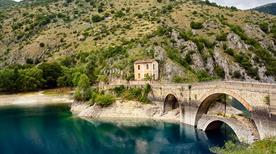
Eremo di San Domenico
Villalago
(12 Km)
The Hermitage of San Domenico is a small church located in the Municipality of Villalago. In the building there are paintings by the great painter Alfredo Gentile, depicting the history of some miracles. Inside the church there is a statue of the Saint, while on the right there is a fresco of the Madonna with the Child. The building was restored in 2012 and every 19 August it is visited by pilgrims.

Eremo della Madonna di Coccia
Campo di Giove
(10 Km)

Eremo di San Bartolomeo in Legio
Lama dei Peligni
(22 Km)
The Hermitage of San Bartolomeo was built on a rock roof. Inside, above the sixteenth-century altar, is the statue of St. Bartholomew. On 25 August each year the feast of the saint is celebrated.
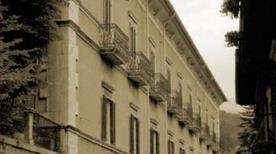
Palazzo Sipari
Pescasseroli
(21 Km)
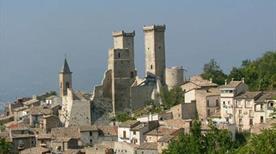
Castello Cantelmo-Caldora
Pacentro
(13 Km)
The Caldora Castle, also known as the Cantelmo Castle, was built between the end of the '300 and the beginning of the '400. The building is located in the Municipality of Pacentro. This has a trapezoidal construction consisting of four towers, of which only three are left. The building was restored in the 1960s.

Castello Cantelmi
Pettorano sul Gizio
(4 Km)
The Cantelmo Castle was built in the 11th century. The building played a very important role in the surveillance of the territory. Inside the castle there were houses. In 1990, the structure was modernized. Currently, it is the property of the Municipality of Pettorano.
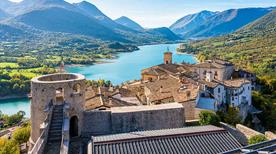
Borgo di Barrea
Barrea
(20 Km)
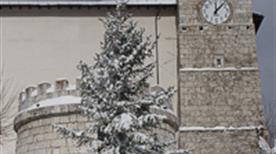
Chiesa madre “Santa Maria Assunta”
Opi
(21 Km)

Madonna dell'Altare
Palena
(12 Km)
Our Lady of the Altar is a sanctuary built in the cave where Pietro da Morrone stayed between 1235 and 1236. It was the seat of the Order of the Celestines until 1807. During World War II, the sanctuary was transformed into a prison by the German army and in 1970 it became the property of the Municipality.
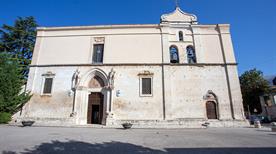
Cattedrale di San Panfilo
Sulmona
(14 Km)
It is the cathedral Church of the Diocese of Sulmona-Valva and was built in 1075. Initially, it was dedicated to Santa Maria, then, undergoing a couple of transformations in the twelfth century it was dedicated to the Patron Saint of Sulmona, San Panfilo from which it also took its name. In 1706 it was renovated in Baroque style due to an earthquake that struck it.

Museo della Civiltà Contadina
Ateleta
(20 Km)
The Museum of Peasant Civilization is located inside the building of the town hall of Ateleta, located in Piazza Carolina. It was established in 1987 with the aim of preserving and presenting the national heritage of the area. The Museum houses a large collection of objects, tools and photos, which represent the testimonies of the past.
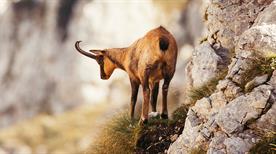
Museo del Camoscio
Opi
(21 Km)
The Chamois Museum was created by the National Park Authority of Abruzzo with the participation of the Municipality of Opi. It was opened to the public on 23 June 1992. The gallery is divided into three rooms, the first of which is addressed to the testimonies of the suede. In the second and third rooms, on the other hand, there are objects, documentation, and a screening room, concerning the protected areas throughout Italy. We can also find chamois, which live in a space of almost 20 square meters.
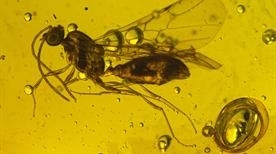
Museo Geopaleontologico Alto Aventino
Palena
(14 Km)
The High Aventine Geopaleontological Museum is located inside the top floor of the Ducal Castle. The structure was opened to the public in 2001, and presents the paleoenvironmental and paleontological aspects of the territory. The Sala Palena is very interesting, where exhibits from the myocenical deposit of Capo di Fiume are exhibited. Currently, the museum exhibition is open to the public and guided tours are also organized by reservation.
Raccolta "O. Recchione"
Palena
(14 Km)
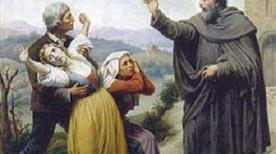
The Collection of the famous painter Oreste Recchione (1841-1904), houses about fifty paintings made by the artist himself. Recchioni was one of the most appreciated artists of the 800. The collection can be visited only by reservation.
Museo Diocesano
Sulmona
(13 Km)
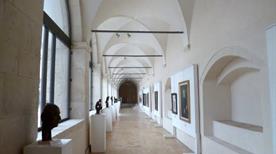
The Diocesan Museum of Sacred Art exhibits works that date from the twelfth century until the 18th century. It is located at the former Convent of Santa Chiara founded in 1269. The works present are both by famous artists and unknown artists.

Museo della Transumanza e del Costume Abruzzese Molisano
Sulmona
(15 Km)
The Museum of Transhumance and Costume of Abruzzo Molise is located at the Santissima Annunziata complex built in 1320. The Museum is divided into four sections: archaeology, medieval - modern times, the Roman Domus Hall and the Museum of Folk Costume. These sections contain sculptures, paintings, goldsmith art and popular costumes from the 12th to the 18th century.
Museo dell'Arte e della Tecnologia Confettiera
Sulmona
(13 Km)
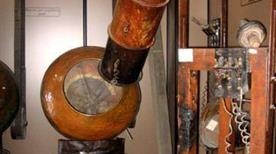
The Museum of Art and Technology Confettiera is located at the Pelino Confetti Factory and was created by Olindo Pelino. The factory presents in the machine rooms, relics, rare and precious objects. The museum also holds the recognition diplomas obtained in world exhibitions from the 800 to the present day. In 1992, the museum was declared a national monument.
Museo "In Situ"
Sulmona
(13 Km)
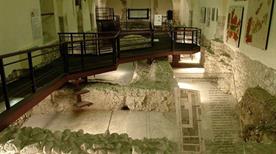
The In Situ Museum is located in the municipality of Sulmona. It is located inside the Palazzo della Santissima, which dates back to the fifteenth century. The Museum presents archaeological finds and popular art and culture to the public. In addition, it offers a large collection of prehistoric archaeological objects.
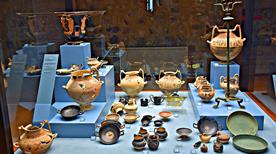
Museo Civico
Sulmona
(14 Km)
The Civic Museum of Sulmona is located inside the Palazzo dell'Annunziata. It was built in 1500 and covers ten rooms. In the first four rooms we find archaeological objects. Instead, the Art Gallery, located inside the museum, occupies six rooms. All the furniture in the room is very nice with furniture from the period. It houses a large collection of works ranging from the 13th to the 18th century. Among the artists we can certainly mention Giovanni da Sulomna, Giuseppe Simonelli and numerous others of the past centuries. Admission to the museum is free of charge.