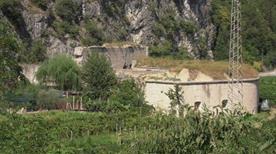
Tagliata di Incanal
Rivoli Veronese
The fortress was built in 1884 in the area of a valley located in the Municipality of Monte Cordespino. The building has a structure built of stone. In the eighties of the last century, part of the structure was destroyed due to the construction of new modern infrastructure. Currently, the fortification is the private property of Mr. Cristofaletti Renato.
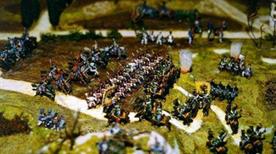
Museo Napoleonico
Rivoli Veronese
The Napoleonic Museum of Rivoli Veronese exposes to the public the relics of the Battle of Rivoli where Austrian troops clashed on 14 January 1797, the Austrian troops with those Napoleonic ones. Inside, we find preserved paintings and portraits, a model with scenes from the battle and documents concerning the Napoleonic period. The Museum is open to the public.
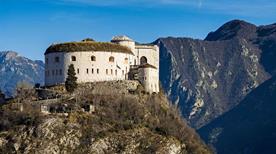
Forte Wohlgemuth
Rivoli Veronese
Wohlgemuth Fort was built between 1850 and 1851, for reasons of defense. In 1866, the building underwent restoration work and was named Forte di Rivoli. Currently, the Great War Museum is set up in its rooms, where weapons, documents and objects of war are exhibited.
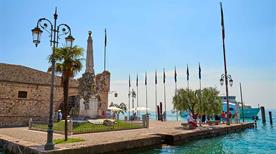
Dogana Veneta
Lazise
(10 Km)
Construction of great importance for the port of goods in the country Along with the port in front of the port. Customs today appears to us as a single 900 m² stone room with a height of 10 m, used as a congress center
Forte San Marco
Caprino Veronese
(6 Km)
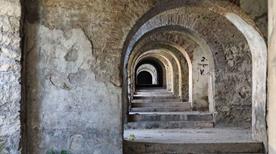
Fort San Marco was built between 1888 and 1913 by the Italian Army. The building was used during World War II for the headquartering of troops. The fort has a rectangular structure, built from local stones. Currently, it is private property and is in a state of neglect.
Forte Nugent
Pastrengo
(10 Km)
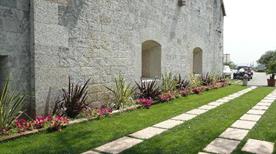
Fort Nugent is named after General Lavant Graf Von Westenrath, who was also the Captain of the King of Naples. You don't have a sure date about its construction, but it is assumed around the nineteenth century. One of its main functions was to protect against attacks and served as a sighting point in the event of war. Today it has been transformed into a restaurant.

Castello Scaligero
Torri del Benaco
(11 Km)
The Scaliger Castle is thought to be built under Roman rule and most likely during the settlement occurred in the 15th century BC. The beautiful structure is located on the eastern shore of Lake Garda . The fortress consists of three towers. Currently, the Ethnographic Museum is housed inside it.

Santuario della Madonna del Frassino
Peschiera del Garda
(19 Km)
The Sanctuary of Madonna del Frassino preserves many artistic and, above all pictorial works, so much so that it is often defined as a real art gallery. Among others, here it is possible to admire works by Farinati, also author of the frescoes on the walls of the Church, Bertanza, Muttoni the Younger and Zeno da Verona. Also very interesting is the choir entirely made of walnut.

Chiesa di San Martino
Peschiera del Garda
(18 Km)
It is considered one of the oldest in the Veronese Diocese, for some the original construction would date back to the year 1000. Demolished in 1800, after being used as a deposit of ammunition by Napoleon, the Church was rebuilt in the 1900s and frescoed by Severino Saoncella. It preserves some relics of Blessed Andrea da Peschiera.

Chiesa di San Nicolo'
Lazise
(10 Km)
The church of San Nicolò is located at the old port of Lazise. In Romanesque style it dates back to the twelfth century. The original bell tower, which was dangerous at the end of the eighteenth century, was knocked down and in its place a new one was made.

Santuario della Madonna della Corona
Garda
(17 Km)
The Sanctuary of Madonna della Corona is located in the middle of the vertical rocky wall of Monte Baldo. Its name comes from the chain of mountains that all around form a crown. This is completely excavated into the rock.
Sant'Antonio a Biaza
Brenzone
(15 Km)
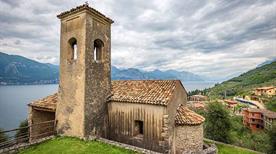
The origins of the Church of Sant'Antonio Abate in Biaza are not well known. The only clue we have, is a fresco on the outside wall, datable to the second half of 1300. The building is in the Romanesque style and is still in good conditions.
San Pietro a Campo
Brenzone
(15 Km)
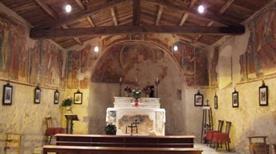
San Pietro in Campo, or San Pietro in Vincoli, is a medieval church whose origins are not yet known. The facade of the building was completely rebuilt in 700. The interior has a single nave leading to the altar and the apse. Please to note are the numerous frescoes.
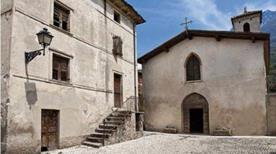
San Nicola ad Assenza
Brenzone
(17 Km)
St. Nicholas Church is located in Assenza, fraction of Brenzone. It was built in the eleventh and twelfth centuries and dedicated to St. Nicholas, Bishop of Myra, the patron of the dangers of the lake. Several extensions and modifications, from the fifteenth century to modern times, have radically changed its look. The interior has a single nave and in the choir there are the altar and a remarkable altarpiece of the sixteenth century. The interior walls contain frescoes painted between the thirteenth and fourteenth centuries.
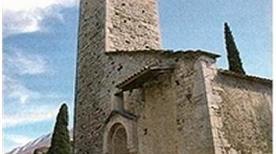
Chiesa di San Zeno a Castelletto
Brenzone
(17 Km)
The medieval church of San Zeno, built on a Roman villa, dating back to the eleventh, twelfth and thirteenth centuries. The structure is the result of different periods of construction. Very characteristic is the bell tower, built only in the last stage, around the thirteenth century. On the walls of the nave and along the apse are located the beautiful frescoes.
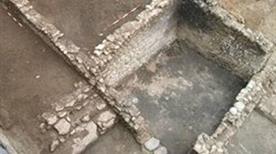
Villa Romana
Brenzone
(15 Km)
The ruins of the Roman Villa of Castelletto is one of the most important historical finds in the territory of the Veneto. Among the many details was most recently found a very impressive mosaic floor area. This was probably built in high medieval age, as it incorporates structural and decorative elements of the Church of Zeno.
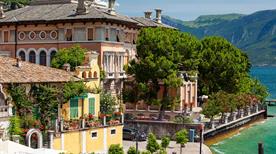
Palazzo Feltrinelli
Gargnano
(17 Km)
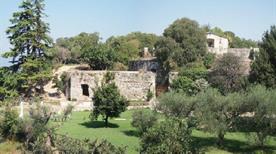
Forte Benedeck
Pastrengo
(9 Km)
The Benedeck Fort, located in Pastrengo, was named after General Ludwig August Von Benedeck. Work on the construction of the fort was completed in 1861. When it was built, it was chosen to do it on a hill, as a strategic point in case of war. Today, the fortification is a private property.
Forte Degenfeld
Pastrengo
(8 Km)
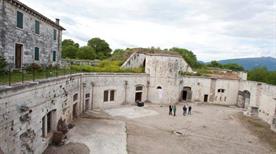
Fort Degenfeld was built between 1859 and 1861 by the Austrians. It was named after Commander August Graf Degenfeld Schonburg. Its structure also included a dozen cannons and a cistern for collecting rainwater. Since the early twentieth century it has been no longer used, but today it is still preserved in good condition. Currently it can be visited only on request, since it is privately owned.
Forte Leopold
Pastrengo
(10 Km)
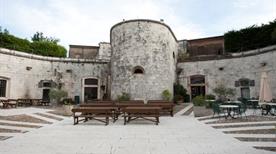
Fort Leopold was built in 1861 dedicated to Prince Leopold Anaht-Dessau. This construction was intended to be the headquarters of the command, on which other forts depended. Today it has been transformed into a restaurant/pizzeria.
Porta Brescia
Peschiera del Garda
(17 Km)
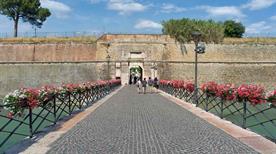
The Porta Brescia is located north of the walls surrounding the city of Garda and has the form of a narrow gap. It is the second entrance that leads to Peschiera and today you can walk only on foot, like the long bridge that connects with the mainland. The door was built thanks to a project, in 1766—1770, by Anton Maria Lorgna.
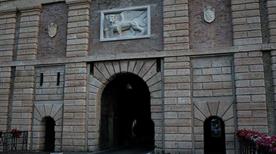
Porta Verona
Peschiera del Garda
(18 Km)
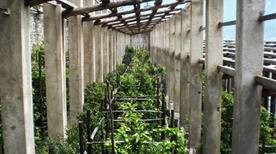
Le Limonaie
Gargnano
(17 Km)
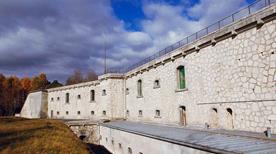
Forte Santa Viola
Grezzana
(17 Km)
Fort Santa Viola was built between 1904 and 1913 near Azzago. It developed on three floors and initially had a military function. The complex was equipped with a ventilation system of electricity generators. In 1958 it was purchased by the municipality of Grezzana and fell into disuse, reporting great damage due to the action of vandals, water infiltration and the invasion of spontaneous vegetation.
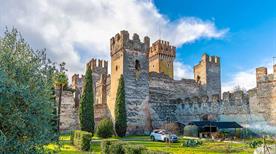
Castello Scaligero e Cinta Muraria
Lazise
(10 Km)
The most impressive building in Lazise is the Scaliger castle and the city walls that surrounds the historic center. The castle was built during the domination of the lords of Verona Bartolomeo II and Antonio della Scala.
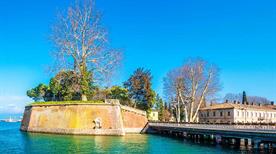
Fortezza di Peschiera
Peschiera del Garda
(18 Km)
Museo Botanico della Lessinia
Fumane
(9 Km)
The Botanical Museum of Lessini, together with seven other museums, is part of the Museum System of the Community of Lessinia. It was opened for the first time in 1981 and in 1996 it was expanded more. The museum was founded in honor of an important doctor and botanist, Giovanni Zantedeschi. In it you can see a considerable variety of species of the flora of this territory.
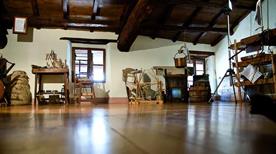
Museo Etnografico
Brenzone
(15 Km)
The Ethnographic Museum of Brenzone is located in the historical center of Castelletto and is located in the house where the Blessed Mother Maria Domenica Mantovani was born. She is the co-founder of the institute "Little Sisters of the Holy Family". The museum reproduces an ancient dwelling of the time and keep tools of local activities.
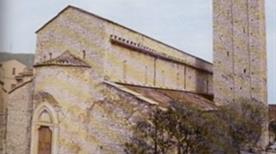
Museo della Pieve
Sant'Ambrogio di Valpolicella
(5 Km)
The Archaeological Museum of the Pieve di San Giorgio di Valpolicella was built in 1992. Inside there are archaeological finds such as: artifacts, Roman inscriptions and sculptures. The construction of this museum was born from the collaboration of Libero Cecchini with Luciano Zinnamosca and Banca Popolare di Verona.

Museo del Castello Scaligero
Torri del Benaco
(11 Km)
The Museum of the Scaliger Castle was established in 1983 at the headquarters of the ancient manor of Torri del Benaco. The collection illustrates the historical and cultural aspects of the territory with materials dedicated to fishing and olive growing, along with archaeological evidence found in Lake Garda.