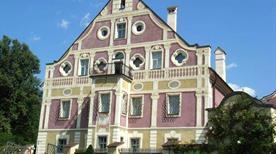
Museo Etnografico
Brunico
(8 Km)
The Ethnographic Museum turns out to be one of the oldest provincial museums in South Tyrol. The museum trail traces the stages of everyday rural life and offers the opportunity to explore the different South Tyrolean walks of life.
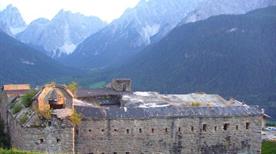
Forte Mitterberg
Sesto
(26 Km)
The Mitterberg Fort was built between 1885 and 1889. The building is part of the Austrian fortifications system on the Italian border. The property is owned by the Military State Property and is used as a deposit. Currently, the Municipality of Sesto is in negotiations for the purchase of the fort, with the aim of transforming it into a cultural and historical center of the country.
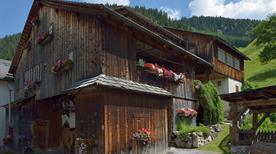
Pedecorvara
Corvara
(29 Km)
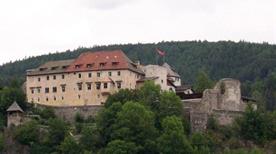
Castel Badia
San Lorenzo di Sebato
(12 Km)
The ancient construction dates back to the 10th century AD and was built at the behest of Count Otwin von Lurngau. Initially it had the function of a courthouse, but then it was transformed into a monastery and was donated to the Benedictine nuns. Unfortunately, there have been some damages over the years, which changed the original structure. The castle is located on a hill and is easily visible.
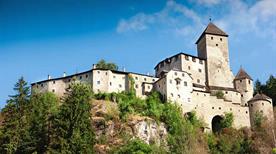
Castello di Tures
Campo Tures
(19 Km)
Restored after the second world war, the Castle Tures offers to tourists all its medieval splendor.Is located in Val di Tures, near the homonymous village Campo Tures.
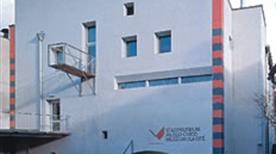
Museo Civico di Brunico
Brunico
(8 Km)
The Brunico Civic Museum is centrally located at the foot of the castle hill. A rich exhibition program of modern and contemporary art enlivens the museum activity. Five to seven exhibitions a year present artistic positions that mainly refer to the regional environment. Graphics, painting, sculpture and photography alternate to meet the interests of a wider audience.
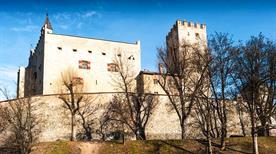
Castello Vescovile
Brunico
(8 Km)
Wherever you approach the city, the first thing you notice is the great Episcopal Castle. Located on an easily accessible hill, the manor overlooks the houses of the old town. In the right wing are the bishops' rooms, in the left wing the administrator's apartment and, originally, also the staff rooms.
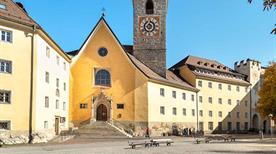
Convento delle Orsoline
Brunico
(9 Km)
The Ursuline Convent, built at the beginning of the fifteenth century, in Gothic style, is located near the Gate of the Ursulines, through which you access the city. In the past, it was home to customs where the goods were weighed and stored. The tower that overlooks this door is decorated with different images and coats of arms, the most important of which, probably the work of the painter Hans da Brunico, was partially damaged during the enlargement works of the arch of the door in 1758. The Ursuline Crypt is the oldest part of the whole convent building, and dates back to approx. 1410.
Chiesetta di Santa Barbara
La Valle
(17 Km)
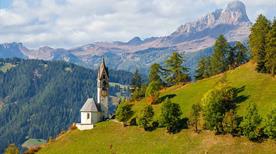
Symbol of The Valley, this church was built in 1490 in a prime position to dominate the surrounding valleys, with a great view of all the beautiful peaks of the Dolomites . On the outside wall there is a painting representing the crucifixion.
Chiesa di Santa Caterina
Corvara
(29 Km)
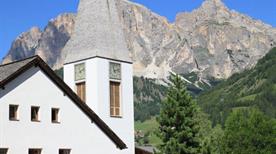
Dedicated to Saint Catherine of Alexandria, the old Church of Corvara was built in the second half of the fifteenth century, in Gothic style, however, without the typical decorations of the churches made in this style. The building contains some works by prestigious local artists, among them the triptych of the altar by Ruprecht Potsch, in which it is depicted precisely Saint Catherine.

Parrocchia di Colfosco
Corvara
(29 Km)
The Gothic Church of Colfosco or parish church of San Virgilio, is located along the road leading to the Gardena Pass. This one enjoys an amazing view. The structure was first mentioned in 1419. Inside there is a beautiful altar from the 19th century.
Cimitero di Guerra
Brunico
(9 Km)
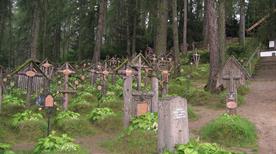
The Austro-Hungarian Cemetery of Bruneck is located in a wooded area. During the First World War in Bruneck, several military hospitals were housed in which numerous wounded, sick soldiers and prisoners of war of many nationalities died, who were then buried in this cemetery.
Forte Tre Sassi
Cortina d'Ampezzo
(28 Km)
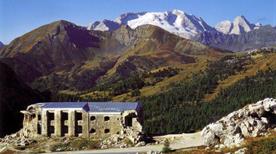
The Fort was built between 1897 and 1901 by the Austro-Hungarian army, with the function of rejecting the advance of the Italian Army. Currently, the structure is run by the Lancedelli family and inside is the Great War Museum.

Museo d'Arte Moderna ''Mario Rimoldi''
Cortina d'Ampezzo
(28 Km)
The Museum of Modern Art was built in 2012. Inside the museum you can admire many contemporary paintings collected by Mario Rimoldi since 1923. The paintings generally belong to famous painters such as: Picasso, Sutherland, Guttuso, Morandi etc.

Museo Paleontologico R. Zardini e Museo Etnologico delle Regole
Cortina d'Ampezzo
(28 Km)
The R. Zardini Paleontological Museum and Ethnological Museum of Rules is divided into several sections. In the paleontological museum there is a large collection of fossils from the Dolomites, algae, shells and animals dating back about 230 million years ago. While in the ethnographic museum the agricultural remains of Ampezzo are exhibited.