
Rocca Nuova
Volterra
(21 Km)
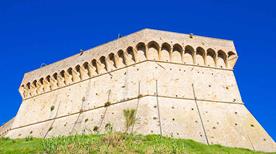
The Rocca Nuova of Volterra was built in 1472 by the Medici family. It was designed to be a fortress with a square shape with four towers. It seems an individual complex but it connects to what is called the Rocca Vecchia with a system of balconies and walls creating a unique and particular architecture. The fortress was exploited as a military base and was later used as a prison since the Medici era.
Rocca Vecchia
Volterra
(21 Km)
The Rocca Vecchia was built in 1292 at the behest of the municipality of Volterra. The building was added to the already existing Bishops' Castle. In the fourteenth century, a pentagonal structure was built that incorporated the thirteenth-century. The Rocca Vecchia is connected to the Rocca Nuova, designed later, with a system of balconies and walls.
Rocca di Berignone o Torraccia
Volterra
(21 Km)
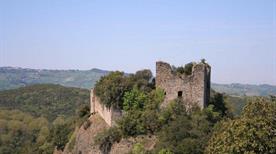
The Fortress of Berignone also known as “La Torraccia” is located in the forest complex of Berignone. After traveling a piece of SS68 it is only reachable on foot. It was used as the residence of the bishops of Volterra. Later it was used as a place of refuge during the war between Guelphs and Ghibellines. Today only part of the tower and fragments of walls remains, while the village disappears inside the surrounding forest.
Castello di Pignano
Volterra
(30 Km)
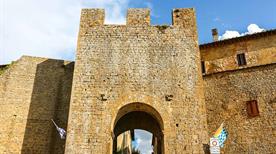
The Castle of Pignano is presumed to date back to the twelfth century. Its structure has been subject to various warfare and war attacks over the centuries. Today we can say that it is in good condition and is accessible to the public. It was used as a stately villa and farm, even though it was originally a rural castle.
Castello Pasquini Fantasia
Rosignano Marittimo
(19 Km)
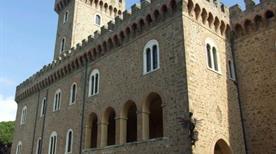
Pasquini Castle was built in 1889. The building was built as the residence of the Baron Lazzaro Patrone. After the work was carried out, the old buildings were demolished and the farmland surrounding it were transformed into a beautiful garden. Today it is a neo-Gothic style building, in excellent condition and open to the public.
Castello di Rosignano
Rosignano Marittimo
(15 Km)
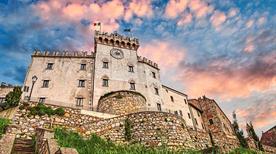
On a hill, dominating the whole area, stands the Castle of Rosignano. It was built around 1100 as a medieval fortress. Within its walls there are various buildings, not all built in the same period. Fortunately, today it is possible to visit this whole architectural complex.

Castello di Magona
Campiglia Marittima
(30 Km)
The Castle of Magona was built in the early 16th century. After being the residence of Leopold II Grand Duke of Tuscany, he passed under the management of the Merciai family who turned it into a “Historical Home” open to all visitors.
Forte di Marina di Bibbona
Bibbona
(13 Km)
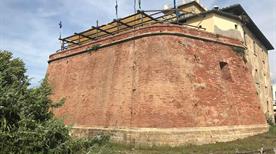
The Fort of Marina di Bibbona was built in 1785 with a defence function. The facility controlled the entire coastal zone from possible enemy attacks. The building housed the rooms for the guard corps, which patrolled the coastal coast.
Propositura di San Lorenzo
Castagneto Carducci
(19 Km)

Viale dei Cipressi
Castagneto Carducci
(11 Km)
Terme S.Michele alle Formiche
Pomarance
(20 Km)
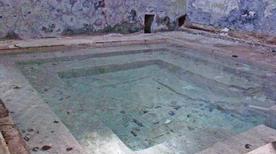
The spa of S. Michele alle Formiche dates back to the 16th century, and took its name from the adjacent homonymous monastery. The structure was restored during the 20th century, but has long been disused.

Teatro Romano
Volterra
(21 Km)

Torre di Vada
Rosignano Marittimo
(14 Km)
The tower of Vada is located in the municipality of Rosignano Marittimo. Its structure has medieval origins. With the fall of the Republic of Pisa, the tower passed into the hands of the Florentines, who in the fifteenth century restored the tower, which became part of the sighting system. Currently, the Environmental Education Laboratory is located in the tower environments. The building can only be visited during cultural events.

Porta San Francesco
Volterra
(20 Km)
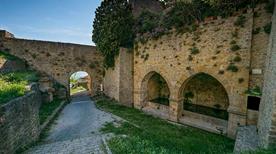
The Porta San Francesco is one of the main gateway to the city. The structure was built in medieval times during the construction of the new city walls deliberated by the Municipality of Volterra. In the past, the door had a different denomination and was known as Porta Santo Stefano or Pisana. Of all the Volterrane doors, Porta San Francesco is the only one that still preserves traces of frescoes on the internal arch.
Porta San Felice
Volterra
(20 Km)

Porta all'Arco
Volterra
(20 Km)
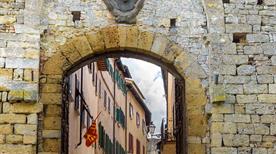
The Gate to the Arch was built during the Vlll century BC by the Etruscans as part of the city walls. The Gate was built with tuff blocks and has a vivid shade due to the fact that three types of rock were used. It is made with different architectural elements, to testify to the numerous changes undergone over the years.
Torre del Porcellino o Podestà
Volterra
(21 Km)
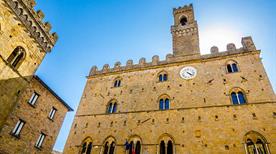
The Porcellino Tower is part of the Palazzo Priori. The tower overlooks the palace and is one of the oldest. It is assumed that the palace and the tower were built in the period of municipalities, around the twelfth century. Nowadays it is among the most beautiful monuments in the area. The property is currently in excellent condition.
Porta Fiorentina
Volterra
(21 Km)

Porta di Docciola
Volterra
(21 Km)
The Porta di Ducciola was built in the 13th century. It was built to connect the city with the surrounding valley. It is composed of an internal and an external round arch. The water that flowed under it in the past served as a driving force to the medieval mills for the processing of wool.
Museo delle Miniere
Montecatini Val di Cecina
(12 Km)
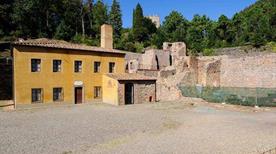
The thematic rooms of the Mining Museum are located at the fourteenth-century Palazzo Pretorio. The exhibition focuses on the resources of the subsoil of the Val di Cecina which, during the nineteenth century, saw its copper mine become one of the largest in Europe. The Museum offers on the ground floor a section dedicated to mining and galleries excavated in the mining site.
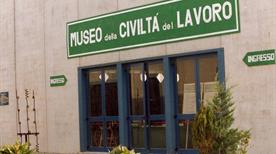
Museo della Civiltà del Lavoro
Campiglia Marittima
(33 Km)
The Museum of Labor Civilization collects about a thousand working tools characteristic of the Val di Cornia. In addition to those of agricultural work and artisanal or industrial use, the Museum also houses several wagons, tractors, cogs and steam locomotives of the twentieth century. You can also admire a collection of twelve thousand artifacts from the farmer's work from the Giovanni Lazzerini donation.
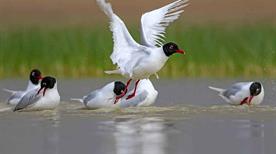
Museo di Scienze Naturali
Rosignano Marittimo
(17 Km)
The Museum of Natural Sciences was opened to the public in 1966, thanks to the collections collected by the children housed by the mountain colony of Gavinana. The Museum is managed by the Association “Friends of Nature of Rosignano” established in 1992, which aims to know the territory and the dissemination of information on scientific culture. Outside the structure there is a botanical garden with plants typical of the Mediterranean scrub.
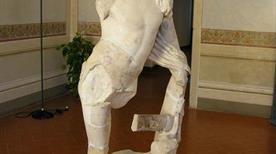
Museo Civico Archeologico
Rosignano Marittimo
(15 Km)
The Civic Archaeological Museum was established in 1955 at the behest of the Archaeological Group of Rosignano Marittimo, with the aim of welcoming some tombs of the Hellenistic age found in Castiglioncello. The same group, during the second half of the twentieth century, enriched the Museum with a large collection of materials found from excavations carried out in the Port of San Gaetano di Vada. Since 1996, the Museum has been headquartered in Palazzo Bombardieri.
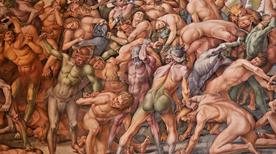
Pinacoteca di Volterra
Volterra
(21 Km)
The Palazzo Minucci Solaini houses the Art Gallery of Volterra. Since 1982, it houses the Pictorial Municipal Gallery ordered by Corrado Ricci in 1905. It has works from different origins. A collection of artworks of the city.

Castello di Montesolaio
Campiglia Marittima
(32 Km)