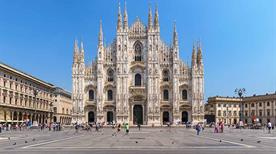
Duomo
Milan
Splendid example of mastery of 1400 architects. The construction of this enormous church began in 1386 and ended during 1900. From the roof, a beautiful view on Milan and Po Valley. Inside the Dome there is the Cathedral Museum with priceless treasur
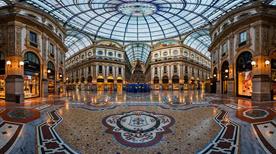
Galleria Vittorio Emanuele II
Milan
Marble floor and mosaics, arches and iron beams supporting the roof and bringing int the sunlight. Ancient and historical shops and stores in a shopping center context. Beautiful passage between Piazza Duomo and Piazza della Scala.
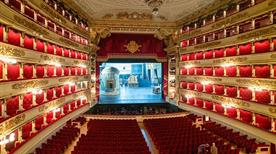
Teatro alla Scala
Milan
The prestigious Teatro alla Scala was built in 1776 by ??order of Maria Theresa of Austria. it was opened in 1778. It takes its name from the church, which was demolished to make way for the Duke's theater.
Cenacolo Vinciano
Milan
The Museum is entirely dedicated to the renowned work of Leonardo Da Vinci: The Last Supper. The painting is located in the Refectory of the Convent of Santa Maria delle Grazie and was commissioned to Leonardo by Ludovico il Moro in 1494. The great artist took three years to complete it, using a new technique for the fresco.

Il Cenacolo e Santa Maria delle Grazie
Milan
Beautiful church in a Dominican convent of 1500 with the famous Last Dinner by Leonardo da Vinci located in the refectory. Saved by a miracle during the Second World War, attracts tens of thousands of tourists every year.
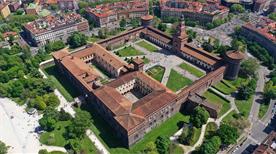
Castello Sforzesco
Milan
The symbol of the city of Milan, it was built in the fifteenth century by Francesco Sforza. It was a major military citadels in Europe between the sixteenth and the seventeenth century. Today, it houses the Egyptian Museum, an art gallery, among other galleries and museums of the Viscount.
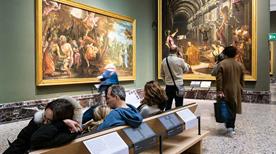
Pinacoteca di Brera
Milan
The Brera Art Gallery is located inside the Palazzo Brera, it was founded in 1776 by Maria Theresa of Austria. It was created to present a collection of the heritage of ancient and modern art. Currently, the art gallery houses paintings and drawings by artists of the last century. Admission to the art gallery is free of charge.

Museo della Basilica di Sant'Ambrogio
Milan
The Basilica of Sant'Ambrogio also known as the minor Roman basilica is one of the oldest churches in Milan, the second for its importance. It belongs to the early Christian and medieval times. The Museum was founded in 1949, and is placed in three rooms, where sacred vestments and liturgical objects from various eras are exhibited that document the history of the Basilica.
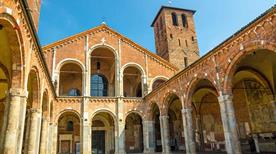
Basilica di Sant’Ambrogio
Milan
A bit hidden but one of the most beautiful and oldest churches in Milan. The old courtyard, the beautiful interior frescoes, the golden altar, the chapels: everything is worth of a visit, even the museum hosting tapestries and art objects.
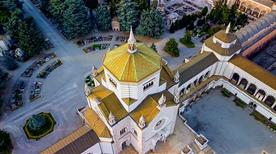
Cimitero Monumentale
Milan
Between the sacred and profane, this cemetery is an expression of funerary art from 1800 until today. Many famous people have been buried in the memorial chapel at the entrance.
Museo d'Arte e Scienza
Milan
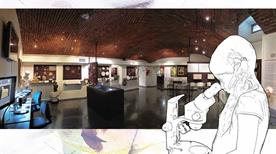
The Museum of Art and Science is located at the Sforzesco Castle. It was founded in 1990 by the will of the German physicist, Gottfried Matthaes. The Museum is located in six rooms, and inside it houses a large collection of Buddhist and African art. It was born to collect and enhance foreign art and culture through paintings, sculptures, tapestries and carpets. The museum is available to the public.
Fondo "U. Mursia"
Milan
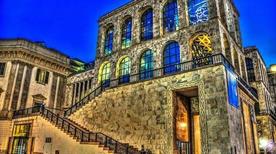
The gallery is located at the National Science Museum and collects a large series of objects, handmade and nautical products. We also find artifacts such as shells, carved sperm whale teeth and ostrich grapes, all decorated by hand by sailors. In addition to this, it also contains seven beautiful wooden statues which were placed on the stern of the boat. These sculptures are called figurehead, and they belong to the 19th century.
Museo Popoli e Culture
Milan
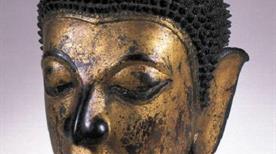
The Museum of People and Culture in Milan was founded in 1862 by the missionaries, and opened to the public only in 1910. Inside we can admire a large collection of objects of art and everyday life from Asian countries, in particular those coming from China. The museum is available to the public.
Museo del Giocattolo e del Bambino
Milan
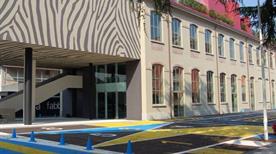
More than two thousand pieces are exhibited in the windows at child height of this museum. But more than quantity, it is the quality of the objects on display that are chosen with extreme care and that are arranged in such a way as to develop a story and stimulate the imagination of children. The toys on display date back to the 18th century until the 20th century. Of great importance are also the educational workshops where children have the opportunity to build a toy.
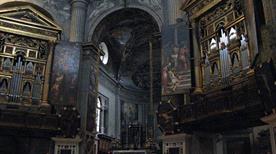
Museo della Basilica di Santa Maria della Passione
Milan
The Museum of the Basilica of Santa Maria della Passione presents to the public a testimony of the religious art heritage. The Museum is located inside the church of Santa Maria. It was built in 1486, in Baroque style and decorated by the painter Ambrogio Bergognone.
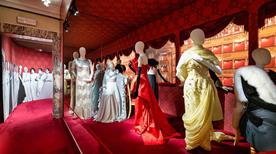
Museo Teatro alla Scala
Milan
Located inside of the Teatro alla Scala, it was established in 1913. There is a great collection of costumes, letters of composers, musical instruments, and other collections. Its library houses over 45,000 volumes.
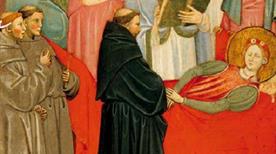
Museo Diocesano
Milan
The Diocesan Museum of Milan was founded in 2001 by the Archdiocese of Milan. It was created to collect and enhance the public an exhibition of the artistic heritage of sacred art through frescoes and works dating back to the fourth and 21st centuries. In addition, sculptures, documents, goldsmiths, prayers and old church ornaments are exhibited in the museum. The museum is available to the public.
Museo Zucchi Collection
Milan
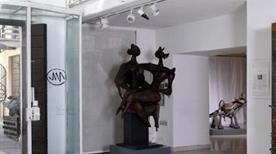
Museo Luciano Minguzzi
Milan
The Luciano Minguzzi Museum, founded in 1930, is located in a 17th century building. It houses sculptures, models and various works by the Bolognese artist from whom it takes its name.
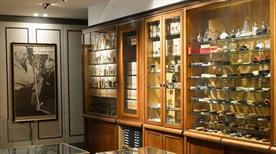
Museo Collezione G. Lorenzi
Milan
The Giovanni Lorenzi Collection Museum was founded in 1929 by Giovanni Lorenzi. The Museum collects and presents the work done by Giovanni Lorenzi after years of experience as a garzone from Arezzo. It is located in the heart of the Monte Napoleone district, in the center of Milan where the shop is also located. Inside the museum houses a large collection of safety razors, almost 3700 models dating back to World War I.
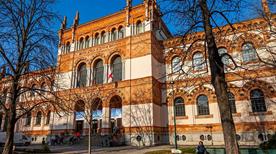
Museo Civico di Storia Naturale
Milan
The Civic Museum of Natural History in Milan was established in 1838, at the behest of the naturalist Giuseppe De Cristoforis. It is one of the most important naturalistic museums in Europe. The Museum is located in three rooms covering Italian environments, parks and nature reserves. The Museum presents an exhibition of Natural History dedicated to zoology and the main natural environments. In 1986, an African archaeology study center was also created inside the museum.
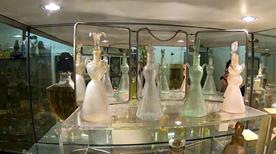
Museo del Profumo
Milan
The Perfume Museum houses a large collection that consists of single-dose products, dating from 1900 to today. The Museum exhibits the most important collections of perfumes and the world's perfumery production.
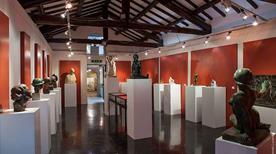
Civico Museo d'Arte Contemporanea
Milan
Museo del Risorgimento
Milan
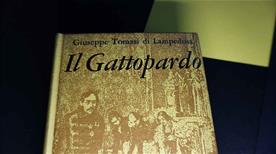
The Museum of the Risorgimento was opened to the public in 1885, and is located in the Palazzo Moriggia. It was born from a series of testimonies on the Risorgimento found for the Turin Exhibition in 1884. In the gallery we find documentations of history ranging from 1796 to 1870. It collects various works of art such as rare objects, frescoes, illustrations, and material that lead us to the war of independence.
Museo Ernesto Treccani
Milan
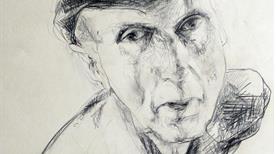
The Ernesto Treccani Museum was created in 1986 by the Corrente Foundation. It was born to collect and enhance the work and artistic life of Ernesto Treccani. The Museum contains about 248 works, and inside there are paintings, sculptures, ceramics and graphic works. The museum is available to the public.
Museo Navale Didattico
Milan
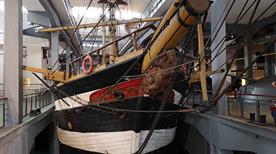
The Educational Naval Museum has recently been incorporated by the National Museum of Science and Technology. Inside it, the best known naval weapons are kept starting from the bombs used in the thirteenth and fourteenth centuries, up to the cannons of the Last World War. The Museum also houses a collection of about two hundred models of the Italian Navy from 1861 to today, as well as a series of historical instruments.
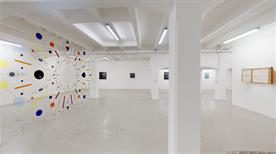
The Flat - Massimo Carasi
Milan
The Flat- Massimo Carasi is a contemporary art Gallery, based in Milan since 2002.
It deals in painting, photography, video, installation and sculpture.
In the space of 200 square meters, in Porta Venezia, through the program of exhibitions and events, the gallery promotes and supports the research in different forms of expression of young and mid-career, national and international artists.
The Flat- Massimo Carasi is active in the primary market, participating in art fairs generating opportunities for exchange and collaboration between artists, curators, critics and collectors.
Artist re

Studio Guastalla Arte Moderna e Contemporanea
Milan
Studio Guastalla Arte Moderna e Contemporanea was established in Milan in 1992. Ettore and Silvia Guastalla focus their research activities mainly on internationally acclaimed Italian artists, with whom they enjoy a direct working relationship, putting on specific exhibitions at their gallery, and promoting and marketing their past works. Apart from the careful choice of projects and works, particular attention is given to scientific aspects of archiving, as well as to the production of exhibition catalogues. Artists represented in solo shows include: Michelangelo Pistoletto, in 2013, simultaneously with the important exhibition being held at the Louvre, Emilio Isgrò, Giorgio Griffa and Piero Pizzi Cannella. Alongside their commitment to contemporary artists, Ettore and Silvia Guastalla are a point of reference in terms of market for artists of the calibre of Afro, Alberto Burri, Giuseppe Capogrossi, Lucio Fontana, Franco Gentilini, Renato Guttuso, Marino Marini, Arturo Martini, Amedeo Modigliani and Mario Sironi. In parallel, Studio Guastalla boasts important collections of graphic works by international artists, including Pablo Picasso, Marc Chagall, Georges Braque and
Teatro Menotti
Milan
It is one of the historical places of the Milanese theater. Since 2010 it has been run by Tieffe Teatro, which offers several seasonal shows.
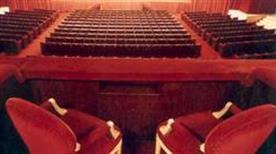
Teatro Manzoni
Milan
it is the place where the great drama theater found its place thanks to the tradition ofgreat artists who have played there since 1850. With 875 seats and 116 boxes today, the theater also hosts events and conventions.
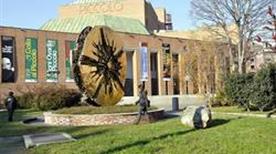
Teatro Nuovo
Milan
Located in the heart of Milan, the Teatro Nuovo was born in 1938 on a project of the architect Lancia. It has a capacity of 1,100 seats and hosts events of all kinds like big-name fashion parades, concerts and other major international gala.
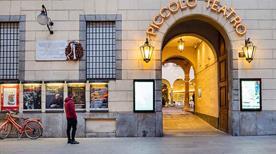
Piccolo Teatro d'Europa
Milan
The Piccolo Teatro was founded on 14 May 1947, by Giorgio Strehler, Paolo Grassi and Nina Vinchi, and is the first Italian building, in order of time, as well as the best known, in Italy and abroad. “Theatre of Art for All” was the slogan that accompanied the Piccolo at his birth and even today it fully summarizes its aims: to stage quality shows addressed to the wider public possible. Since 1991, the Piccolo Teatro di Milano has also been “Teatro d'Europa”.
Teatro I
Milan
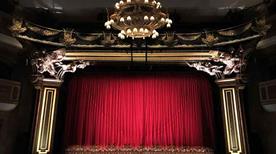
The theater was founded in 1995, by R. Martinelli as the Open Theater. It is located in the heart of Milan and is a space dedicated to the production and presentation of artistic works. Great works by famous authors have been created in this theater such as 'Symphony for Alone Bodies', 'Songs of Chaos', 'Fighting Negro and Dogs, 'and many more.
Ca' Granda
Milan
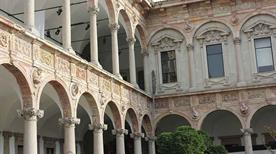
The building was designed by the Florentine architect Filarete, and is famous because it was one of the first Renaissance buildings in Milan. The construction was started in the mid-'400 on commission of the Duke of Milan, with the aim of providing the city with a single large hospital for the hospitalization and care of the sick. Although built in the Baroque era, the 300-meter-long façade has the fifteenth-century decorative elements. Today the building is home to the University of Milan.
Triennale di Milano
Milan
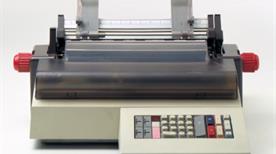
The Triennale of Milano is located in the area of the "quadrilateral " and placed in Palazzo dell 'Arte; since 1933 it reflects the artistic and architectural culture of Italy. Theareas for shows and other activities is equal to 8,000 square meters.
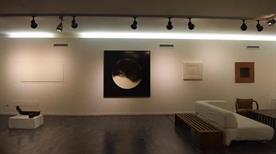
Grossetti Arte Contemporanea
Milan
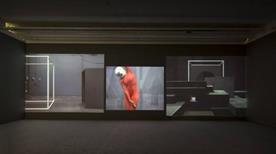
Galleria Francesca Kaufmann
Milan
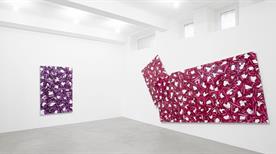
A arte Invernizzi
Milan
The gallery opened in February 1994 with an exhibition of works by Dadamaino, François Morellet and Günther Uecker.
Since 1994 the gallery has participated at Art Basel, Art Brussels, Art Cologne, Arte Fiera Bologna, Fiac Paris and MiArt.
Artists represented: Aricò, Asdrubali, Candeloro, Carrino, Charlton, Ciussi, Colombo, Dadamaino, De Marchi, Foxcroft, Frize, Guarneri, Kopf, Legnaghi, McCracken, Morellet, Nigro, Pfahler, Pinelli, Querci, Rückriem, Sonego, Staccioli, Toroni, Tremlett, Trotta, Umberg, Varisco, Verjux, Wach
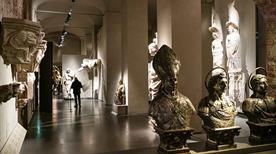
Museo del Duomo
Milan
A museum of twenty rooms that collects the history and artistic works of the Cathedral of Milan. It was inaugurated in 1953. Here you can appreciate the works of sanctuary, graphics, paintings and sketches in clay.
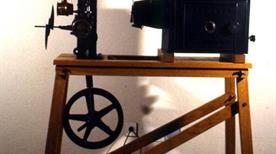
Museo del Cinema
Milan
The Museum houses an exemplary film machinery of that time, a 'reversible'. In a few years, Italian silent cinema also took its first steps, with its pre-litteram stars, its kolossals and of course, the cinemas. The advertising sheets of the Cinema Centrale in Milan (1909) show us the fashionable meeting place for gentlemen with mustaches and madame with eccentric head covers. The museum is available to the public.
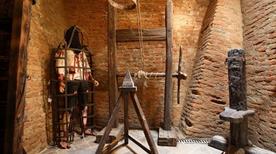
Museo della Pusterla di Sant'Ambrogio
Milan
The Museum of the Pusterla of Sant'Ambrogio also known by the name Museum of Criminology and Ancient Weapons, is located at the Pusterla of Sant'Ambrogio. The Museum houses ancient objects and weapons, and instruments of torture, dating from the Middle Ages until the 19th century. The most significant torture instruments present in the Museum are the guillotine and the electric chair.
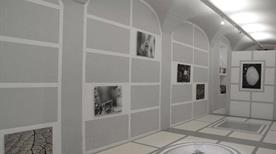
Museo della Permanente
Milan
The Permanent Museum is located inside the Palazzo della Permanente. The building was designed by the architect Luca Beltrami, in neoclassical style, with collections of works from the last nineteenth and twentieth centuries. Within the Museum there are monographic exhibitions, themes and historical exhibitions. The museum is available to the public.
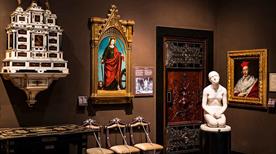
Museo Poldi Pezzoli
Milan
The Poldi Pezzoli Museum was established in 1881, by the nobleman Gian Giacomo Poldi Pezzoli. Inside the rooms of the museum is exhibited the enormous artistic heritage of Giacomo Poldi Pezzoli. The majestic collection contains objects such as: furnishings, paintings, sculptures, weapons, watches, porcelain, carpets and tapestries, furniture and goldsmiths.
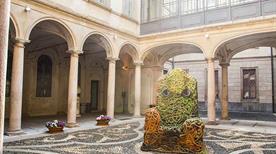
Museo di Storia Contemporanea
Milan
The Contemporary Museum of Milan is located in Palazzo Morando. The building dates back to the 18th century. It was owned by the Attendolo Bolognini family, who in 1945 donated the building to the city of Milan. The Museum was inaugurated in 1963, and today houses a collection that presents reality through works of art, with paintings and sculptures.
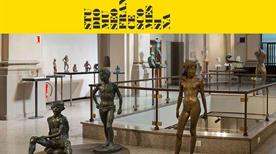
Museo Studio Francesco Messina
Milan
The Francesco Messina Museum was created in 1974 by the City of Milan, in honor of the Sicilian artist, Francesco Messina. It is located inside the ancient deconsecrated church of S. Sisto. The Museum houses about eighty sculptures and thirty works in paper.

Museo Nazionale della Scienza e della Tecnologia
Milan
Opened in 1953 with an exhibition on Leonardo Da Vinci, it aims to safeguard the scientific and technological heritage. Of great importance in Italy, it also houses a collection of machine models made ??from drawings by Da Vinci.
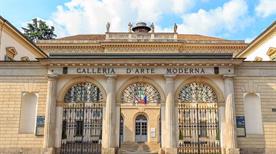
Galleria d’Arte Moderna GAM
Milan
Set in Villa Reale; it collects works by artists such as Andrea Appiani; Giuseppe Bossi;Antonio Canova; Francesco Hayez. But these are only a few names. It boasts a fine collection of the municipal art from the nineteenth century.
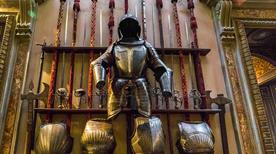
Museo della Fondazione Bagatti Valsecchi
Milan
The Bagatti Valsecchi Foundation is a house-museum entirely curated by the two brothers Fausto and Giuseppe Bagatti Valsecchi at the end of the nineteenth century. The interior rooms are very faithful reconstructions of the rooms of the Barons' house. Very special and lavish are the bedroom and the living room with the walls fully decorated.
Museo di Arte Paolo Pini
Milan
The Paolo Pini Art Museum is located inside the former Paolo Pini Psychiatric Hospital in Milan. A museum is dedicated to contemporary art, it was created in 1993 by Teresa Melorio, Enza Baccei and the Department of Mental Health of the Niguarda Ca 'Granda Hospital. It was opened to the public in 1995, and exhibits the ideas of professional artists and people suffering from psychic distress. Inside the Museum we find a collection of international level that houses the works of over 140 artists.
Pinacoteca Ambrosiana
Milan
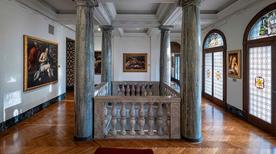
The Pinacoteca Ambrosiana is in the building where the headquarters of the famous Biblioteca Ambrosiana, was founded by Federico Borromeo in 1621 to combine its existing library, and initially began as an academy of painting and sculpture.
Museo Inter & Milan
Milan
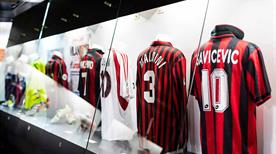
In the historical Meazza stadium, home of the two Milan's football teams, you can visit this unique museum that tells the story of Inter and Milan.
Quadreria dell'ospedale Maggiore
Milan
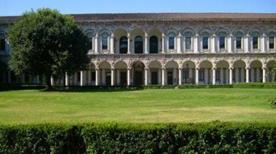
The Ospedale Maggiore holds well over 2800 artistic goods, including paintings, sculptures and objects dating back to the XVI-XXI centuries. The famous Quadreria contains portraits of benefactors of the hospital ranging from the late '400 to the present day, and sculptures and sacred objects. Beyond artistic relevance, the Quadreria is famous for the complexity of its keys to reading. Also of great importance are the portraits of the most famous presidents and doctors who worked in the hospital.
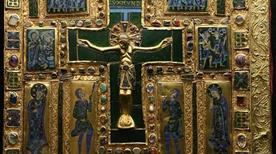
Tesoro del Duomo
Milan
The Treasure of the Duomo was recently moved to the New Great Museum of the Duomo in Milan, located in the Royal Palace. It is composed of precious jewellery and ivory objects, sacred furnishings, paintings and statues known throughout Europe for their priceless value.
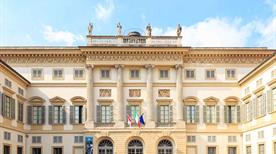
Galleria d'arte Moderna
Milan
The Gallery of Modern Art is located in the luxurious Villa Reale. It hosts great masterpieces by Italian and European artists such as Andrea Appiani, Tranquillo Cremona, Francesco Hayez and many others. It is known internationally and certainly deserves to be visited.

Galleria d'Arte Sacra dei Contemporanei - Villa Clerici
Milan
Founded in 1955 by Bellini Dandolo in the halls of the prestigious Villa Clerici in Niguarda area is the first gallery of contemporary sacred art in Italy.
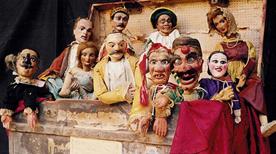
Buma: Museo del Burattino e della Marionetta
Milan
The Fondazione Scuole Civiche di Milano has created a virtual museum dedicated to animation theater to enhance its collection, consisting of over 5,000 pieces including figures and documentary material. BUMA, the museum of Puppets and Puppets, is an opportunity to learn about a collection among the largest and most complete in Europe, unique for the integrity of the pieces preserved and which includes over 500 puppets and puppets, from the '700 to the 40s of the twentieth century, with related accessories for tailoring and set designs.

Nuova Accademia di Belle Arti
Milan
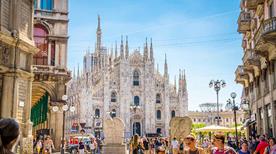
Piazza del Duomo
Milan
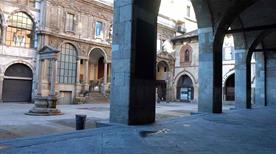
Piazza dei Mercanti
Milan
Piazza Mercanti is located at Piazza del Duomo in Milan. It was created in the 13th century, and has a rectangular shape. In the Middle Ages, the square was the center of city life.

Chiesa di San Maurizio al Monastero Maggiore
Milan
The construction of the Church of San Maurizio al Monastero Maggiore dates back to 1503. It was employed as the seat of the Benedictine women's monastery in Milan. The interior walls are the most important and suggestive attraction, in fact they are entirely frescoed with bright colors that immediately capture the gaze of visitors.
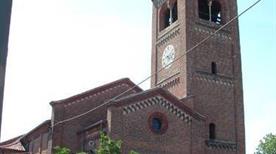
Cascina Monlue
Milan
The Cascina Monlue' was built in the 13th century, initially as an abbey. Over the years, an agricultural core has grown. Today, only the church dedicated to San Lorenzo and a part of the cloister remains of the monastery. Arci took care of it for several years, organizing concerts and DJ sets. Thanks to these programs, the farmhouse was the center of the Milanese summer evenings, however, in 2008, the activity was interrupted.
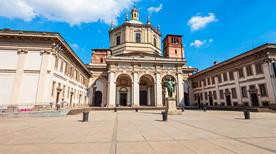
Basilica di San Lorenzo
Milan
The Basilica, located in Corso di Porta Ticino, is one of the oldest churches in Milan. In the churchyard are the famous Columns of San Lorenzo

Chiesa di San Bernardino alle Ossa
Milan
Following the collapse of the bell tower of St. Stephen in 1642, the church was renovated once in 1679 by Giovanni Andrea Biffi (one of the architects of the Fabbrica del Duomo di Milano), who intervened mainly on the facade dand
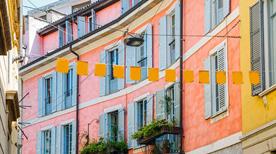
Quartiere Brera
Milan
The Brera area takes the name of the homonymous street, and the artists who studied at the Academy of Fine Arts transformed it into one of the most particular neighborhoods of Milan. It is certainly an area to see, to admire the ancient windows which hide endless treasures, to discover and tell. Of particular interest is the Academy with the particular Art Gallery, the Palazzo Cusani and some art galleries.
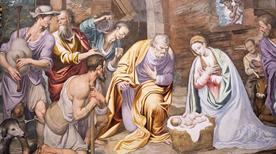
Certosa di Garegnano
Milan
This monument is a monastery and is located on the outskirts of Milan. It was founded in 1349, by the bishop and lord of the city and had the honor of hosting, for a short time, the famous writer Francesco Petrarca. The facade is decorated with modules mixed between the Renaissance and Baroque style, consisting of many statues, obelisks, friezes and flames. In addition, inside, the ceiling is decorated with an octagonal tiburio, while the church has a single nave with barrel vault and geometric stuccoes.
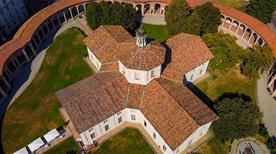
Rotonda della Besana
Milan
It is a structure in late Baroque style, the work of the architects Arrigoni, Croce and Raffagno. Its construction dates back to the 17th century, initially it was a cemetery for the dead of the Ca' Granda. The original core of the complex is the church which has a plan in the shape of a cross. An octagonal dome crowned by the slender lantern rises at the intersection of the arms. Since 1958 the complex has been owned by the Municipality and is often used as an exhibition space for exhibitions, screenings and cultural events.
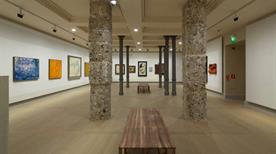
Palazzo Brentani
Milan
Palazzo Brentani was built in the 17th century, but its current appearance dates back to the reconstruction that took place in the 19th century, on commission of the Greppi family. The front side is divided into three floors with a stone base and in the center is the main entrance. The eleven medallions with the busts of the big names in the history of Milan are located above the windows of the first floor. In 1923, a new courtyard was built covered by engineer Giovan Battista Casati.
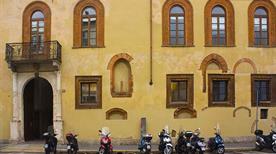
Casa Fontana Silvestri
Milan
The Casa Fontana Silvestri was built in the twelfth century. It was the home of the guardian of the Oriental Gate, Angelo Fontana. Its current appearance is attributed to the reconstruction made in the fourteenth century. The building is developed around the courtyard. Originally the façade was rich in frescoes by Bramante, but over the centuries they have almost all disappeared, you can see only a few remains under the cornice.
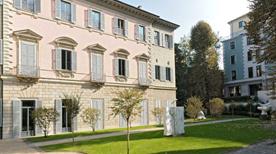
Palazzo Anguissola
Milan
Palazzo Anguissola dates back to the period of neoclassicism and was the home of Count Antonio Anguissola. The building was built between 1775 and 1778, by the architects Soave and Canonica. Inside it is decorated with frescoes, imitation marbles, gilding and mosaics, recreating the atmosphere of classical civilization. Since 2011, the building has been home to the Gallerie d'Italia and houses about 200 works from the '800- '900.
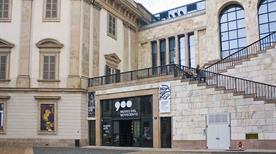
Palazzo dell'Arengario
Milan
The palace was built in the mid-20th century, by the collaboration of three architects. The monument consists of two buildings with façades clad in marble and decorated with bas-reliefs by A. Martini. On the base there are rectangular portals with frames with floral motifs. In the 1950s, the building underwent a renovation and was used as municipal offices. Since 2009, the palace has been home to the Museo del Novecento.
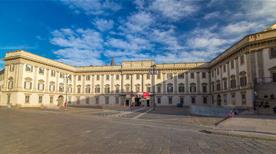
Palazzo Reale
Milan
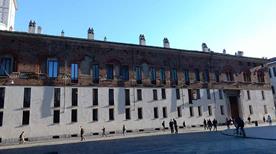
Palazzo Arcivescovile
Milan
The Archbishop's Palace is located in Piazza Fontana and is the work of several architects. Over the centuries the palace has been rebuilt many times, and today only a part that preserves medieval architecture and a hamlet with decorations have remained intact. During the renovation in the late 19th century, fourteenth-century frescoes were found, which decorated the living room. Part of these frescoes and others recovered in other spaces of the building are exhibited today in the Archbishopric.
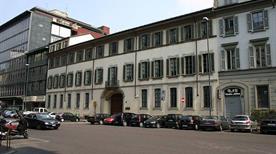
Palazzo Litta Cusini
Milan
It is not known exactly when Palazzo Litta Cusini was erected, which is apparently relatively new, but it is believed to have been superimposed on a very old building. The palace has a long façade decorated with small columns and statues with lion heads with open mouths. Another special feature is the widening of the doors to the whole or outside to facilitate the movement of the carriages. One of the corridors is decorated with medallions depicting the Duke and his wife.
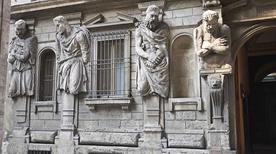
Casa degli Omenoni
Milan
The structure was built in the mid-1500s and was the residence of the sculptor, Leone Leoni. It consists of two orders and an attic which is punctuated vertically into seven compartments. On the ground floor you can see eight colossal caryatids in stone, which depict the defeated barbarians. On the main floor, we find the recessed columns of Ionian order that alternate with niches and windows to which in the 19th century the balconies were added to it. The courtyard is rectangular with three porch wings.
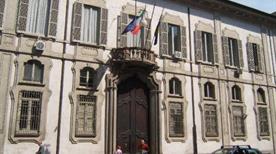
Palazzo Isimbardi
Milan
Palazzo Isimbardi dates back to the fifteenth century and is located in the oldest part of the city. Over the years the building was renovated several times. The long façade has large stucco frames and inside there is a porch courtyard. Inside the rooms of the palace we can admire numerous works of art and decorations, dating back to different historical periods.
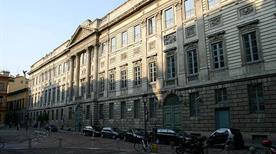
Palazzo Belgioioso d'Este
Milan
Palazzo Belgioioso was built at the behest of Prince Albert XII and was built by the architect Piermarini. The building best reflects neoclassical architecture, and is surrounded by three courtyards with Doric granite columns. All facades are marked by three doors and twenty-five windows decorated with eagles, palm trees and crowns. Inside the main floor we can admire a series of rooms decorated with frescoes and gold stuccoes.
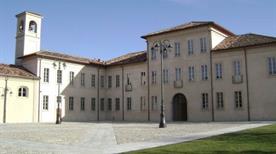
Villa Scheibler
Milan
Villa Scheibler takes its name from its last owners and was built in two different historical periods, the first construction dates back to the mid-'400 and then expanded in the '700. It was designed as a hunting estate for the famous nobleman Ludovico il Moro and had a church and a stable inside it. Since it was abandoned for a long time, much of the church is degraded. The villa is surrounded by a beautiful park that is under restoration. The beauty of the park and the clubs make it a Little Versaille.
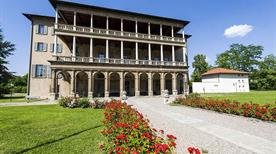
Villa Simonetta
Milan
Villa Simonetta dates back to the beginning of the 16th century and is a typical Renaissance patrician villa; it was built on commission of the nobleman Gualtiero Bascapè. Originally it was rectangular, but at the end of the 16th century it was enlarged with two side wings. The main facade is formed from a portico with nine arches with Tuscan columns on rectangular bases. The prestigious villa was decorated both inside and outside by cycles of frescoes, but unfortunately only a few traces remained visible.
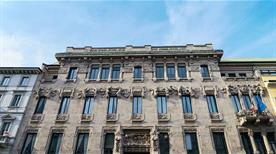
Palazzo Castiglioni
Milan
Palazzo Castiglioni was built in the early 1900s by the architect Sommaruga and is the first Art Nouveau building in the city. The building consists of three floors with a stone base and two facades. The windows are narrow and tall, decorated with putti reggi. Even if the building has undergone a restoration, losing its authenticity, the wonderful staircase remains intact flanked by shiny settlers and metal railings with floral motifs.
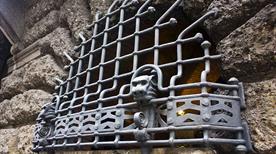
Palazzo Berri Meregalli
Milan
Palazzo Berri Meregalli was built in the early 1900s by the architect Giulio Ulisse Arata. The architecture of the palace is a mix of styles, of Neo-Romanesque, Neo-Gothic and Neo-Renaissance fused together with great skill. The building consists of two facades decorated with arches, bricks and statues. The door is reminiscent of the entrance of a medieval castle above which you can see monstrous sculptures and polychrome mosaics.
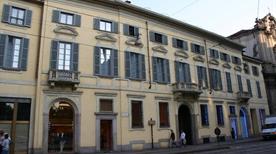
Palazzo Gallarati Scotti
Milan
Palazzo Gallarati Scotti is a vast building built in the early 18th century at the behest of the homonymous family. It has a Baroque style with an articulated front, with three stone balconies and a porch with Tuscan columns that surround the main courtyard. Even if the building has been damaged, it still retains some of the Baroque decorations and a remarkable collection of Art.
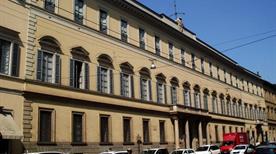
Palazzo Borromeo d'Adda
Milan
Palazzo Borromeo d'Adda was built by the architect Arganini at the behest of the Marquis Fedo d'Adda. The building consists of a very long facade in neoclassical style, with a central arched door and decorated with granite settlers, who hold the noble balcony. Of particular interest is the monumental staircase turned into barrels. Artists and literaries have always attended this palace as a meeting place.
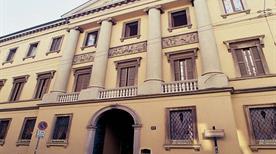
Palazzo Melzi di Cusano
Milan
The Palace dates back to the mid-20th century and is the work of the well-known architect Giovanni Battista Bareggi. The building was built on an existing dwelling of the '400, with a neoclassical style. The front side is characterized by huge pillars of Ionian order, while inside the noble apartment we can still observe the neoclassical decorations. Currently, part of the building houses the Razor Museum which shows the evolution of the art of shaving.
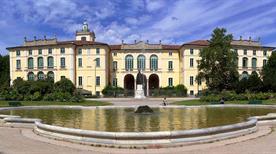
Palazzo Dugnani
Milan
Palazzo Dugnani is an elegant mansion built in the 18th century in Rococo style and has had several owners over the years. From the street you can see the three-level façade with a central arched portal, decorated with light stucco, and with a series of smooth framed windows. Inside you can admire three large oval frescoes and a large painting with mythological figures that is located on the ceiling of the first floor.
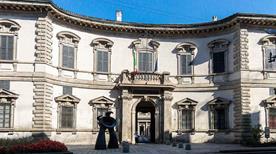
Palazzo del Senato
Milan
The origin of the palace dates back to the early 17th century and was built at the behest of the Cardinal of Milan, F. Borromeo. The building was designed to become the seat of the Swiss college, and stands on the ruins of a monastery. The style used in the construction is the Baroque one and of particular interest is the facade decorated with windows with triangular gables. Inside the building there are two large courtyards consisting of a double order of loggias. Over the centuries the function of the palace has changed several times to finally become, in 1872, the State Archives.
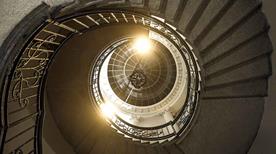
Palazzo Serbelloni
Milan
The famous Palazzo Serbelloni in which Napoleon Bonaparte lived for three months is built in neoclassical style and was one of the first palaces erected in that course. The building was built above an existing seventeenth-century building. A prominent element on the facade is the neoclassical loggia designed by the architect S. Cantoni. The large room has been named Sala Napoleonica, and is used to host conferences and events.
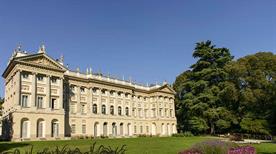
Villa Reale
Milan
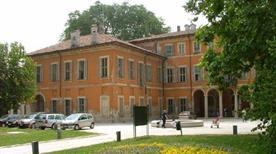
Villa Litta Modignani
Milan
The Litta Modignani villa consists of a central building with three floors from which short side bodies extend that form a small courtyard for carriages. The construction dates back to the early 18th century and was the home of the homonymous family. In the facades you can see decorations such as bands and frames and some balconies with iron railings. Although in poor condition due to inuse, the villa inside it maintains many decorations in the doors, scrolls and frescoed vaults.
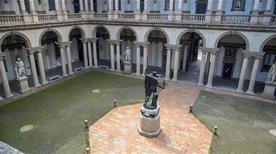
Palazzo di Brera
Milan
Located in the old quarter of Brera this beautiful eighteenth century palace is home to the famous Art Gallery, the Academy of Fine Arts (Milan's art school), the National Braidense Library, the Astronomical Observatory and the Botanical Gardens.
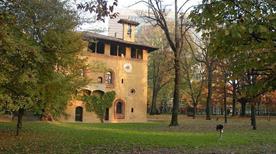
Bicocca degli Arcimboldi
Milan
Country house of the Arcimboldi family was built in the middle of the 15th century. Once the villa was located in the open countryside not far from the center of Milan, today it is located in a completely urbanized context. Today the villa is located in the homonymous district which takes its name from the old owners of the area, precisely the Arcimboldi.
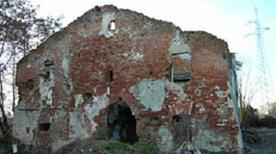
Mulino Torrette
Milan
The Torretta mill is located on the border with Civesio, north of the monastery. There is almost nothing left of the initial construction, except the experimental masonry and a few panels. The roof has collapsed and the internal mechanisms and the wheel have now vanished. Abroad, it is covered with twigs and brambles. The wheel has disappeared lately, because a few years ago it was still visible.
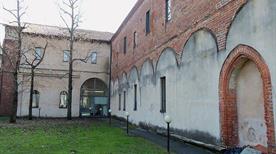
Cascina Monastero
Milan
Cascina Monastero is located west of the city and is an ancient monastery adapted and used as a rural dwelling. Until the 1950s the peasants took care of and cultivated the fields, and in 1960 it was purchased by the City Council. After the renovation, it became the seat of the Council in the area. Noteworthy is the frescoes room that is often used for exhibitions, art competitions and presentations organized by the municipality.
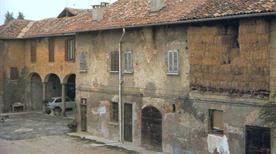
Cascina Cavriana
Milan
The first information on Cascina Cavriano dates back to 1014. It was used as a refuge for the inhabitants of Milan during the conquest of Barbarossa. Today it is a rural structure dedicated to family-run agriculture. It has an agritourism section that hosts nature lovers who can also stay in touch with farm animals.
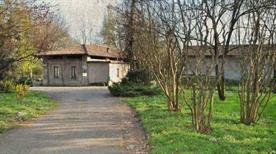
Molino San Gregorio
Milan
The farmhouse is part of a large agricultural complex, dating back to 1600. Originally the mill was fed by Roggia Molina, a detour of the Lambro River, and worked together with the Cascina San Gregorio Vecchio which is now across the street. The two cooperated for the processing of agricultural products. The core of the Cascina was composed of four residential buildings and three working buildings where agricultural products were preserved.
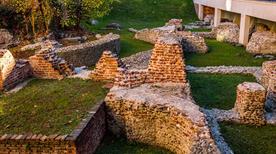
Resti del Circo Romano
Milan
The circus was an ancient building connected to the imperial palace and had several important functions over time. Only a few cities could boast of owning a circus, as it was a symbol of great economic power. Its construction dates back to the 3rd century at the behest of the Emperor Maximian. The best preserved part of the circus is one of the towers.
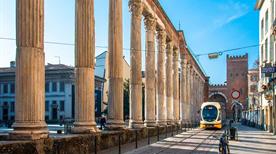
Colonne Romane
Milan
These are sixteen marble columns with Corinthian capitals that support the trabeation of a Roman building dating back to the 3rd century, probably the great spas wanted by the Emperor Maximian. The columns were transported to the current location in the fourth century, to complete the nascent Basilica of San Lorenzo.
Monumento delle Cinque Giornate
Milan
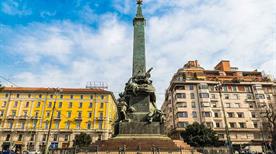
The Monument to the Five Days was created by the great artist Giuseppe Grandi. It depicts in an allegorical way the famous “5 days of Milan”, namely the popular rebellion of the Risorgimento. Every day is represented by a female figure who expresses the feelings of the people until the moment of victory.
Casa Grondona
Milan
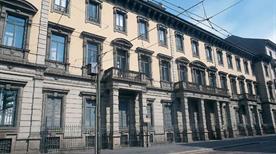
Casa Grondona was built in the late 19th century on commission of the owner of the homonymous mechanical workshop, which at that time was considered the best. The designer of the building was E. Terzaghi, who used a late Renaissance style. The entire building is structured around a fully open courtyard on the back garden.
Colonna del Verziere
Milan
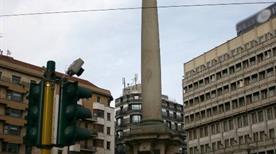
The Colonna del Verziere is part of the most famous monuments in Milan, built in the Baroque style, it is called this way, by the famous Verziere market that was held around the column. It consists of a granite column from Baveno, with the statue of Christ on top. The shelves at its base also served as an altar for outdoor masses. It is one of the very few columns of Milan, which has survived to the present day.
Seminario Arcivescovile
Milan
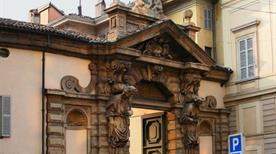
The headquarters of the seminar in Milan was inaugurated in December 1564, to implement the decisions of the Council of Trent. It was originally located near the Church of St. Vitto, but a year later it was moved to an area further north. Joseph II wanted it to be the only institution that formed clerics of theology of the dioceses of Lombardy. The institution was in force until 1839, when the remaining pupils passed to the Seveso Gymnasial Seminary.
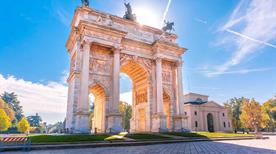
Arco della Pace
Milan
This monument is located in the center of Piazza Sempione and is the most interesting example of neoclassical architecture in the city. In 1807 work began on the construction by Luigi Cagnola, but they were interrupted following the defeat of Napoleon. Thanks to the will of Francis I of Austria, the construction was completed in 1838. The arch is built of Baveno granite and on its top stand out a group of bronze statues representing 'The Sestiga of Peace' and four 'Victories on Horse'.
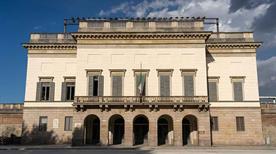
Arena Civica
Milan
The arena is a work by architect L. Canonica, inaugurated in August 1807. It was built over the ruins of Spanish fortifications, and is certainly one of the most distinct monuments in the city. You can immediately notice the neoclassical style, the arena has an elliptical shape 238 meters long and 116 meters wide. During the 19th century it was used for parties, tournaments, chariot competitions and shows, to later become the sports center of Milan in the early 1900s. Currently, the plant has been refurbished and is being used by a local football team.
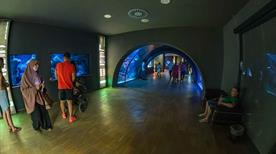
Acquario Civico
Milan
The aquarium was established in 1906 and is the third oldest in Europe. It is regarded as a very special building with Milanese Art Nouveau architecture. Two years after its construction it was enriched with an Applied Biology Station. During the war it suffered a lot of damage, but following a restoration it reopened in 1963. In 2003 it underwent another restoration that turned it into a real technologically advanced aquarium.
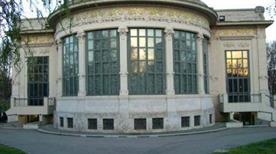
Palazzina Liberty Largo Marinai d'italia
Milan
The structure of the Liberty Palace was conceived by the architect Migliorini, being part of an ancient point in the city where the merchants met for many years. This is the only structure left of the old complex. Its feature is the stained glass windows as well as the ceramic tiles that create beautiful interior decorations.
Palazzo Borromeo
Milan
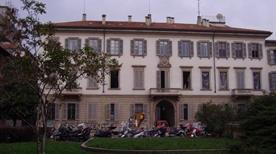
The palace was built at the end of the 13th century at the behest of the Borromeo family, and is one of the oldest residences in Milan. Over the years, the palace has undergone several restorations, losing part of the Gothic architecture. It consists of two courtyards, but only the 'honorable' courtyard is the best preserved part of this building. Inside it presents a cycle of frescoes that decorate the central hall and the rich art gallery, works by Michelino di Besozzo.
Palazzo Trivulzio
Milan
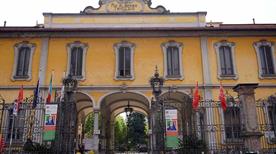
The Palazzo Trivulzio was built in the early 18th century, on commission of the homonymous family and is a work by the architect G. Ruggeri. The facade is modest with decorations where the balcony stands out with the family coat of arms. Inside, however, you can notice the luxury of decorations with rich particularities such as porches, decorated ceilings and lavish furnishings. The palace became famous in the past for the parties held inside it.
Palazzo delle Scuole Palatine
Milan
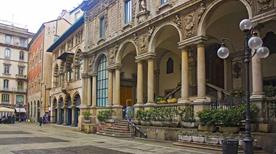
The Palatine School Palace was built in the '600, by the architect Carlo Buzzi. It consists of two floors, with arched porch and is rich in decorations. On the ground floor there is a tombstone with an epigram of the famous poet Ausonio. The triangular windows are lined with mermaids and contain heraldic coats of arms. The facade contains a statue of Saint Augustine, a teacher who taught in the institute.
Loggia degli Osii
Milan
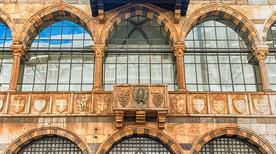
The loggia was built in the early fourteenth century, on commission by Matteo Visconti and is a work by the architect San Gimignano. The style used is Gothic and can be seen on the building with porches and loggias. On the façade you can see two overlapping loggias, on the top floor there are statues collected by a series of three windows. The façade is decorated with Viscount coats of arms and heraldic emblems of the wards.
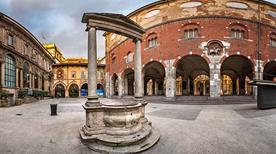
Palazzo della Ragione
Milan
The origin of the palace dates back to the 13th century and until the middle of the 17th century it served as the seat of the Municipality. The building is certainly a medieval testimony from a historical and architectural point of view, with a typical rectangular structure and with two extensive aisles of arcades that form a real covered square, which was used for the traditional fair, at the time of the Visconti. The second floor consists of a large room with an area of one thousand square meters. Today the palace hosts art and photography exhibitions.
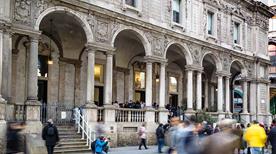
Palazzo dei Giureconsulti
Milan
The Palazzo dei Giureconsulti was built at the behest of the noble Giovanni Angelo Medici, in the mid-16th century, and is a work by the architect V. Seregni. The building is one of the most important buildings in Piazza dei Mercanti and was initially designed to host the college of “Noble Doctors”, an institution to train important figures of the state such as senators and judges. Over the centuries the building was destroyed and rebuilt several times. Since 1911 it has been owned by the Chamber of Commerce and hosts conferences, conferences and exhibitions.
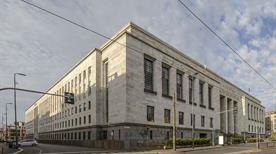
Palazzo di Giustizia
Milan
The Palace of Justice in Milan is a relatively new building, which was built by the architect Marcello Piacentini, in the years 1932 and 1940. The interior of the building is beautifully decorated with high reliefs, mosaics, frescoes and statues that illustrate the history of Justice. The main facade and the entrance are dominated by impressive Latin phrases, concerning the principles of Justice.
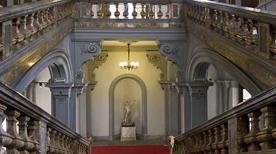
Palazzo Litta
Milan
The work of the well-known architect Bartolomeo Bolli, Palazzo Litta is certainly the jewel of Milan, and is often referred to as the most important symbol of the Baroque style. It has a central structure, three floors high with a portal covered by the convex balcony. All the windows are decorated with folders, garlands in the gables and shells, instead those on the first floor also have small balconies. Do not miss the main floor that contributed to the fame of the building.
Palazzo Litta Biumi
Milan
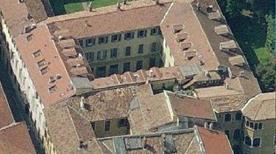
The Palace reflects a baroque structure. Its construction dates back to the seventeenth century and is divided over three floors. The peculiarity of the building is represented by the Courtyard of Honor and the Courtyard of the Clock. He underwent restoration work as a result of damage reported after World War II.
I Chiostri dell'umanitaria
Milan
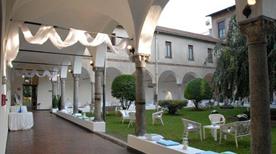
The building is located in the heart of Milan, behind the Palace of Justice. It is a historic building from the 15th century, characterized by famous cloisters and the splendid frescoes hall. It contains a courtyard and a refectory that has been refurbished and adapted into a lounge for various parties and presentations with a capacity for 200 guests.
Cassina Anna
Milan
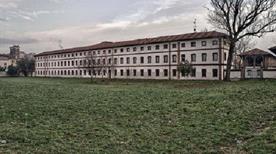
Cassina Anna is a well-stocked library located in a building from the twentieth century. The renovations have recently ended, which made it very modern. In fact, interested parties can consult, not only paper volumes, but also audiovisual materials including films and documentaries with the help of experienced competent staff.
Fondazione Mazzotta
Milan
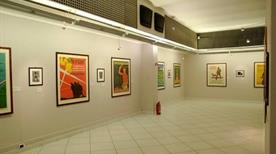
This foundation is unique in its kind and among the most famous in Italy. It was created in 1988, on the occasion of the Italianische Zeichnung exhibition, in memory of the well-known collector Antonio Mazzotta. The aim is to enhance the visual art collection through various exhibitions, concerts and conferences. Before creating this foundation, Mazzotta had already published books and created multiples that have made the history of contemporary art, holding exhibitions in Italy and Europe.
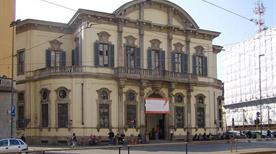
Palazzo Sormani Andreani
Milan
Biblioteca Tremelloni Sistema
Milan
The Tremelloni Library has its headquarters in Politeca, since 2004. A documentary wealth in which one can reconstruct the stylistic, cunning and ingenious evolution of the textile - fashion organism. We find technological and economic documentation, ranging from market techniques to communication. It combines filaments with buildings, clothing and accessories, purchases and sales with the scenarios in progress in the world.
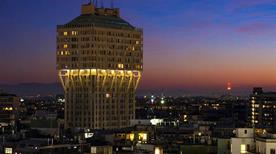
Torre Velasca
Milan
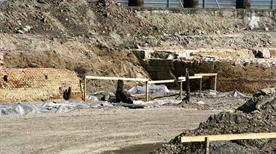
Mura Spagnole
Milan
The construction of the Spanish walls took place between 1548 and 1562, at the behest of Ferrante I Gonzaga, governor at the time of the city, when he was under Spanish rule. The initial project to strengthen the city's defenses, carried out by Giovanni Maria Olgiati, provided for the construction of a new imposing castle in the southern part of the city, but the project came set aside for the excessive burden and it was preferred to build a new city wall better suited to the progress of military technique.
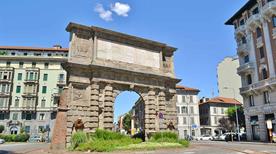
Porta Romana
Milan
Porta Ticinese is one of the six main gates of Milan, obtained inside the Bastions. Today characterized by the presence of the neoclassical door of Cagnola and the adjoining datiary toll booths. In the past Porta Ticinese identified one of the six historical districts in which the city was divided, the Sestiere of Porta Ticinese. Currently you can visit and admire.
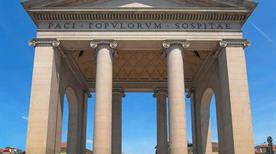
Porta Ticinese
Milan
Porta Ticinese is one of the six main gates of Milan, obtained within the Bastions. Today it presents the neoclassical door of Cagnola and the adjoining datiari toll booths. In the past Porta Ticinese identified one of the six historical districts in which the city was divided, the Sestiere of Porta Ticinese. Currently you can visit and admire.
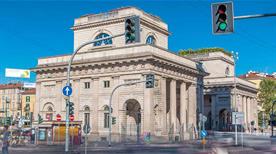
Porta Venezia
Milan
Porta Venezia dates back to the 16th century, when it was still called the Spanish Gate. It is one of the six most important gates of the city, consisting of two imposing ramparts. It is also named in the Betrothed, because it is the door that Renzo crossed to enter Milan.
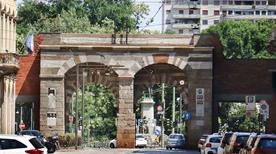
Porta Nuova
Milan
Porta Nuova in Milan is located in Piazzale Principessa Clotilde, located inside the Bastions. It is one of the six main gates of the city, and is characterized by the neoclassical arch of Zanoia. It has an ionic style where it absorbs and reworks oriental motifs. It was restored in 2002 by the association “Castles and Open Villas in Lombardy”.
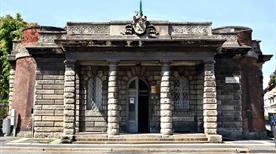
Porta Volta
Milan
Porta Volta is one of the five most recent gates of Milan, created inside the Bastions to allow a more direct communication between the city and the Monumental Cemetery. It is located in the center of Piazzale Baiamonti, at the outlet of the Bastions of Porta Volta. The door was erected in 1880 along the route of the Spanish walls of Milan, built in 1555 by order of Ferrante Gonzaga.
Galleria Tega
Milan
Studio d'Arte Cannaviello
Milan

FORMA Centro Internazionale di Fotografia
Milan
Galleria Forni
Milan
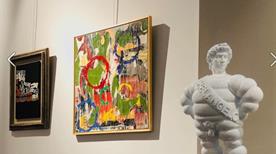
Il Mappamondo
Milan
Galleria Spiralearte
Milan
Lorenzelli Arte
Milan
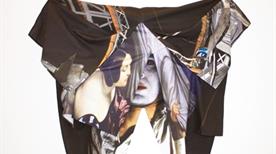
Nowhere Gallery
Milan
Galleria Gio' Marconi
Milan
Angelart & Design
Milan
Galleria Arte 92
Milan
Artesanterasmo
Milan

Galleria Antonio Battaglio
Milan

Il Castello Arte Moderna e Contemporanea
Milan
Studio Gariboldi
Milan

Galleria Zero
Milan
Studio Manuela Klerkx
Milan
Studio Guenzani
Milan
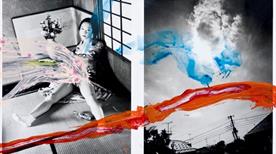
Studio Guenzani opened in Milano, Via Eustachi 10, in 1987.
The director, Claudio Guenzani, has shown during more than 20 years of activity, italian and international artists.
Studio Guenzani proposes different artists, for the formal quality of the work, as well for their national and generational proveniences.
In 1988 Louise Lawler’s and Cindy Sherman’s first exhibitions in the gallery have affirmed the interest of the gallery for photography (other exhibitions of Louise Lawler in 1994 and 2001, of Cindy Sherman in 1991 and 2001) they were followed by exhibitions of Hiroshi Sugimoto (1
Galleria Morone
Milan
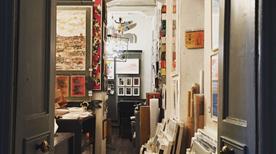
Galleria L'Affiche
Milan
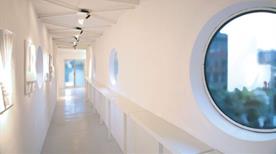
MyOwnGallery
Milan
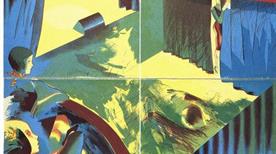
Naviglio Modern Art
Milan
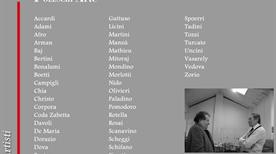
Poleschi Arte
Milan
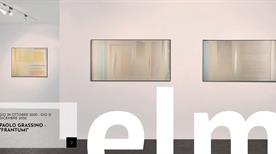
Progettoarte-elm
Milan
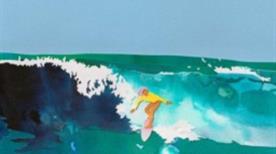
Monica De Cardenas
Milan
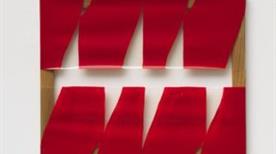
Galleria Massimo De Carlo
Milan
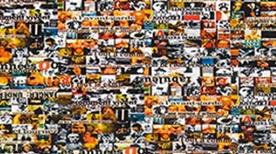
Galleria di Maggio
Milan
Fabbrica Eos
Milan
Galica
Milan
Primo Marella Gallery
Milan
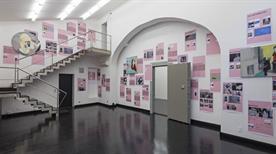
Galleria Pack
Milan
Galleria Rubin
Milan
Galleria Cardi
Milan
Dep Art Arte Moderna & Contemporanea
Milan

Teatro Sala Fontana
Milan
Located in the cloister of Santa Maria della Fontana, it offers dramas. It is very popular with families and it is a point of reference for its distinctive schools matinees. Since2000 it is the seat of the Elsinor Teatro Stabile d' Innovazione.
Santuario di Santa Maria Addolorata
Cernusco sul Naviglio
(13 Km)
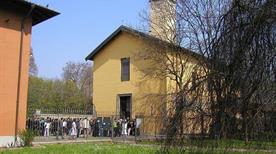
The Sanctuary of Santa Maria Sorrows dates back to 1119, a period when the Church in which it is located was built. Its structure has been modified over the years, and inside it you can see a beautiful fresco by Our Lady of Sorrows and a rich collection of ex votos objects.

Parrocchia di Sant'andrea
Pioltello
(12 Km)
The Church of Sant'Andrea was built in the 16th century by Merlo and Carlo Giuseppe. It is structured by a single, simple central nave and inside there are two altars, built according to the Baroque style of the eighteenth century.
Villa San Carlo Borromeo
Senago
(12 Km)
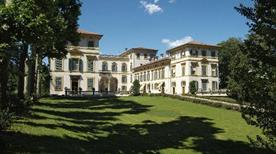
The first feature of Villa San Carlo Borromeo is that of being a house-museum. It is a historic villa built during the 14th century. This is located in a beautiful park with an area of eleven hectares. It is a permanent museum with a rich collection of works of art in every corner of the building. Currently, in addition to the Museum, the Villa also houses a 5-star luxury hotel.
Castello Visconteo
Rozzano
(10 Km)
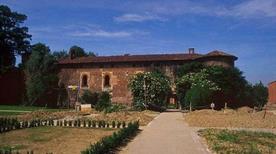
From the Visconti Castle of Rozzano there have been historical references since the year 1000 and from historical materials it turns out that it was inhabited during the fourteenth century. The fortress was owned by the Trivulzio family who gave it, in 1836, to the Visconti di Modrone. This family owes the various structural extensions as well as the reconstructions of the interior spaces. The building has brick walls that enclose a square courtyard with towers placed at the corners of the structure.
Castello Visconteo
Rozzano
(10 Km)
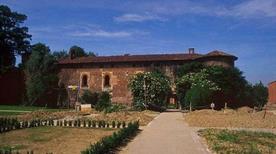
From the Visconti Castle of Rozzano there have been historical references since the year 1000 and from historical materials it turns out that it was inhabited during the fourteenth century. The fortress was owned by the Trivulzio family who gave it, in 1836, to the Visconti di Modrone. This family owes the various structural extensions as well as the reconstructions of the interior spaces. The building has brick walls that enclose a square courtyard with towers placed at the corners of the structure.
Castello Borromeo
Peschiera Borromeo
(12 Km)
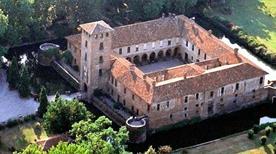
The Castle was built from 1422, based on written testimonies and is the oldest possession of the Borromeo in Lombardy. This original structure includes the walls, the tower, the rivellino and the great moat. The centuries-old plants of the enclosed garden, the courtyard, the frescoed rooms contribute to creating a unique atmosphere. It is currently in excellent condition and is open to the public.

Villa Alari Visconti
Cernusco sul Naviglio
(13 Km)
Villa Alari Visconti was built in 1703 by the engineer and architect Giovanni Ruggeri, at the behest of the Alari family from which it also took its name. The structure is built in a very special style that combines majesty with stylistic refinement. Inside the villa there are frescoes belonging to F. Fabrica and F. Bianchi. But the villa fascinates you with its beauty not only inside but also outside with its magnificent garden that surrounds the whole building.
Museo dell'Automobile
Rozzano
(11 Km)
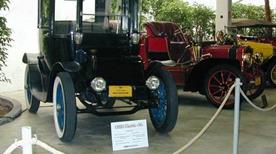
The Automobile Museum was born with the intent to illustrate the history of engines and their evolution. The collection was managed by Gianni Mazzocchi who collected about fifty vintage cars, sidecars and motorcycles built during the twentieth century and a considerable number of bicycles and carriages of the end. of the nineteenth century.
Fondazione Arnaldo Pomodoro
Rozzano
(10 Km)
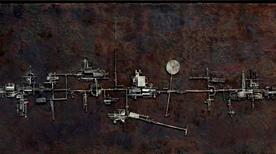
The Foundation of Arnaldo Pomodoro was founded in 1995 by the will of the great Italian artist and sculptor who decided to establish a foundation with the intent of being a place for study and comparison of the avant-garde themes contemporary. There have been numerous offices scattered around Lombardy that have received great interest from art professionals and also from visitors. Currently, the property has moved to Via Vigevano 9, near the Navigli Darsena in Milan. Since 2007, the Foundation has been recognized as the Museum of the Lombardy Region.

Museo del Trattore Agricolo
Senago
(12 Km)
The museum was created by Giancarlo Tosi in the twentieth century and was placed on a department store in the homonymous agricultural company. In the gallery we find the greatest documentations of the evolution of the work activity of the beginning of the 20th century. These important testimonies are given by tractors of different brands.
Museo Storico Alfa Romeo
Arese
(14 Km)
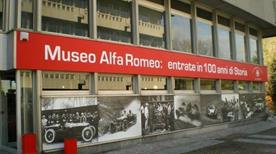
The Museum was established in 1976, for all fans of the famous Milanese brand. This is a large exhibition with more than 100 cars of all types, and about forty models of automotive and aviation engines. Inside we find a great audiovisual documentation on the evolution of machines, which are displayed chronologically with detailed descriptions.