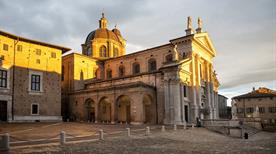
Duomo
Urbino
(15 Km)
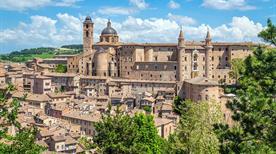
Palazzo Ducale
Urbino
(15 Km)
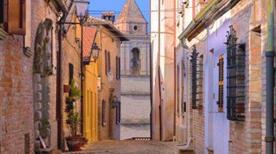
Centro storico
Colli al Metauro
(12 Km)
Mediterranean cuisine.
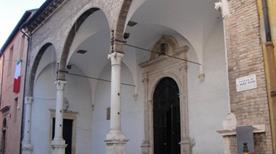
Convento di Santa Maria Nuova
Fano
(23 Km)
The former convent of S. Maria Nuova, is located in the homonymous church. The building dates back to the 14th century, although over the years it underwent a series of restorations that were completed only in the middle of the 20th century. It was built in Renaissance style, combined with the Baroque one. The peculiarity of the church is the Mascioni Opus reed organ, positioned inside.
Chiesa di Santa Maria Nuova
Fano
(24 Km)
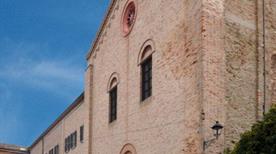
Formerly called the Church of San Salvatore, now Church of Santa Maria Nuova, its origin dates back to 1518, when it was granted to the Minor Friars. It is worth visiting.
Chiesa di Sant’Agostino
Fano
(24 Km)
Magnificent religious edifice, rebuilt in 1563, was almost destroyed during the Second War; as the restoration goes on, it is resuming the ancient splendor of the past.
Teatro Apollo
Mondavio
(13 Km)

Gasparelli Arte Contemporanea
Fano
(23 Km)

Novato Arte Contemporanea
Fano
(24 Km)
Museo Civico e Pinacoteca del Palazzo Malatestiano
Fano
(24 Km)
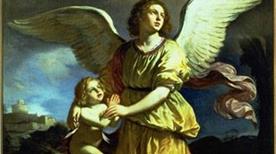
The Civic Museum and the Art Gallery, located in the Malatesta Palace, were built in 1898. Inside there is a large collection of historical testimonies of the evolution of the city, starting from the prehistoric period. Beyond the collections of paintings and sculptures, you can admire: the collection of coins, sets, red ceramics and numerous other objects and documents of ancient origins. The museum is open to all interested parties.

Museo di Biologia Marina
Fano
(24 Km)
The Museum was opened to the public in 1992, with its headquarters in the homonymous laboratory. It collects about 300 marine animals of different species and origin, well arranged in a liquid or dry environment. Currently, the Museum is not available to the public.

Museo Archeologico “Pitinum Mergens”
Acqualagna
(14 Km)
The Archaeological Museum is located inside a building built in the 16th century and is divided into sections in which finds from the Roman era by Pitium Mergens and a special art room are exhibited Contemporary. The visitor can contemplate various types of clay (bottles) and terracotta ceramics (pans).
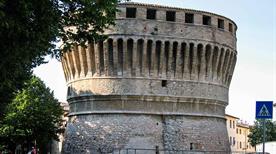
Rocca di Cagli
Cagli
(21 Km)
The first news we have of the Rocca di Cagli, in the Marche region, date back to 1481. The state-of-the-art structure is one of the most significant examples of a military building. The Fortress was conceived by the Sienese Francesco di Giorgio Martini. Della Rocca, destroyed in 1502, came to us the strut and the inner body, which was later transformed into a convent.
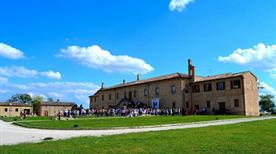
Villa del Balì
Cartoceto
(9 Km)
An ancient villa of the 16th century completely renovated, already dedicated to astronomical study is now the Museum of Science, Planetarium, Astronomical Observatory and Country House
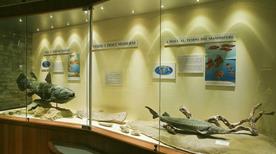
Museo Paleontologico
Mondaino
(22 Km)
The Paleontological Museum was built in 1981 and is located inside the Malatesta Fortress. Inside it, various fossils of flora and fauna are exhibited, precisely, 21. They are of various species of fish and very rare birds.
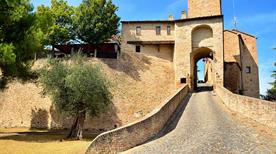
Castello di Montegridolfo
Montegridolfo
(21 Km)
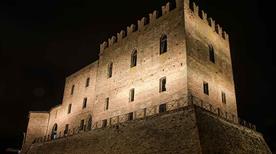
Rocca Malatestiana
Mondaino
(22 Km)
The Malatesta Fortress is built for defensive functions against the Montefeltro troops. The building has a simple and elegant structure with Ghibelline battlements. In one of the interior rooms there is a fresco created in the fifteenth century, where the Madonna del Milk by Bernardino Dolci was depicted. Currently, the building is home to the City Hall.

Via Flaminia e Arco Flaminio
Fano
(13 Km)
The Via Flaminia was of extreme importance in Roman times and linked the cities of Rome to Rimini. Was built by the Roman consul Flaminius, from which it took its name.
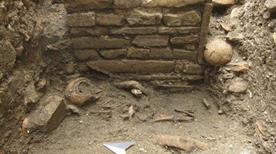
Zona archeologica S.Maria in Portuno
Corinaldo
(20 Km)
The archaeological site Santa Maria in Portuno was discovered in 2001 by the Department of Archaeology of the University of Bologna. The existence of a pre-existing place of worship from the Middle Ages has been confirmed. Whole environments such as a crypt and a small furnace have been found.
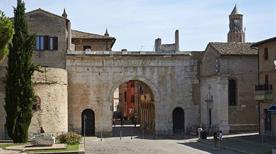
Arco di Augusto
Fano
(23 Km)
The gateway to the ancient Roman Colonia Julia Fanestris, known as the Arch of Augustus is an important symbol of the city of Fano, in the region Marche. It is worth a picture!
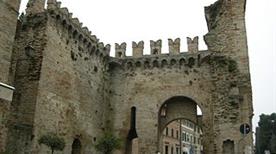
Mura di Fano
Fano
(24 Km)
This wall was built by Roman Emperor Augustus around about the year 9 AD, and they are in good conditions despite time.Worth seeing
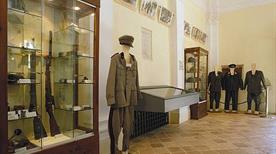
Museo storico del fiume Metauro "Winston Churchill"
Colli al Metauro
(12 Km)
The museum collects photographs, testimonies, diaries, documents, memorabilia and military equipment of World War II. Winston Churchill, accompanied by General Alexander, observed from the castle of Montemaggiore the Anglo-American troops ready to launch the final offensive to the Gothic line.
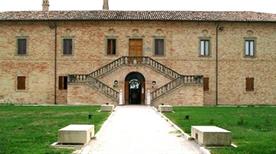
Museo del Balì
Colli al Metauro
(10 Km)
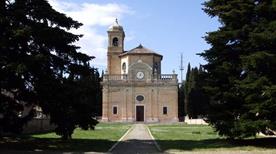
Eremo di Monte Giove
Fano
(19 Km)
The name of Montegiove suggests that in the pagan era a temple dedicated to the divinity itself was erected there. The Hermitage was built around the 17th century, under the papacy of Clement VIII. The whole monastic complex was finished building in 1627, while the church was rebuilt in the mid-1700s. Inside the church there are statues depicting St. Benedict, S. Pier Damiani, S. Bonifacio and Santa Scolastica.
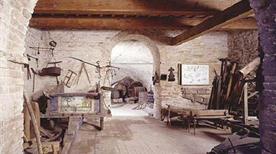
Museo "Sulle Tracce dei Nostri Padri"
Isola del Piano
(6 Km)
The museum “On the Tracks of Our Fathers” was established in the seventies of the twentieth century in the cellars of the Monastery of Montebello. It was born with the intent to document life in peasant society through tools and objects used in the various craft shops. A large section is also dedicated to the finds found in the pre-Roman and Roman settlements of the territory.
Quadreria Comunale
San Costanzo
(22 Km)
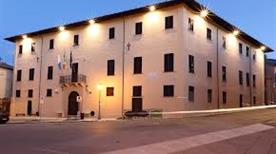
The Quadreria Comunale occupies two rooms of the Palazzo Cassi. The museum displays paintings collected from different churches and chapels of the territory. For example, the famous canvas with the Baptism of Constantine was found in the church of San Silvestro. We can also find non-religious works, such as two portraits of the 18th century.

Porta della Mandria
Fano
(24 Km)
This Romanesque door, of smaller proportions compared to the Arch of Augustus, was the output port of the herd for Flaminia.Worth visiting!
Santuario di Santa Maria del Ponte Metauro
Fano
(23 Km)
This ancient shrine bears a great importance for the people of Fano, and, in 1984, the Virgin Mary was proclaimed by Pope John Paul II, Patron of Fano, his diocese and the Sailors.
Coppar S.R.L.
Vallefoglia
(18 Km)
Galleria Nazionale delle Marche
Urbino
(15 Km)
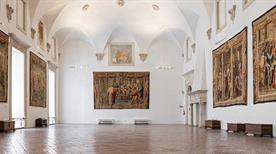
The National Gallery of the Marche has been located in the Ducal Palace of Urbino since 1912. The last installation took place in 1982, it was created with the aim of creating a harmony between the works on display and the rooms that contain them. The collections derive largely from churches and convents in the Marche region. The most famous section is linked to the Urbino Renaissance, with two works by Piero della Francesca.
Casa Natale di Raffaello
Urbino
(15 Km)
Museum Graphia
Urbino
(15 Km)
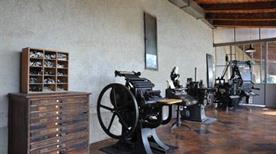
The Graphia Museum is known differently as “The International Museum of Press.” Visiting the Museum you can observe different printing machines together with their accessories, starting from the oldest and simplest, up to the most modern ones. In addition, there are paper documentation, the original engravings of the various techniques of lithography, calcography and typographic sheets.
Museo del Gabinetto di Fisica dell'Università
Urbino
(15 Km)

Museo Diocesano "Albani"
Urbino
(15 Km)
The Diocesan Museum “Albani” established in 1964, was named after Pope Clement XI Albani. The collection set up in the Episcopal Palace was enlarged and enriched day after day with ancient finds. It is open to all those interested in ancient and sacred art, according to the set times.

Museo dei Gessi
Urbino
(15 Km)
The Gessi Museum is located in the rooms of the Institute of Archaeology and exhibits a collection of casts of ancient sculptures provided by the State Institute of Art. The collection represents an important testimony of classical culture, especially the works concerning sculpture from the 5th century BC of the Imperial Age.
Museo Lapidario
Urbino
(15 Km)

Oratorio di San Giuseppe
Urbino
(15 Km)
The Oratory of San Giuseppe was built in 1515 by the Compagnia di S. Giuseppe in Urbino. The actual church has the form of a large classroom, rectangular with a single altar and sail cover. In the center is a statue in white marble depicting the Saint, the work of Giuseppe Lironi. The pictorial decoration of the church is by Carlo Roncalli.
Fortezza Albornoz
Urbino
(15 Km)
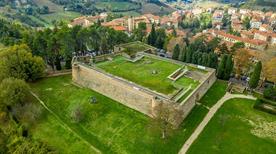
The Albornoz Fortress was built in the second half of the fourteenth century, at the behest of Cardinal Egidio Alvares, on the Piano del Monte. Its favorable position allows it to dominate the whole city. Over the years it was rebuilt and partially modified, due to various damages during the war. Today it is a wonderful fortress, in excellent condition that tourists can admire.
Suasa - Parco archeol Anfiteatro (I sec)
Castelleone di Suasa
(16 Km)
Suasa - Domus dei Coiedii (I sec)
Castelleone di Suasa
(16 Km)