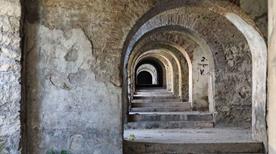
Forte San Marco
Caprino Veronese
(12 Km)
Fort San Marco was built between 1888 and 1913 by the Italian Army. The building was used during World War II for the headquartering of troops. The fort has a rectangular structure, built from local stones. Currently, it is private property and is in a state of neglect.

Castello dei Sabbionara D'Avio
Avio
(12 Km)
The Castle of Sabbionara D'Avio is a fascinating and very ancient castle known even before the 13th century. Ownership of the well-known Castelbarco family, it then passed into the hands of the Venetians, cardinals and other recognized personalities from various eras. You can admire a beautiful landscape that surrounds the castle of medieval architecture. The paintings represented inside the castle are of the Gothic-Veronese style of 14th century, as in the 'Chamber of Love', 'The Male' and in the 'Fighters' Parade.
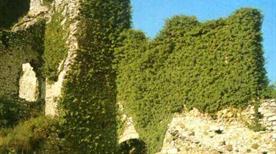
Castel Saiori ruderi
Ala
(18 Km)
The castle, together with two other structures, was part of a defensive system in order to control the communication routes. It was destroyed in 1510 during a conflict with the imperial troops. Of the castle, there are ruins from which you can admire a beautiful panorama of the Adige.
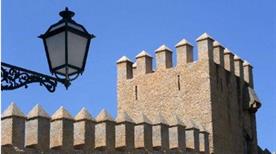
Castel Chizzola ruderi
Ala
(15 Km)
Located on the Adige river in the Municipality of Ala in Trento, the Chizzola Castle is one of the many defensive structures in the valley. Extending over an excellent geographical position, the structure is of a medieval type, characterized by Ghibelline battlements. Moving from one owner to another, he was then completely abandoned. At present, we can find two sections of the fortification, of which a wall.
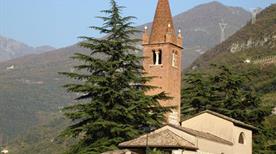
Chiesetta S. Pietro in Bosco
Ala
(12 Km)
The Church of San Pietro in Bosco is a Roman church that is located a few kilometers from Ala. The building dates back to the 6th century and has a tall bell tower with cusps in Veronese terracotta and Romanesque mullioned windows. The story tells that in this little church Teodolinda, daughter of the Duke of Bavaria Garibaldo, met his future spouse Autari in 589. Inside the church there are some frescoes such as the Christ in Majesty and Saint George who kills the dragon.
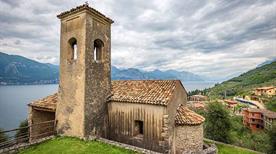
Sant'Antonio a Biaza
Brenzone
(20 Km)
The origins of the Church of Sant'Antonio Abate in Biaza are not well known. The only clue we have, is a fresco on the outside wall, datable to the second half of 1300. The building is in the Romanesque style and is still in good conditions.
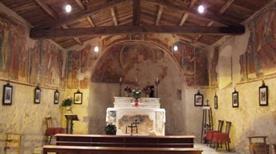
San Pietro a Campo
Brenzone
(20 Km)
San Pietro in Campo, or San Pietro in Vincoli, is a medieval church whose origins are not yet known. The facade of the building was completely rebuilt in 700. The interior has a single nave leading to the altar and the apse. Please to note are the numerous frescoes.
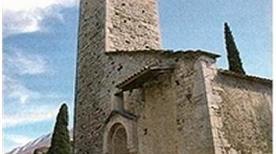
Chiesa di San Zeno a Castelletto
Brenzone
(20 Km)
The medieval church of San Zeno, built on a Roman villa, dating back to the eleventh, twelfth and thirteenth centuries. The structure is the result of different periods of construction. Very characteristic is the bell tower, built only in the last stage, around the thirteenth century. On the walls of the nave and along the apse are located the beautiful frescoes.
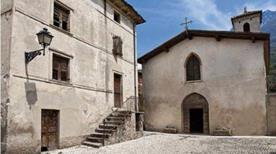
San Nicola ad Assenza
Brenzone
(20 Km)
St. Nicholas Church is located in Assenza, fraction of Brenzone. It was built in the eleventh and twelfth centuries and dedicated to St. Nicholas, Bishop of Myra, the patron of the dangers of the lake. Several extensions and modifications, from the fifteenth century to modern times, have radically changed its look. The interior has a single nave and in the choir there are the altar and a remarkable altarpiece of the sixteenth century. The interior walls contain frescoes painted between the thirteenth and fourteenth centuries.
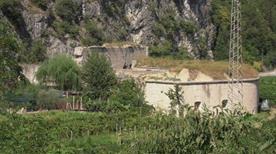
Tagliata di Incanal
Rivoli Veronese
(15 Km)
The fortress was built in 1884 in the area of a valley located in the Municipality of Monte Cordespino. The building has a structure built of stone. In the eighties of the last century, part of the structure was destroyed due to the construction of new modern infrastructure. Currently, the fortification is the private property of Mr. Cristofaletti Renato.
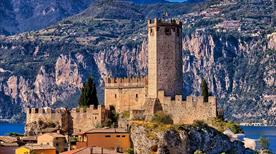
Castello Scaligero
Malcesine
(20 Km)
The Scaliger Castle of Malcesine is located in the northeast part of Lake Garda, in the historic center. It is a medieval fortification built in the first century AD. The castle was the residence of the Scaligeri from which it also took its name. The fame of the castle is also due to the wonderful descriptions of the German writer Goethe during his trip to Italy, in honor of which a museum was built. It is one of the most beautiful castles in Italy.
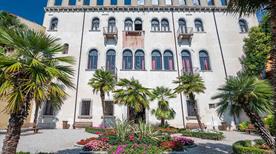
Palazzo dei Capitani
Malcesine
(20 Km)
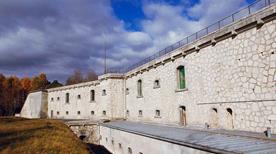
Forte Santa Viola
Grezzana
(13 Km)
Fort Santa Viola was built between 1904 and 1913 near Azzago. It developed on three floors and initially had a military function. The complex was equipped with a ventilation system of electricity generators. In 1958 it was purchased by the municipality of Grezzana and fell into disuse, reporting great damage due to the action of vandals, water infiltration and the invasion of spontaneous vegetation.
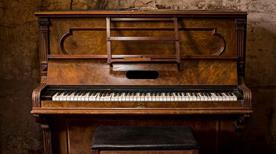
Museo del Pianoforte Antico
Ala
(13 Km)
The Museum of Ancient Piano is located at the Palazzo de' Pizzinivon Hoechenbrunn, built in the 17th-18th century. The museum tells the story of the piano from its origins until 800. Presenting rare and prestigious specimens, the museum also serves as a laboratory for the restoration and the return to the origin of the keyboards.
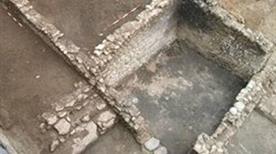
Villa Romana
Brenzone
(20 Km)
The ruins of the Roman Villa of Castelletto is one of the most important historical finds in the territory of the Veneto. Among the many details was most recently found a very impressive mosaic floor area. This was probably built in high medieval age, as it incorporates structural and decorative elements of the Church of Zeno.
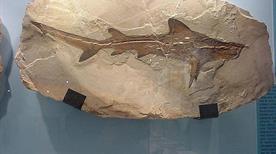
Museo Civico Etnografico "La Lessinia: l'Uomo e l'Ambiente"
Bosco Chiesanuova
(3 Km)
The Ethnographic Civic Museum “The Lessinia: Man and the Environment” exhibits original ethnographic objects. These finds belong to different periods: from prehistory to the present day.
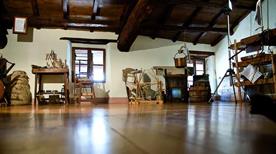
Museo Etnografico
Brenzone
(20 Km)
The Ethnographic Museum of Brenzone is located in the historical center of Castelletto and is located in the house where the Blessed Mother Maria Domenica Mantovani was born. She is the co-founder of the institute "Little Sisters of the Holy Family". The museum reproduces an ancient dwelling of the time and keep tools of local activities.
Museo Botanico della Lessinia
Fumane
(8 Km)
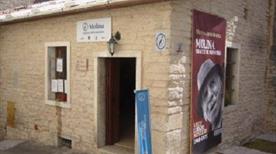
The Botanical Museum of Lessini, together with seven other museums, is part of the Museum System of the Community of Lessinia. It was opened for the first time in 1981 and in 1996 it was expanded more. The museum was founded in honor of an important doctor and botanist, Giovanni Zantedeschi. In it you can see a considerable variety of species of the flora of this territory.

Musei del Castello Scaligero
Malcesine
(20 Km)
The museum of the Scaliger Castle is located in the environments of the homonymous castle in the municipality of Malcesine. The works of the museum are exhibited in 9 rooms that display nine different themes. Inside, visitors can admire and touch the objects on display. The museum is also suitable for children and is at a surcharge.
Museo Napoleonico
Rivoli Veronese
(17 Km)
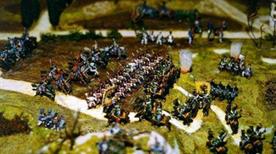
The Napoleonic Museum of Rivoli Veronese exposes to the public the relics of the Battle of Rivoli where Austrian troops clashed on 14 January 1797, the Austrian troops with those Napoleonic ones. Inside, we find preserved paintings and portraits, a model with scenes from the battle and documents concerning the Napoleonic period. The Museum is open to the public.
Forte Wohlgemuth
Rivoli Veronese
(17 Km)
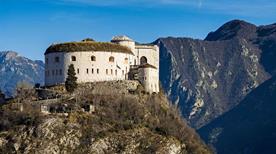
Wohlgemuth Fort was built between 1850 and 1851, for reasons of defense. In 1866, the building underwent restoration work and was named Forte di Rivoli. Currently, the Great War Museum is set up in its rooms, where weapons, documents and objects of war are exhibited.
Museo della Pieve
Sant'Ambrogio di Valpolicella
(17 Km)
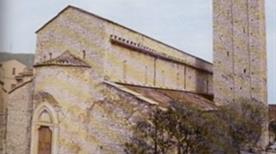
The Archaeological Museum of the Pieve di San Giorgio di Valpolicella was built in 1992. Inside there are archaeological finds such as: artifacts, Roman inscriptions and sculptures. The construction of this museum was born from the collaboration of Libero Cecchini with Luciano Zinnamosca and Banca Popolare di Verona.
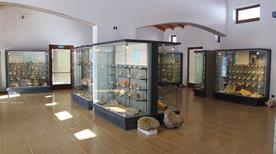
Museo Geopaleontologico dei Fossili della Lessinia
Velo Veronese
(8 Km)
The Geopaleontological Museum of Fossils of Lessinia is divided into two small rooms. In the first, materials belonging to the Cabbage Cave of Camposilvano are exhibited, while in the second, visitors can find a geological map in which general concepts are explained on the formation of mountains. In the Museum there are also some fossils belonging to thirty million years ago.

Museo d'Interesse Locale
Crespadoro
(18 Km)