Museo Archeologico delle Acque
Chianciano Terme
(40 Km)
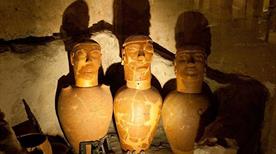
Opened in 1997, it collects archaeological material discovered in the municipal area as a result of capillary research; it exhibits numerous Etruscan findings.

Museo Etrusco delle Acque
Chianciano Terme
(38 Km)
With Chiusi Chianciano Terme as well as UNESCO heritage sites, Terme, medieval center boasts the most important center of ETRUSCAN civilization, world headquarters of the Etruscan Museum of Water

Museo di Storia Naturale della Maremma
Grosseto
(27 Km)
The Museum is located in the historic center of Grosseto in Piazza della Palma. The construction was initially a civil home, later it was transformed into a secular school, which carried the name “Vittorio Emanuele”. The Museum was inaugurated in 1879, and consists of 3 floors among which only 2 are exhibitions. The exhibitions are divided into two sections: that of Earth Sciences and that of Life Sciences. The first focuses on the geological evolution of Grosseto and the second shows samples.
Museo Archeologico e d'Arte della Maremma
Grosseto
(27 Km)
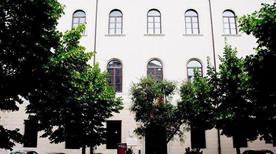
The Archaeological Museum of Art of Maremma was inaugurated in 1975 and consists of several thematic sections, exhibited in 40 rooms. The museum was created thanks to the intellectual Giovanni Chelli, who began to collect the objects. Also interesting are the exhibitions coming from different necropolis, from the Iron Age, to the Paleolithic, to the Etruscan era and the finds of the Roman period.

Museo Diocesano d'Arte Sacra
Grosseto
(27 Km)
The Diocesan Museum of Sacred Art is located inside the building of the former court. The Museum was established in 1933, and inside it houses works from the whole Diocese of Grosseto and from the churches of the Maremma, precious objects, paintings and sculptures. The museum is open to the public.
Convento delle Clarisse
Grosseto
(27 Km)
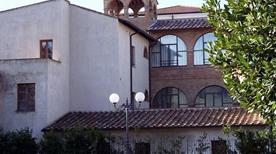
Of medieval origin, together with the church of the monastery , it is currently desecrated. The entire complex is nowadays restored in the seventeenth century Baroque style . It currently houses the Lab Museum as well as the university of the city
Parco Museo Minerario
Abbadia San Salvatore
(23 Km)
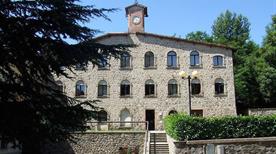
The Mining Museum of Abbadia San Salvatore consists of five rooms of which: Room 1 composed of Geology, Room 2 with Amiata and Mercury, Room 3 with the history of the Abbadia S.Salvatore mine, the Room 4 with drawings, objects and more, and to finish room 5 with other activities.
Museo della Collegiata
Chianciano Terme
(40 Km)
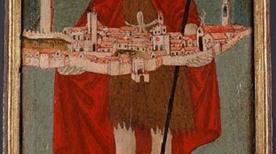
The Collegiate Church Museum is located inside the eighteenth-century Arcipretal Palace of Chianciano Terme. Among the most important works is a Polyptych by the Master of Chianciano, in which a splendid Madonna and Child is depicted. Also interesting is the table that represents Giovanni Battista while supporting the ancient Chianciano.
Museo Civico Archeologico delle Acque
Chianciano Terme
(40 Km)
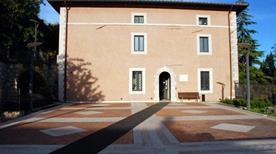
The Archaeological Museum of Water is located near the historic center of the city. The exhibition is dedicated to issues concerning the history of the territory of Chianciano. Great interest are the ancient tombs dating back to the last years of the 7th century BC, the necropolis of Morelli as well as a princely tomb reported to life size.

Museo Civico e Diocesano d'Arte Sacra
Montalcino
(20 Km)
The Civic and Diocesan Museum of Sacred Art was inaugurated in 1958 at the headquarters of the former Convent of Sant'Agostino di Montalcino. It includes 12 rooms that extend over three floors and present materials and works of Medieval and Modern art from the Province of Siena and the surrounding area. The most significant work is that depicting the Madonna with the Child by Luke di Tommè.

Museo Storico del Vetro e della Bottiglia "J. F. Mariani"
Montalcino
(18 Km)
The Historical Museum of Glass and the Bottle “J. F. Mariani” is housed in the rooms of the Castle of Poggio alle Mura di Montalcino. It collects different collections of glass art from the Egyptians era up to the works of the Venetian masters. There are rare bottles dating back to the 18th century by English masters as well as a collection of bottles mounted on art Nouveau silver.
Antiquarium di Poggio Civitate
Murlo
(30 Km)
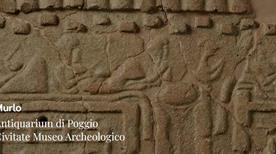
The Antiquarium of Poggio Civitate was created in 1988 and contains a large number of archaeological finds. The most valuable is a princely home that testifies to the importance of the Etruscans in the Ombrone Valley. In the Museum there is also a workshop that deals with archaeological restorations.

Museo di Palazzo "Piccolomini"
Pienza
(31 Km)
The Museum of Palazzo “Piccolomini” is located on the first floor of the eponymous Palace built in the fifteenth century as the residence of Pope Pius II. The museum area exhibits works that portray Enea Silvio Piccolomini and houses living materials, such as the bedroom of the well-known Pope. The adjoining library contains books, bubbles and writings from the period of Pope Pius II and Pope Pius III.
Museo Diocesano
Pienza
(31 Km)
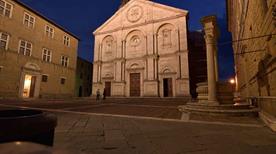
The headquarters of the Diocesan Museum of Pienza was inaugurated in 1998 inside the Bishop's Palace. The museum is divided into eleven rooms along which are exhibited ecclesiastical works coming from the Duomo and the surrounding territory. The most important work is located in the fourth room and depicts the “Stories of Our Lady”, of Saint Margaret of Antioch and Saint Catherine of Alexandria, donated to the Pope by Thomas Paleologist.

Museo Archeologico
Scansano
(23 Km)
The Archaeological Museum of Scansano was inaugurated in 2001 and preserves archaeological finds from the ancient age found in the Albegna Valley and finds from the Etruscan town of Ghiaccio Forte. The Museum welcomes materials from the excavations carried out by the Archaeological Superintendence of Tuscany and also the sections related to the production of wines of Southern Tuscany.

Centro di Documentazione dell'Area Archeologica di Sovana
Sorano
(35 Km)
The Documentation Center for the Archaeological Area of Sovana is located in Palazzo Pretorio. Inside there are archaeological finds and reconstructive models referring to the excavations of the necropolis of San Sebastiano and the tomb of Ildebranda, illustrated thanks to some panels.

Museo del Medioevo e del Rinascimento
Sorano
(35 Km)
The Museum of the Middle Ages and Renaissance is located in the interiors of the fourteenth-century fortress of the Orsini. Medieval and Renaissance ceramic materials are on display and there are also frescoes from the sixteenth-century period. Among the ceramics are interesting some glazed windows dating from the 16th to the 18th century found in medieval wells also called “butti”.
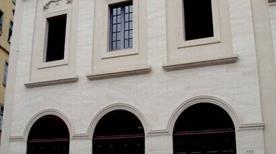
Teatro degli Industri
Grosseto
(27 Km)
The Teatro degli Industri is the main theater in Grosseto. The first show was built in 1819 by the Academy of Industri. The room had the capacity to accommodate more than 500 people. Later, between 1888 and 1892 the theater was renovated and expanded by the Sienese architect Agusto Corbi. Thus, a horseshoe room was built, for a capacity of 800 spectators, with 56 stages.

Rocca Orsini
Sorano
(35 Km)
The Orsini Fortress was built during the twelfth century as an Aldobrandesca fortress. In the thirteenth century it was acquired by the Orsini family who used it as one of their most important residences. During the annexation of Sorano to the Grand Duchy of Tuscany, the Fortress was transformed into the Medici military center. Currently in the building there is the Museum of the Middle Ages and the Renaissance.
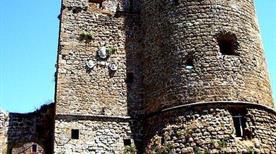
Rocca degli Ottieri
Sorano
(34 Km)
The Fortress dates back to the fifteenth century and was built by the Ottieri family in the locality of Castell' Ottieri. The structure was built around a 12th century tower built by the Aldobrandeschi. During the eighteenth century the building went under the management of the Grand Duchy of Tuscany, a period when the structure underwent a heavy decline. The external parts covered in tuff flaret and three gentle coats of arms located in the wall leaning on the left side of the tower are still visible.
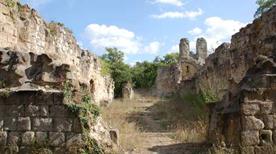
Castello di Vitozza
Sorano
(35 Km)
The Castle of Vitozza was built in 1572 by Niccolò IV Orsini. The building has a rectangular shape with a bell tower. Currently, the castle is in poor condition and there are only a few ruins left.
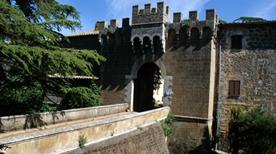
Castello di Montorio
Sorano
(35 Km)
The Castle of Montorio was built in the Middle Ages and was the property of the noble Aldobrandeschi family. During the thirteenth century the structure was sold to the Ottieri and in the fifteenth century it passed into management to the Republic of Siena. The complex is articulated by walls covered in tuff basins and there is also a circular tower located in the southeastern part of the walls. In the post-seventeenth century, the Castle was transformed into a fortified farm.
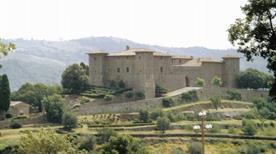
Castello di Montepò
Scansano
(15 Km)
Historical news of the Castle of Montepò dates back to 1188, found in a bubble by Pope Clement III. The building was entirely rebuilt by the Lords of Cotton in the fourteenth century and around 1378 it passed under the control of Siena and the Sergardi family. During the Renaissance era it was transformed into a fortified farm. The structure has a semi-regular quadrilateral shape flanked by four corner towers that originally had a defensive function.
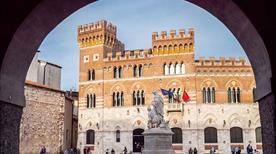
Palazzo Aldobrandeschi
Grosseto
(27 Km)
Situato in Piazza Dante, il palazzo è attualmente sede della provincia. L’edificio dalle origini medioevali è ora in stile neogotico in quanto fu quasi completamente ricostruito agli inizi del novecento per mano dell’architetto Lorenzo Porciatti.

Palazzo Tognetti
Grosseto
(27 Km)
Along the central Corso Carducci this beautiful building is an elegant and refined art nouveau palace distributed on three levels. The facade is a jewel of inestimable beauty with its rich decorations that appeal to all visitors.
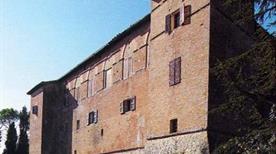
Castello Altesi
Montalcino
(26 Km)
Located on a hill, Castello Altesi is located on the border between the municipalities of Montalcino and Buonconvento. It was built in the 15th century, to host the troops of Don Alvaro di Sande during the Republic of Siena in Montalcino.
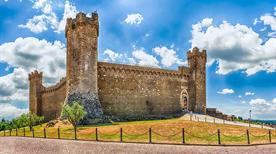
Fortezza Medicea
Montalcino
(20 Km)
The Medici Fortress was built in 1381 by Mino Foresi and Domenico Feo. It is located in the historic center of Montalcino and is characterized by a pentagonal plan with high and irregular corner towers. The Medici coat of arms is placed on the external walls and the spur is also from the Medici era. The inner courtyard is currently used as a venue for shows and cultural initiatives.
Castello Poggio alle Mura
Montalcino
(10 Km)
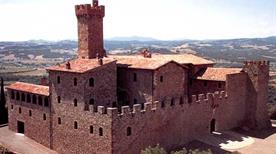
The Poggio alle Mura Castle was built in 1438 on a hill located between the river Orcia and Ombrone. Its ideal location has placed the fortress at the center of disputes between the Republic of Siena, the Aldobrandeschi and Florence. The ownership of the Castle has passed into management to several families including that of the Ptolemies and the Placid. The structure of the building has a square plan consisting of several buildings closed by a curtain wall. The property is currently owned by Banfi Spa, which has brought changes by adapting the fortress to a wine tourism center.
Castello e Torre panoramica
Manciano
(35 Km)
Castelluccio
Pienza
(36 Km)
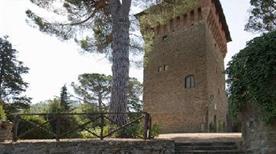
Also called Castelluccio dei Bifolchi, it was fortified in the fourteenth century with two corner towers still intact. In 1787 it was transformed into a 'fortified farm'. Since then, it has gone through various owners.
Rocca di Monticchiello
Pienza
(34 Km)
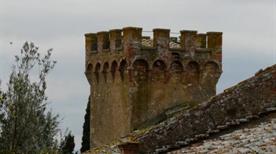
The Rocca di Monticchiello dates back to the 13th century and is located on the walled village of the homonymous municipality. Only the Sienese formwork remains of the construction, consisting of walls and stone beccatelli. The walls were equipped with a walkway, and were interspersed with various towers of varying sizes.
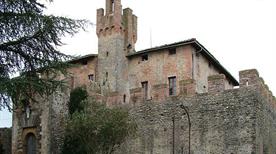
Castello di Bibbiano
Buonconvento
(26 Km)
The Castle of Bibbiano is an imposing medieval castle surrounded by a moat with drawbridge to increase defenses. Inside the Castle we find the Annunciation, the latest work by Pietro Lorenzetti, and the Madonna in the Chapel of the Castle, by Baldassarre Peruzzi.
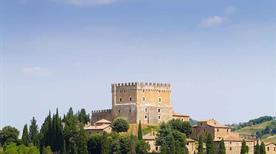
Castello di Ripa
Castiglione d'Orcia
(22 Km)
The Castle of Ripa, is an architectural complex located in Castiglione d'Orcia. It is also possible to visit its interior.
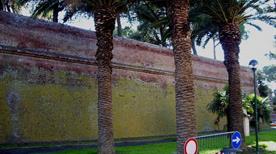
Baluardo di San Michele
Grosseto
(27 Km)
This bulwark is located in the southwestern part of the medieval walls and was built in the second half of the 16th century during the construction of the Medici walls. The building has a polygonal plan with a large shoe base. A pedestrian walk was realized during the works of the '800 which is still visible.

Fortezza e Cassero Senese
Grosseto
(27 Km)
This building dates back to the '300, and is one of the many forts, which are located along the Walls of Grosseto. Of great interest is the fact that this is the only element of the old medieval walls that was not modified during the reconstruction in the 16th century. The building is an imposing rectangular tower with exteriors covered in travertine. On the external facade you can see the white-black coat of arms of Siena and the typical double arch. Now the Cassero is used for various artistic and photographic exhibitions.

Palazzo degli Aldobrandeschi
Grosseto
(27 Km)
The building overlooks Piazza Dante and its construction dates back to the Middle Ages. It has a polygonal shape developed on four raised floors and one underground. Observing the articulations of volumes, the use of materials and decorative elements you can notice the neo-Gothic style; even the interior is characterized by the same style with pictorial decorations on the walls and with a fake cruise time.
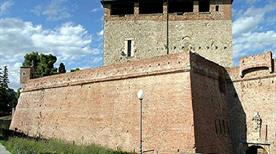
Fortezza Medicea
Grosseto
(27 Km)
The Medici Fortress is a real fortified citadel, made of bricks that responded to the principles of modern military architecture. The Fortress has a pentagonal shape and in the center the Piazza d'Armi opens, the heart of the Fortress, which has a rectangular shape and is surrounded by remains of the sixteenth-century buildings. High level cultural and museum center, since 2003 it houses the classrooms of the Grosseto University Pole. In summer, theatrical and musical performances are held there.
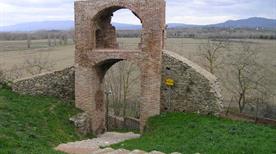
Portaccia di Istia
Grosseto
(20 Km)
The door was built in the twelfth century, simultaneously with the tower. Over the centuries, the structure underwent several changes that, during the Sienese occupation, added the upper arches. With the spread of malaria, and the abandonment of the territory, they determined the degradation of the walls and the door itself. The door is currently in a poor state of preservation.

Forte di San Rocco
Grosseto
(38 Km)
This building is a coastal fortification near the marina. In the second half of the 18th century the Lorraine ordered the construction of this complex in the place where a pre-existing building with military functions stood. Originally, the structure served as a checkpoint for the coast and also as a logistics base. The entire fortification is clad in bricks and is protected by a series of wall curtains, while inside it there is a courtyard.
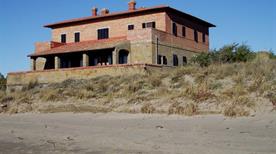
Forte delle Marze
Grosseto
(41 Km)
The fort dates back to the mid-18th century and was once the home of ministers. A work by engineer L. Ximenes, who over the years has no longer been used as a residence and has been used as a military fort. Due to numerous renovations and the backward of the coastline, the building has undergone numerous changes. The original elements that we can still observe today are in the walls covered in stone and in the upper part covered by a four-pitched roof.

Borgo di Montemerano
Manciano
(35 Km)
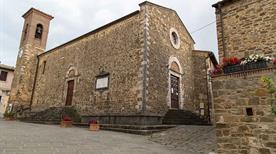
Chiesa di San Michele
Montalcino
(20 Km)
Located in the small town of Castiglione del Bosco in Montalcino, the Church of San Michele is a sacred building built before the 18th century. Behind the central nave you can see many frescoes by Pietro Lorenzetti.

Collegiata dei Santi Quirico e Giulitta
San Quirico d'Orcia
(25 Km)
The collegiate church of Saints Quirico and Giulitta is a sacred building of medieval origin located in San Quirico d'Orcia.

Cattedrale di San Lorenzo
Grosseto
(27 Km)
Built in 1294 in honor of the patron saint of the city to replace the pious old church of Santa Maria Assunta , it is a Gothic church, designed by the famous architect Sozzo Rustichini of Siena.
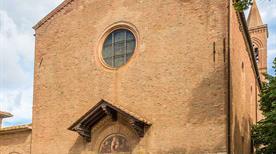
Chiesa di San Francesco
Grosseto
(27 Km)
Built in the Middle Ages, first as a Benedictine monastery of great importance then passed to the Franciscans. Inside there are numerous works of great artistic value dating back to various historical periods.
Chiesa di San Pietro
Grosseto
(27 Km)
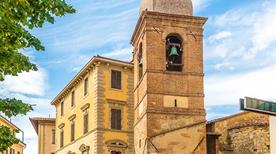
Known for being the oldest building of the city of Grosseto it was built near the Via Aurelia crossing the historic city center. It was originally built as a parish church.
Tempio della Madonna della Rosa
Chianciano Terme
(39 Km)
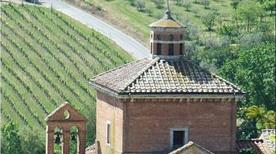
The most beautiful church in Chianciano, designed by Baldassarre Lanci, in 1569, architect of the Duke of Urbino. Inside, the image of Our Lady of the Rose is painted on a wall.
Parco Artistico Naturale e Culturale della Val D'Orcia
San Quirico d'Orcia
(25 Km)
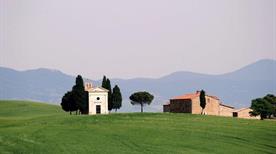
Born to ensure the conservation of the artistic and natural heritage of the Val d'Orcia, since 1996 he deals with the realization of projects that see man and the territory protagonists.
Necropoli di Poggio Buco
Pitigliano
(36 Km)
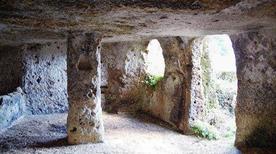
The tombs of the necropolis of Poggio Buco have different constructions. The oldest are dated to the 8th century BC and have only a pit dug into the tuff, while those that date back to the middle of the 7th century BC are chamber dug into the tufa rock, of the same period also date back to the larger chamber tombs. Today it is only possible to visit the room tombs. Most of the finds found are Etruscan-Corinthian ceramics.
Necropoli Sovana
Sorano
(33 Km)
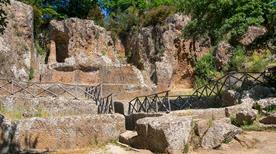
The Necropolis of Sovana extends for about one and a half kilometers in the hills north of the Calesine stream. It is represented by a considerable number of tombs facing the colonnade where that of Pula and Ildebranda stand out. The Necropolis is divided into several sectors that include the Via Cava or del Cavone, Poggio Felceto, Poggio Stanziale and others along the Folonia stream.
Area Archeologica di Roselle
Grosseto
(20 Km)

Torre Bassa
Magliano in Toscana
(36 Km)
The Bassa Tower is located in the Maremma Natural Park, in the Municipality of Magliano. The building was erected at the beginning of the 12th century. In the fourteenth century the tower was owned by the Sienese Marsili family, who owned the structure for a long time. The tower had a quadrangular structure. Today, only a few ruins are visible.

Torre Cala di Forno
Magliano in Toscana
(36 Km)
The Tower of Cala di Forno is located in the Municipality of Magliano, not far from the beach of Cala di Forno. The building was rebuilt during the second half of the sixteenth century, at the behest of the Medici. The tower was a medieval structure and had the function of defending the territory against pirate attacks. After a long period of abandonment, there are only a few ruins left of the structure.
Le mura e la Fortezza
Montalcino
(20 Km)
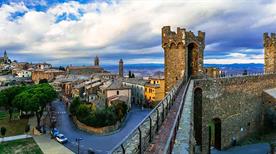
The walls of Montalcino were built in the thirteenth century, while the fortress was built by Sienese architects in 1361 with pentagonal structure and slender corner towers and incorporating part of the walls.
Torre del Castello di Crevole
Murlo
(33 Km)
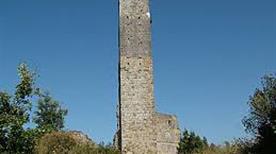
The Tower of the Castle of Crevole, in medieval times, was one of the most important centers in the area. During the Siena War, the Castle was destroyed by the imperial troops who spared only the Tower. Today, only the ruins that are part of a farm remain.
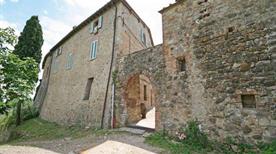
Porta e Borgo Fortificato
Murlo
(30 Km)
The small medieval village is located on a hill surrounded by a city wall built during the twelfth century in the province of Siena. The structure was the capital of the area that was owned by the Bishops of Siena. The village, still today, preserves its original medieval structure in good condition.
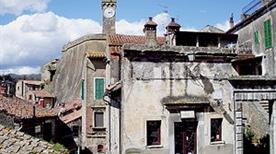
Torre dell'Orologio e Masso Leopoldino
Sorano
(35 Km)
The Leopoldino Boulder was a fortified structure located in the historic center of Sorano and represented one of the defence fortifications of the Tufo Area. Called Rocca Vecchia, it also included the Clock Tower. It also served as a shelter for the population during enemy sieges. The Tower has a square plan with battlements on the top and below the crowning is the clock that gives its name.
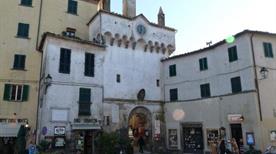
Porta Grossetana
Scansano
(23 Km)
Porta Grossetana is thought to date back to the sixteenth century. It was part of a complex that allowed entry into the city by crossing a moat first. The façade also featured the coat of arms of the noble family.
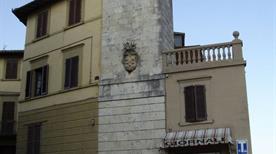
Torre dell’Orologio
Chianciano Terme
(38 Km)
An imposing medieval tower on which is represented the coat of arms of the Medici family, added when the Signoria of Florence had the ultimate control of the town.

Baluardo delle Palle
Grosseto
(27 Km)
The Bulwark of the Palls, also called Bastione Maiano, is located south of the city. He was the first to be built in the Medici era. It is part of the long walls and stands out from the others because it has frescoes on the frame with the coat of arms of the influential family. Today it is partially damaged due to the bombings of World War II.

Torre Uccellina
Grosseto
(34 Km)
The Uccellina Tower is located along the ridge of the Uccellina Mountains, and was built in the first half of the '300, with the aim of spotting and defending the Abbey of San Rabano. The construction is quadrangular and the walls are covered with stone.

Torre Belvedere
Grosseto
(25 Km)
The Belvedere Tower was built in the Middle Ages. It is characterized by its quadrangular shape. Various redevelopment interventions were carried out that culminated the construction of the fortification. The property is situated in Grosseto. Its walls are stone realizations. For defensive purposes, the tower was also equipped with a louver.

Torre di Collelungo
Grosseto
(39 Km)
Torre di Castel Marino
Grosseto
(36 Km)
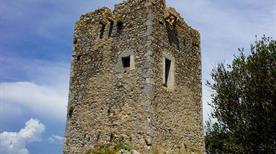
The Tower of Castel Marino is located in the Maremma natural park, set on a hill. It was erected in medieval times by the Aldobrandeschi, to spot the coastal strip, but following the construction of the nearby tower of Collelungo, it lost its initial function. The tower is in the form of a ruin, ruined on two sides, with the shoe base characterized by the truncated pyramidal shape and the walls covered in stone.
Torre della Trappola
Grosseto
(34 Km)
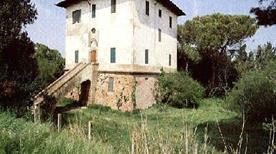
The Torre della Trappola is located to the right of the Ombrone river in the homonymous marsh area in Grosseto. The tower was built in medieval times by Meo Guiducci di Torrenieri, on commission of the Municipality of Siena, with the aim of defending the port, and included not only the current construction, but of the ancient salt pans, a complex of buildings, a curtain wall and the church of Sant'Antonio. The tower has a brick shoe structure in the shape of a truncated pyramid.

Torre del Guascone
Grosseto
(25 Km)
The Torre del Guascone is one of the oldest of the walls of Montepescali, it was erected in the Middle Ages with the aim of spotting enemies and protecting Montepescali from attacks. The fortification has still remained intact today. Currently, the tower is private property.
Porta Grossetana
Grosseto
(19 Km)
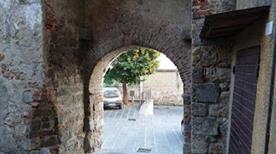
The Grossetana Gate is one of the two initial gates of the city walls of Batignano, Grosseto. The door was erected around the twelfth century, along the walls that allowed access to the village. The door is still well preserved today.
Porta Senese
Grosseto
(19 Km)
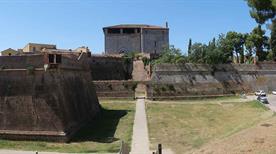
The Sienese door was built in the twelfth century. Subsequently, the tower was modified, replacing a part, with a small building on guard. The latest restorations, made at the beginning of the millennium, made it possible to recover the ancient structure.
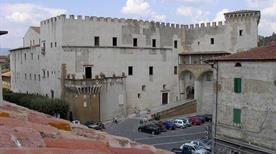
Fortezza e Palazzo Orsini
Pitigliano
(36 Km)
Palazzo Orsini was built by the Counts Aldobrandeschi of Savona, but after an combined marriage, it became owned by the Counts Orsini, from which it retained its name. The construction dates back to the twelfth century but around the fifteenth century it was modified many times, losing its original form.
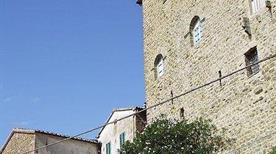
Castello di Montorgiali
Scansano
(19 Km)
The Castle of Montorgiali was built during the twelfth century at the behest of the family of the homonymous accounts, vassals of the Aldobrandeschi family. The complex has historical references dating back to 1188 from a bubble of Pope Clement III directed to the Bishop of Grosseto. The Montorgiali family sold the Castle to the Republic of Siena in 1378 after having sided against the branch of Santa Fiora. The structure of the Castle consists of several buildings leaning among themselves.

Roccaccia di Montevitozzo ruderi
Sorano
(29 Km)
The only traces, in the present day, of the Rocca di Montevitozzo are the ruins, which dominate in the large part of the local territory and a square section that was supposed to be a watchtower. Parts of a double wall are still visible. The Fortress is also called the Roccaccia.