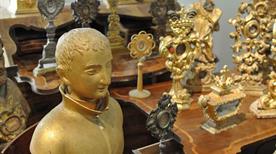
Museo Diocesano "A. Bergamaschi"
Pennabilli
(18 Km)
The Diocesan Museum “A. Bergamaschi” is housed in the rooms of the Palazzo Bocchi in Pennabilli. The Museum is distributed on three levels and is developed in fifteen exhibition halls. The structure preserves works by highly important artists such as Benedetto Coda, Giovan Francesco da Rimini, Carlo Cignani and others. Collections of liturgical objects, sacred vestments, silverware and majolica of great beauty and historical value are exhibited.
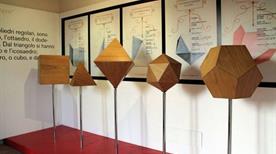
Museo della Storia del Calcolo
Pennabilli
(18 Km)
The Museum of the History of Calculation is located in the halls of the Palazzo Comunale di Pennabilli. Materials and inventions are exhibited that have made the history of mathematics and calculus great. Here it is possible to admire the only Cuneiform cone present in Italy that dates back to 2200 BC. Sumerian tablets from 4200 years ago, Greek inscriptions and Roman tombstones are also exhibited.
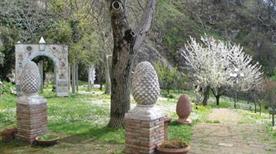
I Luoghi dell'Anima: Museo Diffuso
Pennabilli
(16 Km)
The Places of the Soul represent the spaces that Tonino Guerra wanted to create to expose to the inhabitants of Pennabilli and tourists evocative paths that invite the reflection and meditation of times elapsed. The Diffuse Museum is divided into different places starting from the “Garden of Forgotten Fruits” until you reach the “Petrified Garden” in the locality of Bascio.
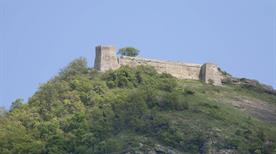
Rocca Maioletto
Maiolo
(25 Km)
Rocca Maioletto turned out to be one of the hard to conquer strongholds of Valmarecchia and Montefeltro. It stands on a rock of sand and clay and dominates the village below. It was the property of the Church to become the home of the Casteldelci and Montefeltro.
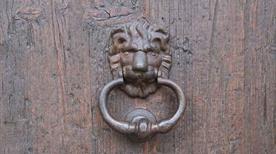
Castello di Pennabilli
Pennabilli
(18 Km)
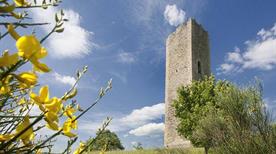
Torre di Bascio
Pennabilli
(15 Km)
The Tower of Bascio was built during the 13th century inside the valley of the Torbello stream. The Tower is 21 meters high and has a square plan of 5.30 meters. At the foot of the Tower are the “petrified gardens” by Tonino Guerra. The property was restored in 1958 and is a popular place for hikers and nature-loving visitors.

La Chiesa dei Morti e il Cimitero delle Mummie
Urbania
(18 Km)
The Cola Chapel or Church of the Dead was built in 1380. Its rooms are adorned in Gothic style. In its halls there is the Mummy Cemetery, very famous for the natural mummification of the bodies of the 16th century.
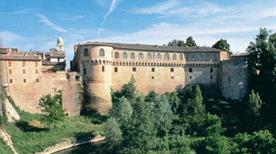
Palazzo Ducale
Urbania
(18 Km)
The Palace was built at the behest of the Duke of Urbino Federico II da Montefeltro. The project was conceived by the architects Francesco di Giorgio Martini, as far as the general plant is concerned, and Gerolamo Genga as far as the rooms are concerned. The complex also includes a beautiful garden that dates back to the '400. It currently houses the Civic Museum, the Library, the Art Gallery, the Museum of Agriculture and Crafts and the Historical Archive.
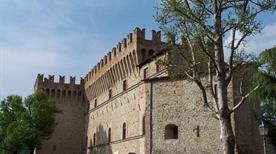
Castello dei Conti Oliva
Piandimeleto
(12 Km)
The Castello dei Conti Oliva di Piandimeleto was built at the behest of Carlo Oliva from whom it also took its name and dates back to the fifteenth century. The building does not stand out for its architectural structure, because it is mainly anonymous. Nowadays it is the symbol of the community and is used for the various events that take place in the area.

Museo dei Fossili e Minerali del Monte Nerone
Apecchio
(15 Km)
The Museum is located in the underground part of the fifteenth-century Palazzo Ubaldini. Inside there is a large collection of fossils, dinosaur claws, skulls of human evolution and numerous other archaeological evidence of great importance. All the elements are well organized in display cases with the usual information.
Museo "F. Assetto"
Frontino
(13 Km)
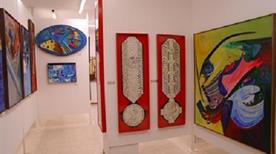
The “F. Assetto” Museum is located in the historic center. It is dedicated to Franco Assetto, one of the most important artists in Turin, who donated most of his works to the City Council. The works exhibited inside are of particular beauty and concern the various phases that the painter has gone through, also changing currents. The institute was completely renovated in the 1980s.
Museo Civico Archeologico e Paleontologico
Macerata Feltria
(70 Km)
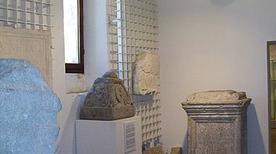
The Civic Archaeological and Paleontological Museum is located in the Palazzo del Podestà, which dates back to the fourteenth century. The finds are arranged in eight rooms, each divided by historical period. All materials trace the historical settlements of the eastern Montefeltro area. Each object has a reference card, which provides all the information about it. In addition, from the building where the museum is located, you can enjoy a wonderful view.

Museo di Storia dell' Agricoltura
Urbania
(18 Km)
The idea of a Museum of the History of Agriculture was born in the seventies with the intent to exhibit materials from the demological collection carried out by the Municipality of Urbania. The installations of the exhibitions explain very well the cycles of wheat, vine and wine.
Museo Diocesano
Urbania
(18 Km)
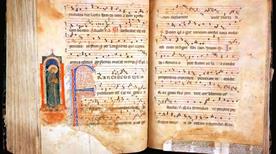
The Diocesan Museum is located in the solemn building of the former Bishop's Palace and preserves a rare collection of ceramics of the Urbanian tradition from the Middle Ages onwards. The section dedicated to ceramics illustrates the techniques used from the thirteenth to the twentieth century among which amphorae and stoups from the surrounding area are distinguished.

Museo Civico e Pinacoteca
Urbania
(18 Km)
The Civic Museum and the Art Gallery are set up in the Doge's Palace of Urbania, built by the architect Francesco di Giorgio Martini. The Civic Museum is characterized by a large exhibition hall called “of the Knights “which houses valuable paintings from the late sixteenth century and two unique globes of the Mercator. The Art Gallery, on the other hand, exhibits a splendid painting of works by Mannerist artists.
Museo Storico della Linea Gotica
Sassocorvaro Auditore
(29 Km)
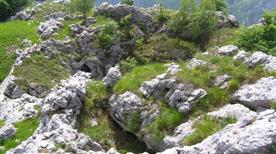
The Historical Museum of the Gothic Line was created in 1992 by Professor Giovanni Tiberi. The Museum reconstructs the history of the battle of the Gothic Line of 1944. In the museum we find more than three thousand finds of discoveries discovered on the ancient battlefield along with various precious documentations of the time.
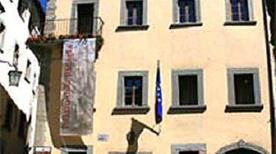
Palazzo Marzocco
Anghiari
(23 Km)
The Palace was built in the '500, commissioned by the Angelieri. It took the name 'Marzocco' from the stone statue of a lion that, over the years, was destroyed during the war. Anyway, today a terracotta depicting the same statue is still visible. Over the years the building underwent several restorations and today houses the 'Museum of the Battle'.
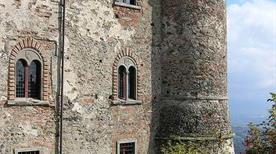
Castello Montauto
Anghiari
(27 Km)
The castle was built in the twelfth century and for many years it was owned by the noble family of the Barbolani. The building stands in a very favorable defensive position, and was one of the most powerful of the period. From the height of the castle you can enjoy a very special and suggestive view. Today it continues to be the private property of the Barbolani, as a result it cannot be visited inside.
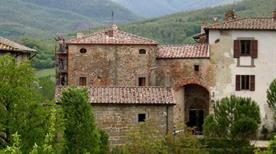
Castello di Sorci
Anghiari
(24 Km)
The Castle was built between the 13th and 16th centuries by two noble families, the Tarlati and the Baldaccio. It was demolished several times and, then, restructured because of the wars of the time. Today the building works as a accommodation facility with the same name, and is open to the public.
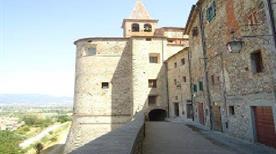
Bastione del Vicario
Anghiari
(23 Km)
The “Vicar's Bastion” was built in the period between 1181 and 1204. It takes this name as the main entrance of the structure is located in the Vicar's Palace. The structure has undergone various renovations over the years. The Bastion is a fence of walls, whose construction was completed in 1572. In the Bastion there are important archaeological works.
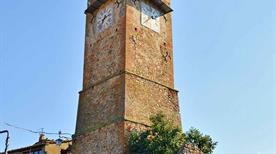
Il Campano (Torre Civica)
Anghiari
(23 Km)
The Campania dates back to the 13th century. In the '500 it was demolished by Vitellozzo Vitelli, and then it was restored and the clock was also added on the occasion. In the facade there are Gothic scriptures, testimony that the Campania is part of the Castle of Montauto.
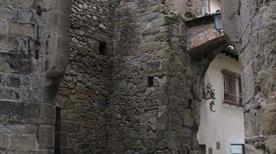
Porta Sant Angelo
Anghiari
(23 Km)
Porta S. Angelo was built in the 13th century. It was part of the 'double door' system, a defensive strategy to prevent access to the city. Since, until the '300, it was the direct point of entry to Anghiari, it was supervised very carefully. Today it is in good condition.
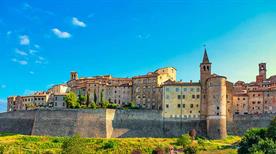
Mura del Borgo
Anghiari
(23 Km)
The current walls of Anghiari were built at the end of the twelfth century, along with the two other gates of the city. This is the defensive structure of the castrum, which occurred after the destruction of the previous ones by the Arezzo and Florentines. Over the years, the walls underwent several changes to reinforce them, up to their present appearance. Currently, the entire city walls are in a good state of preservation and has remained intact since the twelfth century.
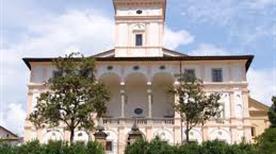
Villa Magherini-Graziani
San Giustino
(16 Km)
The villa has the typical structure of the noble villas of the late Renaissance. Its structure has a pentagonal perimeter walled and surrounded by a beautiful garden. Today, the villa is owned by the Municipality, and inside there is a Museum that houses the finds from the excavations.
Castello Bufalini
San Giustino
(16 Km)
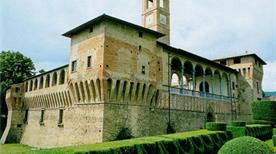
The Bufalini Castle dates back to the end of the fifteenth century, when it was a military fortification. In the 16th century it was transformed by the Buffalini into a stately residence with frescoes and paintings created by Cristoforo Gherardi. The castle has a beautiful garden adorned with lovely fountains. Since 1988 it has been the property of the State and the seat of a Museum.
Torre di Berta
Sansepolcro
(16 Km)
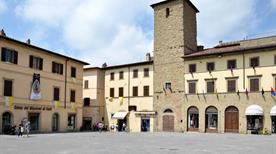
The Tower of Berta is located in the homonymous square in Sansepolcro. It was built around the 12th century, at the behest of some families in the area. This building is the only one left among the existing ones, since in 1868 they were destroyed and the square was built. It is currently in excellent condition and easily visited by tourists.
Casa di Piero della Francesca
Sansepolcro
(15 Km)
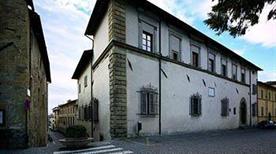
The house where the artist was born is a beautiful fifteenth-century palace. The architectural layout features Michelozzi modules into the portal and in the windows.
Fortezza Medicea
Sansepolcro
(15 Km)
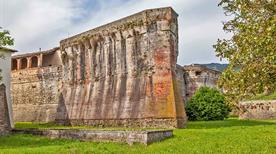
The fortress of Sansepolcro, designed in the sixteenth century, is situated in the eastern part of the walls still standing. The project is due to Giuliano da Sangallo.
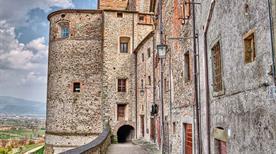
Abside di Chiesa S. Agostino
Anghiari
(23 Km)
The apse of the Church of Sant'Agostino is of fifteenth-century origins. It is a tower apse structure, which was restored in 1748. The apse is an element that strongly characterizes the church.

Convento dei Frati Cappuccini
Sansepolcro
(15 Km)
Set in the hills of Sansepolcro, the Convent is home to the student's home, while in the adjacent Church of St. Michael you can admire a large painting depicting heaven, made in 1608 by Paolo Piazza.
Museo Geopaleontologico Naturalistico Antropico e Ornitologico
Piobbico
(19 Km)
Badia di Subcastelli
Sansepolcro
(15 Km)
It stands on a hill close to that of Montedoglio where are the remains of the homonymous castle and for this reason it took the name of Subcastelli, although it was originally dedicated to St. Bartholomew.